📰 Overview
Canada is taking steps to tighten and clarify the rules for passing down citizenship to children born abroad.
A parliamentary committee has introduced new language, residency, and security requirements to Bill C-3, which governs citizenship by descent.
These changes aim to make the process more consistent with what immigrants go through when applying for Canadian citizenship.
⚖️ What’s Changing in Bill C-3?
The Standing Committee on Citizenship and Immigration voted to add key amendments that affect how Canadian citizenship can be passed to children born outside Canada.
Here’s what’s new under the proposed changes:
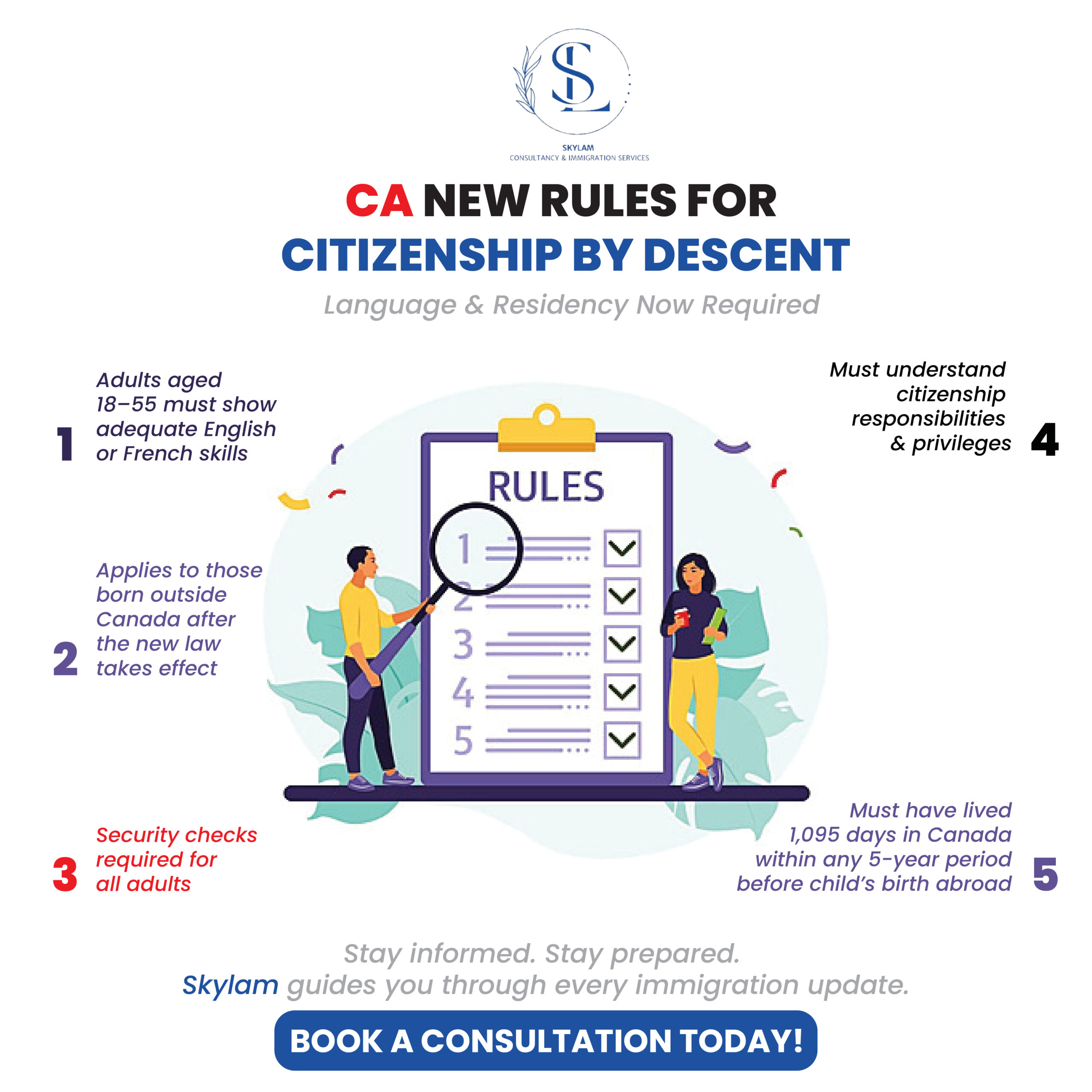
- Language Requirement:
Adults aged 18 to 55 who wish to pass citizenship to their foreign-born children must demonstrate adequate knowledge of English or French. - Civic Knowledge:
Applicants must show an understanding of the rights, responsibilities, and privileges of being a Canadian citizen. - Security Screening:
All adults will need to undergo security checks to confirm they are not inadmissible under Canadian law. - Residency Condition:
To transfer citizenship by descent, a Canadian citizen must have lived in Canada for at least 1,095 days (three years) within any five-year period before the birth of their child abroad. - Effective Date:
These rules would apply only to those born outside Canada on or after the date when the new act comes into effect.
🏛️ Why These Changes Matter
Prime Minister Mark Carney’s government introduced Bill C-3 in June to comply with a court order declaring the current two-generation limit on citizenship by descent unconstitutional.
Under the existing law, citizenship can only be automatically passed to the first generation born outside Canada. The new bill seeks to restore citizenship to those affected by this restriction — but with additional checks to align the process with other citizenship pathways.
🔍 Debate and Reactions
With both the Liberal and Conservative parties holding equal votes in the committee, Bloc Québécois MP Alexis Brunelle-Duceppe cast the deciding vote that approved the Conservative-backed amendments.
Brunelle-Duceppe argued that applying language and residency standards is fair, as similar requirements already exist for naturalized citizens.
However, Uyen Hoang, Director General of Citizenship at Immigration, Refugees and Citizenship Canada (IRCC), cautioned that these changes might create a new group of “lost Canadians” — individuals who could lose citizenship rights due to stricter rules.
📅 What Happens Next?
The committee will now report the amended Bill C-3 to the House of Commons for further debate and a final vote at third reading.
The government faces a November 20 deadline to pass the bill to ensure compliance with the Charter of Rights and Freedoms.
If approved, these new rules will redefine how Canadian citizenship is inherited for generations to come.
💬 Skylam Insight
At Skylam Immigration, we closely monitor every update affecting citizenship and immigration law in Canada.
If you or your family were born abroad and may be impacted by these changes, our team can help assess your eligibility and guide you through the evolving requirements of Bill C-3.
📞 Book a consultation today or visit www.skylam.ca for the latest updates.