


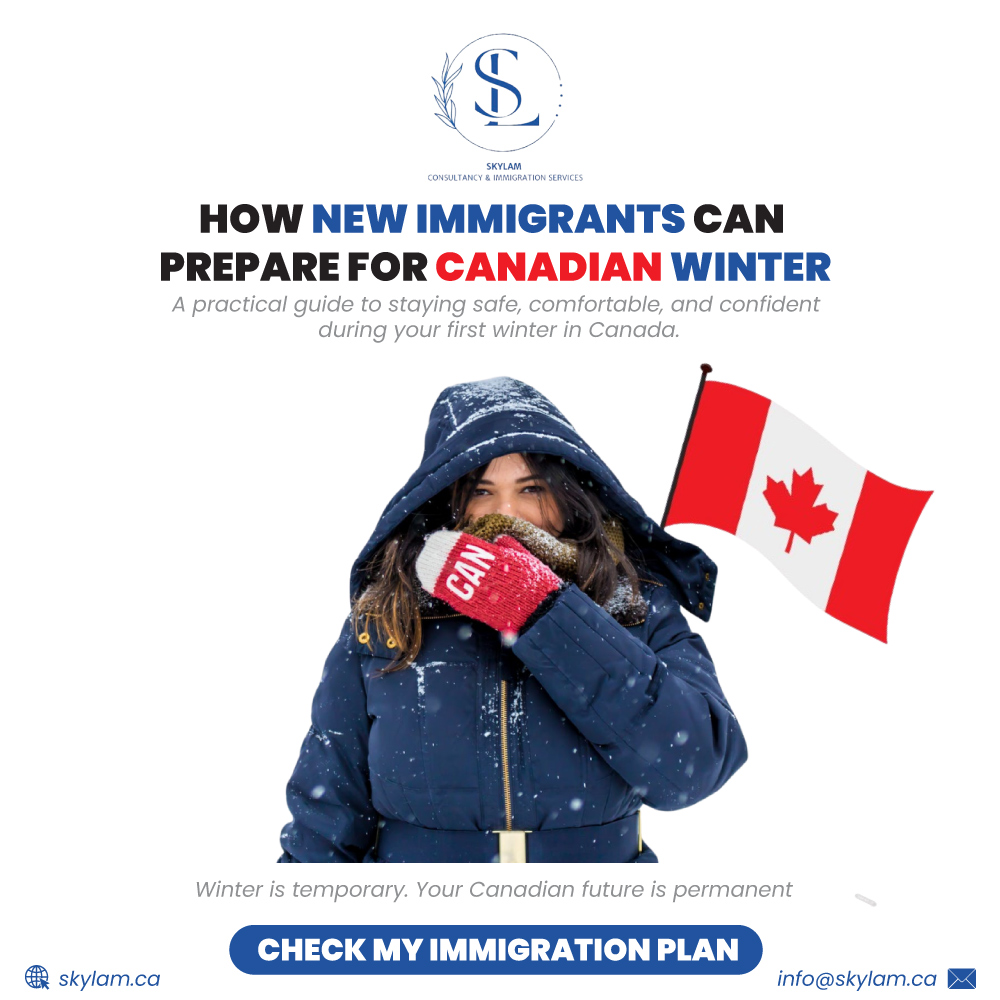
Introduction
Canada is one of the most welcoming countries for immigrants, offering strong public services, diverse communities, and long-term opportunities. However, one of the biggest adjustments newcomers face is winter.
For many immigrants arriving from warm or moderate climates, Canada’s winter can feel overwhelming. Temperatures may drop below zero, snowfall can be heavy, and daily routines change significantly.
But winter does not have to be frightening.
With the right knowledge, preparation, and mindset, you can enjoy this season safely and comfortably.
This guide explains everything new immigrants should know to prepare for their first Canadian winter.
Understanding Canadian Winter
How Cold Is It?
Canadian winter usually lasts from November to March, depending on the province.
Typical temperatures:
- Toronto & Vancouver: −5°C to 5°C
- Alberta & Prairies: −10°C to −30°C
- Quebec & Ottawa: −10°C to −25°C
Some regions experience snowfall almost daily in peak months.
Why Preparation Is Important
Without preparation, winter can cause:
- Health problems
- Slips and injuries
- Transportation delays
- Increased expenses
- Emotional stress
Proper planning ensures:
- Personal safety
- Comfort
- Financial stability
- Peace of mind
Winter Clothing: Your First Priority
Essential Clothing Items
- Winter Jacket
- Waterproof
- Insulated
- Covers hips
- Thermal Base Layers
- Worn under normal clothes
- Sweaters & Hoodies
- Snow Boots
- Waterproof
- Non-slip sole
- Gloves or Mittens
- Winter Hat (Toque)
- Scarf or Neck Warmer
- Thermal Socks
Buying Tips
- Buy locally in Canada for better quality
- Look for “winter rated” labels
- Discount stores offer affordable options
- Do not rely on fashion over function
Preparing Your Home for Winter
Heating System Basics
Most Canadian homes use:
- Central heating
- Electric heaters
- Gas furnaces
Learn:
- How to control thermostat
- How to report heating issues
- How to prevent frozen pipes
Safety Equipment
- Smoke detectors
- Carbon monoxide detectors
- Fire extinguisher
Managing Electricity & Gas Bills
Winter increases energy usage.
Tips:
- Use curtains to keep heat inside
- Seal window gaps
- Turn off unused heaters
- Wear warm clothes indoors
Transportation in Winter
Public Transport
- Expect occasional delays
- Dress warmly while waiting
- Follow city alerts
Driving in Winter
If you plan to drive:
- Install winter tires
- Learn snow driving techniques
- Carry emergency kit
- Avoid speeding
- Clear snow from your car
Walking Safety
- Walk slowly
- Use sidewalks carefully
- Wear boots with grip
- Avoid icy shortcuts
Health Care During Winter
Register for Health Insurance
New immigrants should:
- Apply for provincial health card immediately
- Some provinces have waiting periods
Common Winter Health Issues
- Cold & flu
- Dry skin
- Vitamin D deficiency
- Joint pain
Health Tips
- Drink warm fluids
- Eat nutritious food
- Get flu vaccine
- Exercise indoors
- Get enough sleep
Mental Health & Emotional Well-Being
Winter may cause:
- Loneliness
- Homesickness
- Seasonal depression
How to Stay Positive
- Join community groups
- Attend cultural events
- Use public libraries
- Explore winter festivals
- Stay active
- Maintain social connections
Budgeting for Winter
Winter expenses include:
- Clothing
- Heating bills
- Transportation
- Vitamins & medicine
Financial Tips
- Shop during sales
- Buy second-hand when possible
- Track monthly utilities
- Apply for government benefits if eligible
Winter Activities for Newcomers
Winter is not only about survival.
Enjoy:
- Snowfall photography
- Ice skating
- Snow walking
- Winter festivals
- Holiday markets
Many cities offer free beginner programs.
Emergency Preparation
Know these numbers:
- 911 – emergency
- Local city service lines
Prepare:
First aid kit
Emergency food
Flashlight
Batteries