


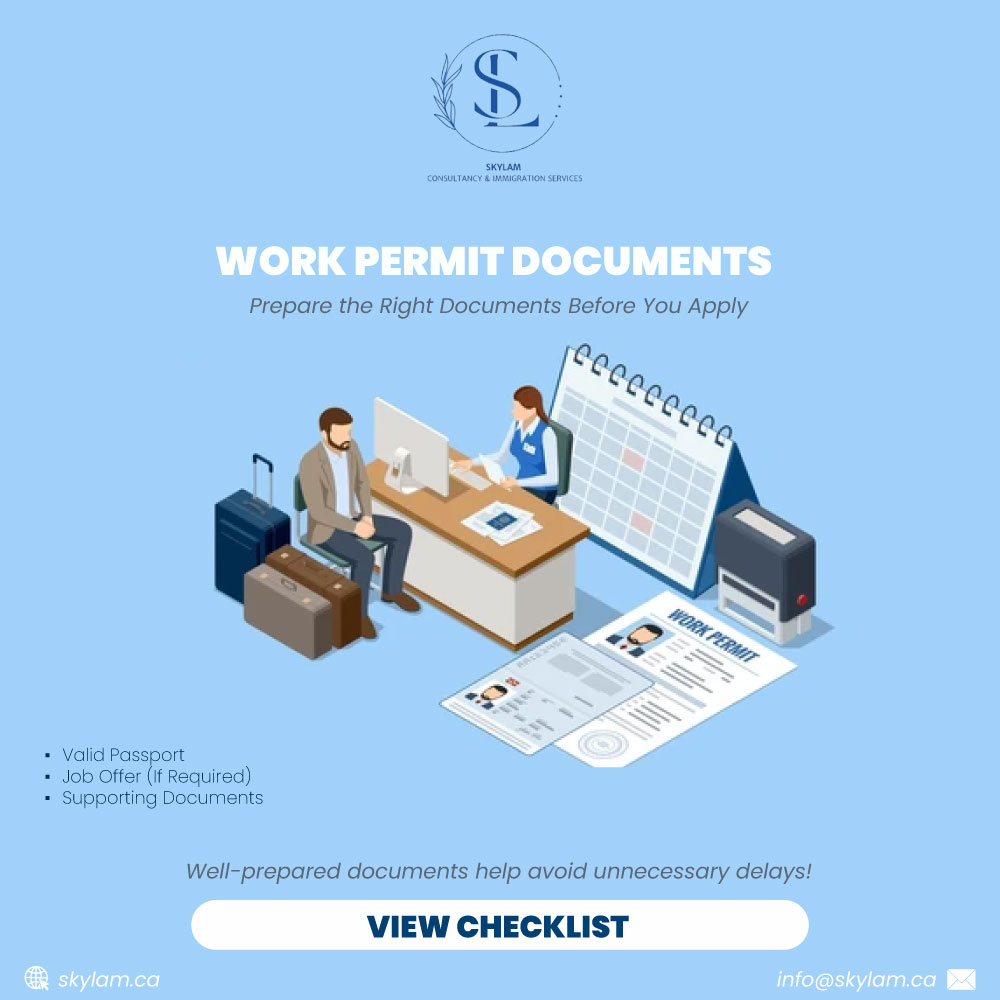
Applying for a Canadian work permit is an exciting step toward building your career in one of the world’s most welcoming countries. Whether you’ve received a job offer from a Canadian employer or qualify for an open work permit, submitting the correct documents is essential for a smooth application process.
In this guide, we’ll explain the key documents typically required for a Canadian work permit in 2026, common mistakes to avoid, and tips to help you prepare a strong application.
What Is a Canadian Work Permit?
A Canadian work permit is an official authorization that allows eligible foreign nationals to work legally in Canada for a specified period.
There are two main types of work permits:
- Employer-Specific Work Permit: Allows you to work for a designated employer under approved conditions.
- Open Work Permit: Allows eligible individuals to work for most employers without being tied to a single company.
The documents required may vary depending on the type of work permit you are applying for.
1. Valid Passport
Your passport is one of the most important documents for any immigration application.
Make sure your passport:
- Is valid for the intended period of stay.
- Has enough blank pages.
- Matches the information provided in your application.
👉 Renew your passport before applying if it is close to expiring.
2. Job Offer Letter (If Required)
For many employer-specific work permits, you’ll need a genuine job offer from a Canadian employer.
A job offer generally includes:
- Employer’s name
- Job title
- Duties and responsibilities
- Salary and benefits
- Working hours
- Employment duration
👉 Ensure the offer is issued by a legitimate Canadian employer.
3. Labour Market Impact Assessment (LMIA) (If Applicable)
Some employer-specific work permits require a Labour Market Impact Assessment (LMIA).
A positive LMIA indicates that hiring a foreign worker is justified because no suitable Canadian citizen or permanent resident is available for the position.
Not all work permits require an LMIA. Some programs are LMIA-exempt.
4. Proof of Qualifications
Depending on the job, you may need to provide evidence of your qualifications.
Examples include:
- Degree certificates
- Diplomas
- Trade certifications
- Professional licenses
- Academic transcripts
These documents help demonstrate that you meet the requirements of the position.
5. Work Experience Documents
Employers and immigration officers may request proof of your previous work experience.
Useful documents include:
- Employment reference letters
- Experience certificates
- Salary slips
- Employment contracts
- Updated resume or CV
👉 Make sure your work experience matches the job you’re applying for.
6. Language Test Results (When Applicable)
Although many work permits do not require language test results, some immigration pathways and employers may request proof of English or French proficiency.
Accepted language tests may include:
- IELTS
- CELPIP
- TEF Canada
- TCF Canada
Strong language skills can also benefit future permanent residency applications.
7. Proof of Financial Support
In some situations, applicants may need to show they have enough financial resources to support themselves and accompanying family members during the initial period in Canada.
Documents may include:
- Recent bank statements
- Savings certificates
- Sponsor letters (if applicable)
8. Police Clearance Certificate
Applicants may be asked to provide police clearance certificates from countries where they have lived for a specified period.
This helps verify that the applicant has no serious criminal history.
9. Immigration Medical Examination
Depending on your occupation or country of residence, you may need to complete an immigration medical examination.
This exam must generally be performed by an approved panel physician.
10. Digital Photographs and Biometrics
Many applicants are required to provide:
- Digital photographs
- Fingerprints
- Biometrics appointment confirmation
Biometrics help verify your identity and support security screening.
Additional Documents That May Be Required
Depending on your situation, you may also need:
- Marriage certificate
- Birth certificates for accompanying children
- Proof of relationship
- Travel history
- Educational Credential Assessment (ECA) for certain immigration pathways
- Provincial nomination certificate (if applicable)
Common Mistakes to Avoid
Avoid these common errors:
- Submitting expired passports
- Uploading blurry or incomplete documents
- Providing inconsistent information
- Missing deadlines
- Using unofficial translations
- Failing to respond promptly to additional document requests
👉 Carefully reviewing your application before submission can help prevent delays.
Tips for a Successful Work Permit Application
To improve your chances of success:
- Prepare all required documents in advance.
- Ensure your information is accurate and consistent.
- Follow document format requirements.
- Keep copies of everything you submit.
- Stay updated on immigration requirements.
- Seek professional guidance if you are unsure about your eligibility.
A well-organized application is often easier to process.
How Skylam Immigration Services Can Help
Skylam Immigration Services assists applicants by:
- Assessing work permit eligibility
- Reviewing required documents
- Helping prepare complete applications
- Providing guidance throughout the immigration process
- Supporting long-term immigration planning
Our goal is to help applicants submit accurate, complete, and well-prepared applications.
Frequently Asked Questions (FAQs)
Can I apply for a work permit without a job offer?
Some open work permits do not require a job offer, but many employer-specific work permits do. Eligibility depends on the program.
Do all work permits require an LMIA?
No. Certain work permit categories are LMIA-exempt.
Is a medical exam always required?
Not always. It depends on factors such as your occupation, country of residence, and length of stay.
How long does it take to process a work permit?
Processing times vary depending on the application type, country of residence, and application volume.
Final Thoughts
Submitting the correct documents is one of the most important steps in obtaining a Canadian work permit. Careful preparation, accurate information, and complete documentation can help reduce delays and improve your chances of approval.
Whether you’re applying for your first work permit or planning your long-term immigration journey, staying informed and organized is essential.
Start Your Canadian Career with Confidence
If you’re planning to work in Canada:
- Confirm your eligibility.
- Gather all required documents.
- Verify that your information is complete and accurate.
- Submit your application carefully.
- Seek professional guidance if needed.
With proper preparation and a clear understanding of the requirements, you’ll be better equipped to begin your career journey in Canada.