


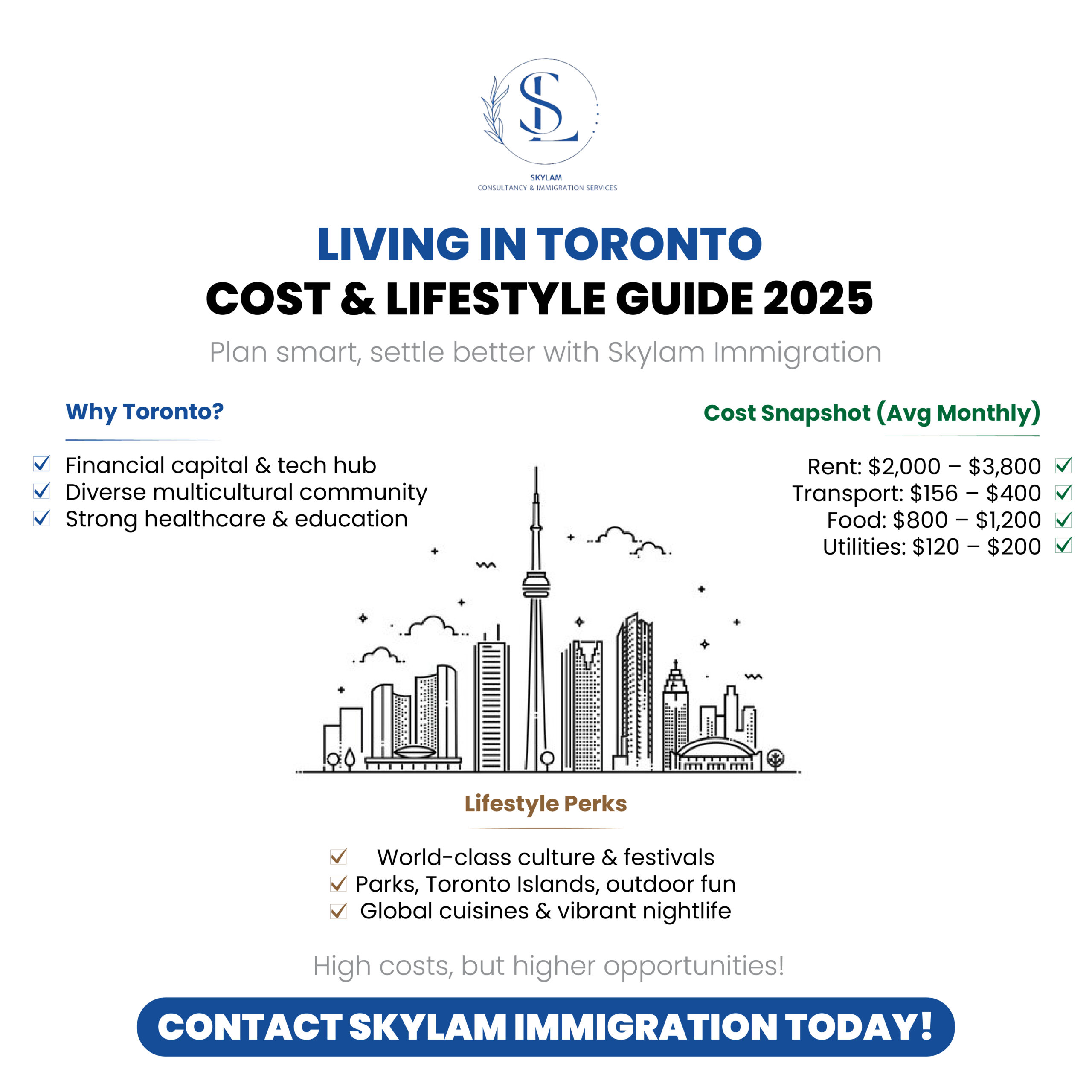
Toronto, Canada’s largest city and economic powerhouse, continues to attract thousands of newcomers annually with its diverse opportunities, multicultural environment, and world-class amenities. At Skylam Immigration, we help clients transition to life in Toronto successfully, and understanding the real costs and lifestyle expectations is crucial for proper settlement planning. This comprehensive guide provides current insights into what life in Toronto truly costs and offers in 2025.
Why Toronto Attracts Newcomers Worldwide
Economic Opportunities and Career Growth
Thriving Job Market Toronto serves as Canada’s financial capital and technology hub, offering abundant opportunities across multiple sectors. The Greater Toronto Area (GTA) hosts headquarters for major Canadian banks, technology companies, healthcare institutions, and international corporations.
Key Industries:
- Financial services and banking
- Technology and software development
- Healthcare and life sciences
- Media and entertainment
- Manufacturing and logistics
- Education and research
Average Salary Ranges by Profession (2025):
- Software Developer: $75,000 – $120,000
- Financial Analyst: $60,000 – $95,000
- Registered Nurse: $70,000 – $90,000
- Mechanical Engineer: $65,000 – $100,000
- Marketing Manager: $70,000 – $110,000
- Skilled Trades: $55,000 – $85,000
Cultural Diversity and Community
Multicultural Excellence Over 50% of Toronto’s population is foreign-born, creating an incredibly welcoming environment for newcomers. The city celebrates diversity through:
- Cultural festivals throughout the year
- Diverse neighborhoods with authentic cuisine and services
- Multi-language community services and support
- International business networks and professional associations
Neighborhood Diversity
- Little Italy: Authentic Italian culture and dining
- Chinatown: Multiple Chinatowns serving various Asian communities
- Little India: Gerrard India Bazaar and Punjabi community
- Greektown: Danforth Avenue’s vibrant Greek community
- Kensington Market: Bohemian multicultural atmosphere
Comprehensive Cost of Living Breakdown
Housing Costs: The Largest Expense
Rental Market Overview Housing represents the most significant expense for Toronto residents, with costs varying dramatically by location, property type, and amenities.
Average Monthly Rent (2025):
- Downtown Core:
- 1-bedroom apartment: $2,400 – $3,200
- 2-bedroom apartment: $3,500 – $4,800
- 3-bedroom apartment: $4,500 – $6,500
- Midtown Areas:
- 1-bedroom apartment: $2,000 – $2,800
- 2-bedroom apartment: $2,800 – $3,800
- 3-bedroom apartment: $3,500 – $4,800
- Suburban GTA:
- 1-bedroom apartment: $1,600 – $2,300
- 2-bedroom apartment: $2,200 – $3,200
- 3-bedroom apartment: $2,800 – $4,000
Home Ownership Costs For those considering purchasing property:
- Average home price: $1,100,000 – $1,400,000
- Condo average: $650,000 – $900,000
- Townhouse average: $800,000 – $1,200,000
- Property taxes: 0.6% – 1.0% of assessed value annually
- Maintenance fees (condos): $0.45 – $0.85 per square foot monthly
Transportation: Getting Around the City
Public Transportation Excellence Toronto Transit Commission (TTC) provides comprehensive public transportation covering the entire GTA.
Monthly Transportation Costs:
- TTC Monthly Pass: $156
- GO Transit Monthly Pass: $150 – $400 (depending on distance)
- Combined TTC/GO: $200 – $500
- PRESTO card convenience fee: Minimal additional cost
Vehicle Ownership Costs:
- Car insurance: $150 – $400 monthly
- Parking downtown: $200 – $500 monthly
- Gas: $60 – $120 monthly (depending on usage)
- Maintenance and registration: $100 – $200 monthly average
Alternative Transportation:
- Bike Share Toronto: $99 annually
- Car sharing (Zipcar, etc.): $8 – $15 per hour
- Uber/Lyft: $15 – $30 per trip within city
Food and Dining: Multicultural Culinary Scene
Grocery Shopping Toronto offers diverse grocery options from budget-friendly to premium organic markets.
Monthly Grocery Costs (Family of 4):
- Budget shopping: $600 – $800
- Mid-range shopping: $800 – $1,200
- Premium/organic: $1,200 – $1,800
Popular Grocery Chains:
- Loblaws/No Frills: Wide range, competitive pricing
- Metro/Food Basics: Convenient locations, regular sales
- Sobeys/FreshCo: Quality products, loyalty programs
- Walmart: Budget-friendly options
- Whole Foods/Longo’s: Premium and organic selections
Dining Out Culture:
- Fast casual meal: $12 – $18
- Mid-range restaurant dinner: $25 – $45 per person
- Fine dining experience: $80 – $150 per person
- Food court meals: $8 – $15
- Coffee shop visits: $4 – $7
Utilities and Essential Services
Monthly Utility Costs (Average Apartment):
- Electricity and heating: $80 – $150
- Internet (high-speed): $60 – $100
- Mobile phone plan: $50 – $90
- Water (if not included): $30 – $60
- Home insurance: $25 – $50
Additional Services:
- Streaming services: $15 – $50 monthly
- Gym membership: $30 – $80 monthly
- House cleaning: $80 – $150 per visit
Healthcare and Insurance
Provincial Healthcare Coverage Ontario Health Insurance Plan (OHIP) provides comprehensive healthcare coverage for permanent residents and citizens.
Additional Healthcare Costs:
- Dental care: $150 – $400 per visit
- Vision care: $200 – $500 annually
- Prescription medications: $50 – $200 monthly
- Extended health insurance: $100 – $300 monthly (family)
- Physiotherapy/massage: $80 – $120 per session
Education and Childcare
Public Education (Free for Residents):
- Excellent public school system
- French immersion programs available
- Diverse extracurricular activities
- University preparation programs
Private Education Options:
- Private elementary: $15,000 – $35,000 annually
- Private high school: $20,000 – $45,000 annually
- International schools: $25,000 – $50,000 annually
Childcare Costs:
- Licensed daycare: $1,200 – $2,000 monthly per child
- Nanny services: $15 – $25 per hour
- After-school programs: $200 – $500 monthly
- Summer camps: $200 – $800 per week
Lifestyle and Recreation Opportunities
Arts and Culture Scene
World-Class Entertainment Toronto’s cultural scene rivals any major international city:
- Royal Ontario Museum: World-renowned exhibitions
- Art Gallery of Ontario: Extensive Canadian and international collections
- Toronto Symphony Orchestra: Regular performances at Roy Thomson Hall
- Theatre District: Broadway-style productions and local theatre
- Film Festivals: TIFF and numerous smaller festivals throughout the year
Entertainment Costs:
- Movie tickets: $14 – $18
- Theatre shows: $50 – $200
- Concert tickets: $40 – $300
- Museum admissions: $15 – $25
- Sporting events: $30 – $500 (depending on team and seats)
Outdoor Activities and Recreation
Parks and Green Spaces Despite its urban density, Toronto offers abundant green space:
- High Park: 400 acres with hiking trails, cherry blossoms, and recreational facilities
- Toronto Islands: Beach access, cycling, and family activities
- Harbourfront: Waterfront walking and cycling paths
- Scarborough Bluffs: Dramatic cliffs and beach access
- Don Valley trails: Extensive cycling and hiking network
Seasonal Activities:
- Summer: Beach activities, outdoor festivals, patio dining
- Fall: Leaf viewing, harvest festivals, outdoor markets
- Winter: Ice skating, skiing (nearby), winter festivals
- Spring: Cherry blossoms, cycling, outdoor events
Recreation Costs:
- Beach access: Free
- Provincial park fees: $15 – $25 per vehicle
- Ski hill day passes: $60 – $120 (nearby hills)
- Bike rentals: $8 – $15 per hour
- Golf: $40 – $150 per round
Shopping and Consumer Culture
Shopping Districts:
- Eaton Centre: Major mall in downtown core
- Yorkdale Shopping Centre: Luxury and mainstream brands
- Queen Street West: Unique boutiques and vintage stores
- Kensington Market: Eclectic mix of vintage and artisanal goods
- PATH Underground: Weather-protected shopping network
Clothing and Personal Items:
- Basic clothing: Comparable to international prices
- Designer brands: Premium pricing but wide selection
- Electronics: Competitive pricing with good selection
- Personal care: $50 – $150 monthly average
Neighborhood Guide: Finding Your Perfect Fit
Downtown Core Neighborhoods
Financial District
- Pros: Close to major employers, excellent transit, urban amenities
- Cons: High cost, limited green space, tourist crowds
- Best for: Finance professionals, urban lifestyle enthusiasts
- Average rent: $2,500 – $4,000 monthly
King West
- Pros: Trendy restaurants, nightlife, entertainment district
- Cons: Expensive, noise levels, parking challenges
- Best for: Young professionals, entertainment industry workers
- Average rent: $2,400 – $3,800 monthly
Distillery District
- Pros: Historic charm, cultural attractions, pedestrian-friendly
- Cons: Limited transit options, tourist area, higher costs
- Best for: Arts enthusiasts, couples, cultural professionals
- Average rent: $2,600 – $4,200 monthly
Midtown Excellence
Yonge and Eglinton
- Pros: Excellent transit, shopping, balanced urban/suburban feel
- Cons: Construction disruption, increasing costs
- Best for: Families, professionals seeking balance
- Average rent: $2,200 – $3,500 monthly
The Annex
- Pros: Near University of Toronto, cultural attractions, walkable
- Cons: Student population, limited parking, older buildings
- Best for: Graduate students, academics, young professionals
- Average rent: $1,800 – $3,000 monthly
Family-Friendly Suburban Areas
North York
- Pros: More space, family amenities, diverse communities
- Cons: Longer commutes, car dependency
- Best for: Growing families, budget-conscious residents
- Average rent: $1,600 – $2,800 monthly
Mississauga (GTA)
- Pros: Suburban lifestyle, good schools, airport proximity
- Cons: Limited nightlife, car necessary
- Best for: Families, airport workers, suburban preference
- Average rent: $1,500 – $2,500 monthly
Markham (GTA)
- Pros: Excellent schools, tech industry presence, family-oriented
- Cons: Limited transit, distance from downtown
- Best for: Tech workers, families with children
- Average rent: $1,700 – $2,900 monthly
Seasonal Living: What to Expect Year-Round
Summer (June – August)
Weather: Warm and humid, 20°C – 30°C Activities: Festivals, outdoor dining, beach visits, cycling Clothing needs: Light summer clothing, sun protection Energy costs: Air conditioning increases electricity bills
Fall (September – November)
Weather: Cool and comfortable, 5°C – 20°C Activities: Fall festivals, leaf viewing, harvest events Clothing needs: Layers, light jackets, comfortable walking shoes Preparation: Winter clothing shopping, home weatherization
Winter (December – February)
Weather: Cold with snow, -10°C – 5°C Activities: Ice skating, winter festivals, indoor entertainment Clothing needs: Heavy winter coats, boots, gloves, scarves Additional costs: Higher heating bills, winter tire changes
Spring (March – May)
Weather: Mild and variable, 5°C – 20°C Activities: Cherry blossoms, outdoor markets, cycling resumes Clothing needs: Light layers, rain protection Home maintenance: Spring cleaning, garden preparation
Integration Tips for Newcomers
Building Your Professional Network
Industry Associations
- Join relevant professional organizations
- Attend networking events and conferences
- Participate in mentorship programs
- Volunteer for industry committees
Skills Development
- Consider Canadian certification requirements
- Enroll in continuing education programs
- Improve language skills if needed
- Stay current with industry trends
Social Integration Strategies
Community Involvement
- Join cultural associations from your home country
- Participate in neighborhood community centers
- Volunteer for local charities and causes
- Attend religious or spiritual communities
Language and Communication
- Practice Canadian English idioms and expressions
- Understand workplace communication styles
- Learn about Canadian cultural norms and values
- Develop confidence in professional and social settings
Practical Settlement Steps
Essential Documents and Services
- Social Insurance Number (SIN): Required for employment and benefits
- Ontario Health Card: Healthcare coverage registration
- Driver’s License: Ontario license exchange or testing
- Bank Account: Establish Canadian banking relationship
- Credit History: Begin building Canadian credit score
Financial Planning
- Understand Canadian tax system and obligations
- Research RRSP and TFSA investment options
- Compare insurance options for home, auto, and life
- Plan for children’s education savings (RESP)
Budget Planning: Sample Monthly Budgets
Single Professional Budget
Income: $70,000 annually ($4,650 monthly after taxes)
Monthly Expenses:
- Housing (1-bedroom): $2,200
- Transportation: $156
- Food: $400
- Utilities: $120
- Phone/Internet: $110
- Healthcare/Insurance: $150
- Entertainment: $300
- Savings: $800
- Miscellaneous: $414
Total: $4,650
Family of Four Budget
Income: $120,000 annually ($7,800 monthly after taxes)
Monthly Expenses:
- Housing (3-bedroom): $3,200
- Transportation: $400
- Food: $1,000
- Utilities: $180
- Phone/Internet: $140
- Healthcare/Insurance: $300
- Childcare: $1,500
- Entertainment: $400
- Savings: $500
- Miscellaneous: $180
Total: $7,800
Long-term Financial Planning
Building Wealth in Toronto
Real Estate Investment
- Property values generally appreciate over time
- Rental income potential in high-demand areas
- Tax advantages for principal residence
- Consider timing and market conditions
Career Advancement
- Toronto’s competitive market rewards skill development
- Professional networking leads to opportunities
- Industry clusters provide career growth potential
- Entrepreneurship and startup ecosystem support
Retirement Planning
- Employer pension plans and matching contributions
- RRSP contributions for tax advantages
- CPP and OAS government benefits
- Private investment and savings strategies
The Skylam Immigration Settlement Advantage
Pre-Arrival Planning Services
Our comprehensive settlement support includes:
- Detailed budget planning based on your specific situation
- Neighborhood selection guidance matching your lifestyle preferences
- School research for families with children
- Employment preparation including resume adaptation and interview coaching
- Banking and financial services setup assistance
Post-Arrival Support Services
First Month Essentials
- Government document applications
- Healthcare registration assistance
- Banking and financial setup
- Mobile phone and internet services
- Transportation orientation
Ongoing Integration Support
- Professional networking introductions
- Community connection facilitation
- Educational planning for family members
- Career advancement guidance
- Cultural adaptation coaching
Toronto-Specific Expertise
With extensive experience helping clients settle in Toronto, we understand:
- Neighborhood characteristics and commute considerations
- School system navigation for optimal educational choices
- Employment market insights across various industries
- Cultural community connections based on your background
- Seasonal preparation for successful year-round living
Making Toronto Your Home
Toronto offers an exceptional quality of life for newcomers willing to invest in integration and community building. While costs are significant, the opportunities for career growth, cultural enrichment, and family development make it a worthwhile investment for many immigrants.
The key to successful Toronto living lies in thorough preparation, realistic budgeting, and strategic neighborhood selection based on your priorities and lifestyle preferences.
Ready to Start Your Toronto Journey?
Contact Skylam Immigration today for personalized Toronto settlement planning. Our experienced team will help you understand the real costs, identify the best neighborhoods for your situation, and create a comprehensive settlement strategy that sets you up for long-term success.
From pre-arrival planning to post-settlement support, we ensure your transition to Toronto life is smooth, informed, and successful.
Book your Toronto settlement consultation now and begin planning your successful Canadian life with confidence.
At Skylam Immigration, we don’t just help you immigrate to Canada—we help you thrive in your new home. With over 1000 successful cases worldwide and extensive Toronto settlement experience, we provide the practical guidance and ongoing support needed to make Toronto your successful, permanent home.