


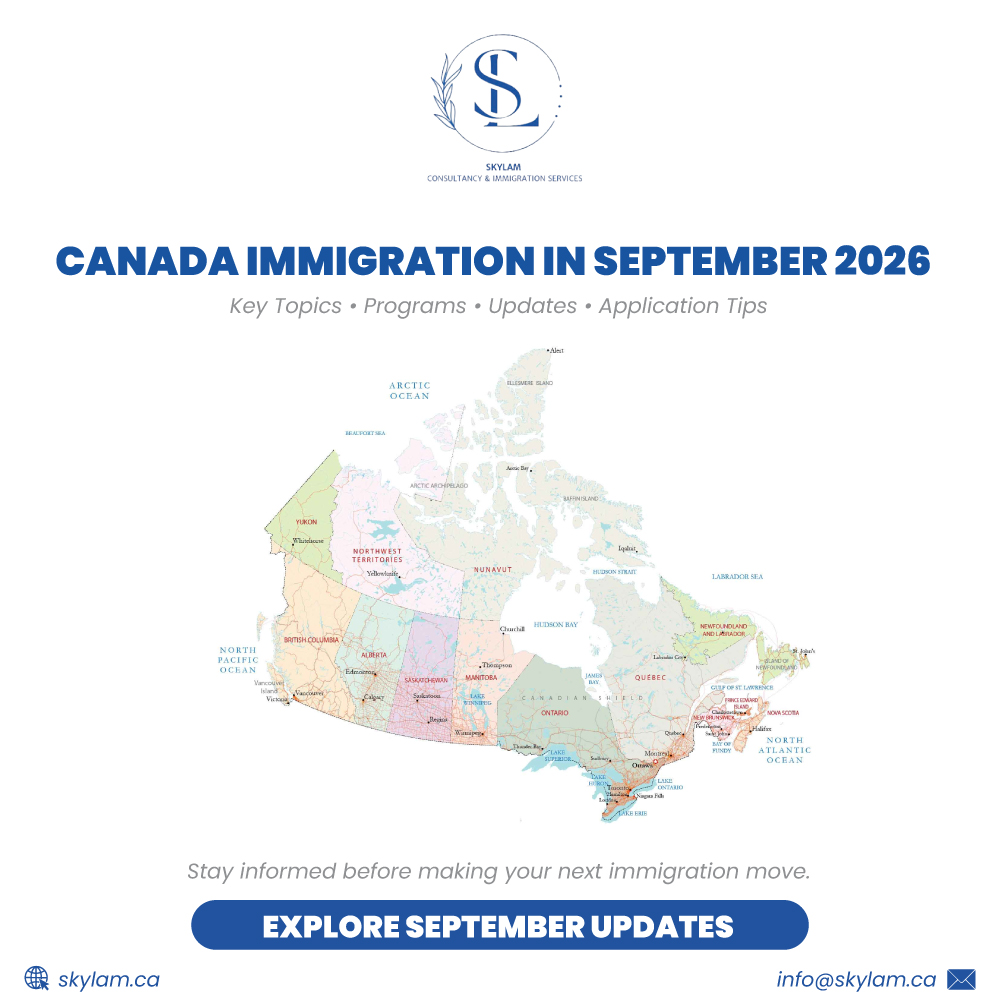
Canada continues to be a popular destination for people looking to study, work, reunite with family, or build a long-term future through permanent residence. However, Canada immigration in 2026 is operating within a more targeted and carefully managed environment. Applicants need to understand the available pathways, eligibility requirements, documentation, and the importance of preparing an application carefully.
The 2026–2028 Immigration Levels Plan sets Canada’s permanent resident admissions target at 380,000 for each year from 2026 through 2028. At the same time, the government has reduced targets for new temporary resident arrivals, including international students and temporary workers. The 2026 target for new temporary resident arrivals is 385,000, followed by 370,000 in both 2027 and 2028.
These targets do not mean that every applicant has the same opportunity or that an individual application is guaranteed to succeed. Canada’s immigration system includes multiple programs, and eligibility depends on factors such as education, work experience, language ability, occupation, age, finances, family circumstances, and other program-specific requirements.
For anyone considering Canada immigration in September 2026, the most important approach is to understand the current system and develop a realistic immigration plan.
What Is Happening With Canada Immigration in 2026?
Canada’s immigration system is increasingly focused on economic needs, labour-market priorities, regional immigration, and sustainable levels of temporary immigration.
Under the 2026–2028 Immigration Levels Plan, Canada plans to welcome 380,000 permanent residents in each of the three years. Economic immigration remains the largest category. For 2026, the economic category represents 63% of planned permanent resident admissions, while family reunification represents 22% and refugees, protected persons, humanitarian and other categories represent 15%.
This is important for applicants because Canada’s immigration system is not based on one single pathway. Different programs are designed for different types of applicants.
For example:
- Skilled workers may consider Express Entry.
- Applicants with provincial nomination opportunities may explore Provincial Nominee Programs.
- Students may apply for a study permit.
- Eligible foreign nationals may qualify for work permits.
- Canadian citizens and permanent residents may be able to sponsor eligible family members.
- Applicants interested in specific communities may consider regional or rural immigration pathways.
Therefore, the right question is not simply, “How can I immigrate to Canada?”
A better question is:
“Which Canadian immigration pathway matches my education, experience, language ability, finances, and long-term goals?”
Canada Immigration Programs to Understand in September 2026
There are several major immigration pathways that applicants should understand before making a decision.
1. Express Entry
Express Entry is one of Canada’s major systems for managing applications for certain economic immigration programs.
It manages three federal economic immigration programs:
- Canadian Experience Class
- Federal Skilled Worker Program
- Federal Skilled Trades Program
Applicants who meet the requirements of one of the programs may create an Express Entry profile and enter the candidate pool.
Being in the Express Entry pool does not automatically mean that an applicant will receive an invitation to apply for permanent residence. Candidates are ranked according to the Comprehensive Ranking System, commonly called CRS, and invitations are issued through invitation rounds.
This means applicants should not focus only on creating a profile. They should also understand how their profile compares with the requirements and selection approach applicable to the relevant rounds.
Language results, education, work experience and other factors can affect an applicant’s profile and CRS score.
2. Provincial Nominee Programs
Provincial Nominee Programs, or PNPs, provide another important route to Canadian permanent residence.
Canada’s provinces and territories operate their own immigration streams based on their specific economic and labour-market needs.
A provincial nomination can be particularly relevant for applicants whose background aligns with the needs of a particular province or territory.
However, provincial immigration programs are not identical.
Each province or territory has its own requirements, streams, application procedures and selection priorities.
Applicants should therefore avoid choosing a province simply because they have heard that it is “easy” or “fast.” Instead, they should determine whether their profile genuinely matches the requirements of the specific provincial program.
3. Study Permits
Canada remains an important destination for international students, but study permit planning requires careful preparation.
Most foreign nationals who want to study in Canada need a study permit. Applicants generally need an acceptance letter from a Designated Learning Institution, along with other required documents and evidence.
Depending on the applicant’s circumstances and destination, additional requirements may apply.
Financial planning is particularly important. Students should understand tuition costs, living expenses, travel costs and other expenses before applying.
A study permit should also be approached as a study application first. Applicants need to demonstrate that they meet the requirements of the program and can genuinely explain their educational plans.
Choosing a school and program should therefore be based on the student’s academic background, career objectives, finances and overall circumstances rather than simply choosing a program because someone says it offers a route to permanent residence.
4. Work Permits
Canada also offers different work permit pathways.
The requirements depend on the type of work permit and the applicant’s situation. Some work permits are employer-specific, while others may be open work permits available only to people who meet particular eligibility conditions.
Many temporary workers require authorization to work in Canada, although specific exemptions can apply.
The 2026–2028 Immigration Levels Plan includes targets for new temporary workers as part of Canada’s overall approach to temporary immigration. For 2026, the target for new temporary worker arrivals is 230,000.
Applicants should not assume that receiving a job offer automatically means they will receive a work permit. The job, employer, applicant and immigration program must all meet the applicable requirements.
Why Language Skills Matter
Language ability is an important part of many Canadian immigration pathways.
Depending on the program, applicants may need an approved language test in English or French.
For economic immigration, language results can influence eligibility and, in some circumstances, ranking or selection.
Commonly recognized English-language testing options include IELTS and CELPIP for relevant immigration purposes, while French-language applicants may use approved French tests such as TEF Canada or TCF Canada, depending on the program.
Applicants should always check which tests are accepted for their specific immigration pathway.
It is also important to remember that simply having a language test result is not enough. Applicants must meet the required language level for their particular program.
For someone planning Canada immigration in September 2026, taking the language test early can be a useful part of overall preparation.
Education and Work Experience
Education and work experience can play a significant role in Canadian immigration eligibility.
The importance of each factor depends on the immigration pathway.
For example, economic immigration programs may have specific requirements related to skilled work experience. Applicants may also need an Educational Credential Assessment when foreign education must be assessed for a particular immigration program.
Work experience should be documented accurately.
Applicants should be prepared to provide appropriate evidence of their employment history where required. Information such as job duties, employment dates, hours worked and other details may be important depending on the program.
One common mistake is assuming that having a job title automatically proves eligibility. Immigration programs may consider whether the actual work performed meets the relevant occupational and program requirements.
Therefore, applicants should carefully compare their real work experience with the requirements of the program they are considering.
Canada’s Focus on Economic Immigration
Economic immigration continues to be a major component of Canada’s immigration strategy.
The 2026–2028 Immigration Levels Plan states that economic immigration will represent the largest share of permanent resident admissions. The government has emphasized attracting people with skills and experience that support Canada’s economy and labour-market needs.
This broader direction means applicants should pay attention to their occupation, work experience, qualifications and language ability.
It also highlights why immigration planning should be based on an applicant’s actual profile.
Instead of asking which program is currently popular, applicants should ask:
- What skills do I have?
- What occupation do I work in?
- How much qualifying work experience do I have?
- What is my language level?
- What is my education level?
- Do I have Canadian work or study experience?
- Do I have a valid job offer where required?
- Could I qualify for a provincial program?
- What are my financial requirements?
- Which pathway fits my long-term objective?
These questions can help create a more realistic strategy.
Regional and Provincial Immigration Can Be Important
Not every immigration opportunity is concentrated in Canada’s largest cities.
Canada has programs designed to support communities and regions that need skilled workers and newcomers.
The 2026–2028 immigration plan continues to emphasize labour-market needs and regional immigration. It also includes a focus on transitioning certain people already in Canada to permanent residence and supporting rural communities.
This means applicants should look beyond Toronto, Vancouver and other major metropolitan areas when researching their options.
Depending on their occupation and circumstances, applicants may find that a provincial, rural or regional pathway is more relevant than a federal pathway alone.
However, regional programs also have specific requirements. Applicants should never assume that moving to a smaller community automatically creates eligibility for permanent residence.
Family Sponsorship
Family reunification remains an important part of Canada’s immigration system.
Canadian citizens and permanent residents may be able to sponsor eligible family members, including spouses, partners and dependent children, as well as parents and grandparents under applicable programs and requirements. Other relatives may qualify in specific circumstances.
Family sponsorship has its own eligibility criteria and responsibilities.
The sponsor and sponsored person must meet the requirements of the relevant program. Depending on the type of sponsorship, financial obligations and other conditions may also apply.
Anyone considering family sponsorship should review the current requirements before preparing an application.
Why September 2026 Is a Good Time to Review Your Immigration Plan
September can be a useful point in the year to review immigration plans.
Applicants who have been waiting to start may want to assess their eligibility, while those who already have an Express Entry profile, study plan, work permit plan or provincial strategy may want to review whether their information remains current.
Immigration policies and program requirements can change.
Therefore, applicants should avoid relying on old social media posts, outdated videos, forum discussions or information provided by friends who applied several years ago.
A requirement that applied in the past may not necessarily apply in the same way today.
The Government of Canada remains the primary source for federal immigration program requirements, while provincial governments provide information for their respective provincial immigration programs.
What Applicants Should Prepare in September 2026
If you are planning to immigrate to Canada, consider organizing the following areas.
1. Check Your Eligibility
Start by identifying which immigration programs may fit your profile.
Review:
- Age
- Education
- Work experience
- Occupation
- Language ability
- Canadian experience
- Family circumstances
- Job offer, if applicable
- Financial requirements
- Provincial connections, if applicable
Do not assume that one program is automatically suitable for you.
2. Check Your Language Test
If your chosen pathway requires a language test, check whether your current result is valid and meets the program’s requirements.
If you have not taken a test yet, research the approved testing options for your intended program.
3. Organize Your Documents
Create a document folder containing relevant records.
Depending on the program, this could include:
- Passport
- Educational documents
- Language test results
- Employment records
- Reference or experience letters
- Police certificates where required
- Financial documents
- Civil status documents
- Immigration forms
- Other supporting documents
The exact document requirements depend on the immigration program and applicant circumstances.
4. Review Your Financial Situation
Some immigration programs require applicants to demonstrate settlement funds or other financial capacity.
Study permit applicants also need to plan for tuition, living expenses and other costs.
Financial documentation should be genuine, properly documented and consistent with the application’s information.
5. Research Provincial Options
If you are considering permanent residence, check whether your occupation, experience and circumstances may align with a provincial program.
Do not choose a province only because it appears frequently in online immigration discussions.
Look at the actual program requirements.
6. Review Your Long-Term Goal
Your immigration plan should consider where you want to be several years from now.
For example, a student may want to consider:
Study → graduation → eligible work opportunities → potential immigration pathway
A skilled worker may instead consider:
Work experience → language test → Express Entry/PNP assessment → permanent residence
These are examples of planning structures, not guaranteed pathways.
Your actual options depend on your circumstances and the rules of the applicable programs.
Common Mistakes Canada Immigration Applicants Should Avoid
Immigration applications involve significant documentation and should be prepared carefully.
Some common mistakes include:
Relying on Outdated Information
Canada’s immigration system changes over time. Information from an old application or social media post may no longer reflect current requirements.
Choosing a Program Without Checking Eligibility
An applicant may hear about a program and assume they qualify without reviewing the detailed requirements.
Providing Inconsistent Information
Information across forms and supporting documents should be accurate and consistent.
Ignoring Language Requirements
Language test results can be important for eligibility and selection. Applicants should understand the required test and score before building their plan around a particular pathway.
Submitting Incomplete Documents
Missing information or required documents can create problems with an application.
Treating Immigration as Guaranteed
No legitimate immigration strategy can guarantee approval.
Eligibility, selection and final decisions depend on the applicable program and Canadian immigration authorities.
Using False or Misleading Information
Applicants should never submit false documents or inaccurate information.
The information provided in an immigration application should be truthful and supported by genuine documentation.
How Skylam Immigration Services Can Help
For applicants who are unsure where to begin, professional immigration support can help organize the process and identify the areas that require attention.
At Skylam Immigration Services, the focus can be on understanding an applicant’s circumstances, identifying potentially relevant immigration pathways and helping organize the application process.
A consultation can be useful for applicants who have questions such as:
- Which Canadian immigration pathway may fit my profile?
- What documents should I prepare?
- Do I have the required work experience?
- What language test should I consider?
- Should I explore Express Entry or a provincial pathway?
- What should I consider before applying for a Canadian study permit?
- How should I plan my immigration application?
The purpose of professional guidance should be to help applicants understand the process and prepare carefully. It should not be viewed as a guarantee of approval.
Canada Immigration in September 2026: Key Takeaways
Canada immigration in September 2026 continues to offer different pathways for skilled workers, students, temporary workers, families and other eligible applicants.
At the same time, Canada’s immigration system is becoming more targeted.
The 2026–2028 Immigration Levels Plan sets permanent resident admissions at 380,000 per year while reducing targets for new temporary resident arrivals. The government has emphasized economic immigration, labour-market needs, regional priorities and more sustainable temporary immigration levels.
For applicants, this means preparation matters.
A strong immigration plan should begin with understanding your own profile rather than simply following the latest trend online.
Your education, work experience, language ability, occupation, finances and family circumstances all matter when determining which programs may be relevant.
September 2026 is therefore a good time to review your immigration goals, verify current requirements and organize the documents you may need.
Frequently Asked Questions About Canada Immigration in September 2026
Is Canada still accepting immigrants in 2026?
Yes. Canada continues to have permanent and temporary immigration programs in 2026. The 2026–2028 Immigration Levels Plan sets a permanent resident target of 380,000 for each year from 2026 to 2028.
However, individual applicants must meet the eligibility and selection requirements of the specific program they apply under.
What is the main Canada immigration pathway for skilled workers?
Express Entry is one of Canada’s major systems for managing applications under certain federal economic programs. However, Provincial Nominee Programs and other economic pathways may also be relevant depending on an applicant’s profile.
Can I immigrate to Canada without a job offer?
Some Canadian immigration programs do not require a job offer, while others may require or benefit from one. The answer depends on the specific immigration program and the applicant’s circumstances.
Is a study permit the same as permanent residence?
No. A study permit allows an eligible foreign national to study in Canada under the applicable rules. It is not the same as permanent residence.
Some international students may later have opportunities to pursue permanent residence if they meet the requirements of an applicable immigration program.
Do I need IELTS for Canadian immigration?
Many immigration pathways require an approved language test, but the exact test and minimum language level depend on the program.
Applicants should check the requirements of their intended pathway before booking a test.
What is a Provincial Nominee Program?
A Provincial Nominee Program allows participating Canadian provinces and territories to nominate eligible candidates based on their own immigration priorities and labour-market needs.
Each province or territory has different programs and requirements.
Can immigration rules change after I start planning?
Yes. Canadian immigration programs and requirements can change. Applicants should therefore verify current requirements through official sources before submitting an application.
Final Thoughts
Canada remains an important destination for people seeking opportunities to study, work, reunite with family or establish permanent residence.
But Canada’s immigration system in 2026 requires careful planning.
The most important step is to understand your own situation and then identify the programs for which you may be eligible. Do not rely solely on general statements such as “Canada is hiring” or “this province is easy.” Immigration eligibility is personal, and requirements vary between programs.
Whether you are considering Express Entry, a Provincial Nominee Program, a study permit, a work permit, family sponsorship or another immigration pathway, start by reviewing the current requirements and preparing accurate documentation.
If you are planning your Canada immigration journey in September 2026, taking the time to understand your options now can help you make a more informed decision about your next step.
Plan carefully. Check the current requirements. Prepare accurately.
This article is provided for general informational purposes and should not be considered legal advice or a guarantee of immigration approval. Canadian immigration requirements and programs can change, so applicants should verify the current requirements applicable to their specific situation before submitting an application.