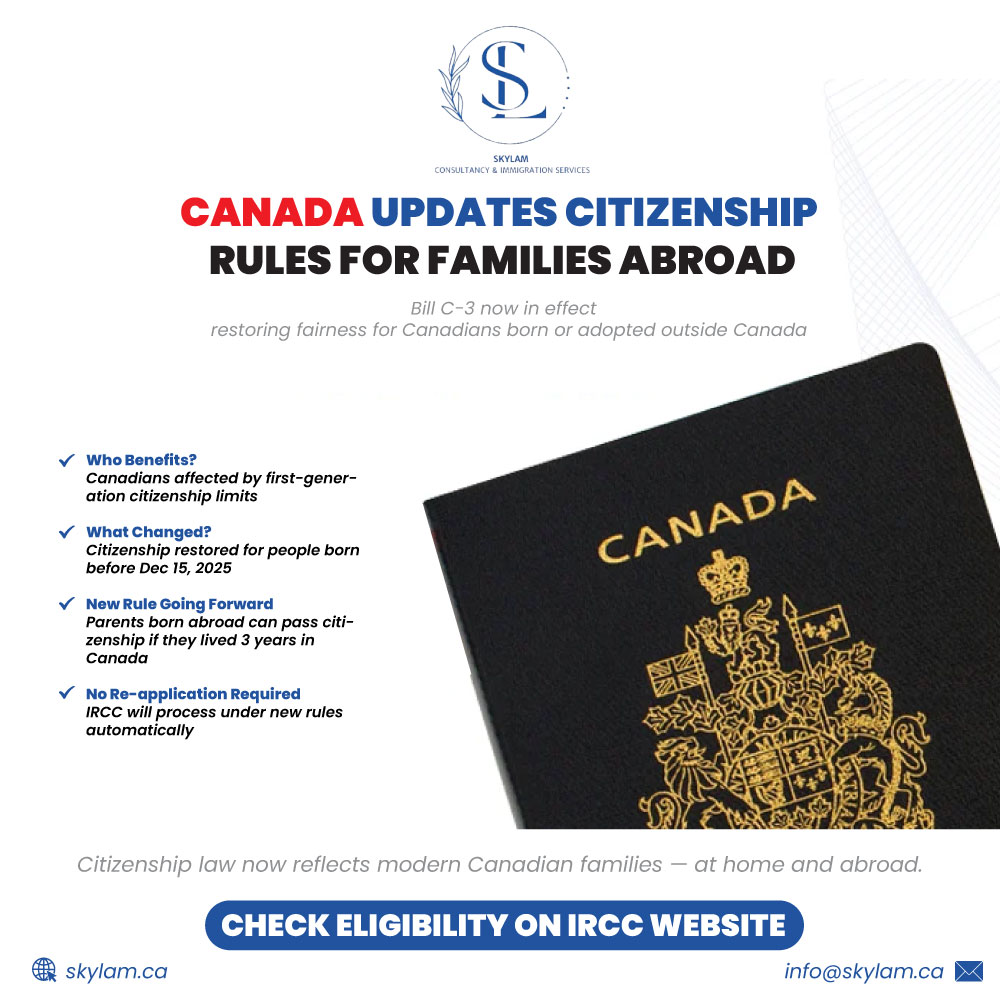
A historic step toward fairness, clarity, and modern Canadian identity
Introduction
Canadian citizenship is more than a legal status—it is a powerful symbol of belonging, identity, and connection to a country that values fairness, diversity, and inclusion. On December 15, 2025, the Government of Canada took a decisive step toward strengthening that bond by bringing Bill C-3, an amendment to the Citizenship Act, officially into force.
This long-awaited reform addresses decades-old rules that left many people—often called “Lost Canadians”—without citizenship simply because of outdated laws around birth, adoption, and descent. The new legislation modernizes citizenship by descent, restores rights to those unfairly excluded, and creates a clear, consistent pathway for Canadian families living abroad.
This blog breaks down what has changed, why it matters, who benefits, and how the new rules reshape Canadian citizenship for future generations.
Why Citizenship Law Needed Reform
Canada’s citizenship framework has evolved since the first Citizenship Act of 1947, but not always fairly. Over time, various legal provisions unintentionally caused thousands of people to:
- Lose their Canadian citizenship
- Never receive it despite strong ties to Canada
- Be excluded due to technicalities related to birthplace or adoption
While amendments in 2009 and 2015 restored citizenship to many affected individuals, one major barrier remained: the first-generation limit to citizenship by descent.
Understanding the First-Generation Limit
Introduced in 2009, the first-generation limit meant:
A child born or adopted outside Canada could not automatically acquire Canadian citizenship if their Canadian parent was also born or adopted outside Canada.
This rule did not consider:
- Time spent living in Canada
- Cultural, social, or economic ties
- Military, diplomatic, or international service
- Adoption circumstances
As global mobility increased, the rule increasingly failed to reflect how modern Canadian families live.
The Turning Point: Court Ruling in 2023
On December 19, 2023, the Ontario Superior Court of Justice ruled that key aspects of the Citizenship Act related to the first-generation limit were unconstitutional.
The court recognized that the law created:
- Inequitable outcomes for children
- Discrimination based on birthplace
- Unacceptable barriers to citizenship
Importantly, the Government of Canada chose not to appeal the decision—acknowledging that reform was necessary.
What Is Bill C-3?
Bill C-3, officially titled An Act to Amend the Citizenship Act (2025), is Canada’s legislative response to that ruling.
As of December 15, 2025, the bill is fully in force, bringing immediate and long-term changes to citizenship by descent.
Key Changes Under the New Law
✅ 1. Citizenship Restored for Many Born Before December 15, 2025
People born before December 15, 2025, who would have been Canadian citizens if not for outdated rules, are now legally recognized as Canadians.
They can:
- Apply for proof of Canadian citizenship
- Obtain citizenship certificates
- Access rights and services associated with citizenship
This includes many individuals previously excluded due to:
- The first-generation limit
- Historic technicalities in citizenship law
For thousands of families, this represents long-overdue recognition.
✅ 2. A Clear Path Forward for Future Generations
The new law establishes a modern and consistent rule for children born or adopted abroad today or in the future.
A Canadian parent born or adopted outside Canada can now pass on citizenship if they can demonstrate:
🟢 At least three years of physical presence in Canada
🟢 Time spent before the child’s birth or adoption
This requirement balances:
- Fairness for families abroad
- The principle that citizenship should reflect real ties to Canada
✅ 3. No Need to Reapply Under Interim Measures
Following the 2023 court ruling, IRCC introduced interim measures to support affected individuals.
Now that Bill C-3 is law:
- Applications already submitted will be processed under the new rules
- No new application is required
- Processing continues seamlessly
This reduces confusion and administrative burden for applicants.
Why the Three-Year Requirement Matters
The three-year residency requirement is not arbitrary. It reflects a foundational principle:
Citizenship by descent should be based on meaningful connection to Canada, not just legal status.
Time spent living in Canada demonstrates:
- Cultural and social integration
- Economic contribution
- Familiarity with Canadian values and institutions
This ensures citizenship remains both inclusive and credible.
Who Benefits Most from the New Law?
👨👩👧 Canadian Families Living Abroad
- Professionals working internationally
- Students studying overseas
- Families temporarily relocated for personal reasons
🌍 Children Born or Adopted Outside Canada
- Previously excluded under first-generation rules
- Now recognized as Canadians by law
🧾 “Lost Canadians”
- Individuals affected by historic legislative gaps
- Many waited decades for recognition
Approximately 20,000 people sought proof of citizenship following earlier reforms. Bill C-3 is expected to help many more.
Government Perspective
🇨🇦 Minister Lena Metlege Diab stated:
“These changes reflect how Canadian families live today… This new legislation strengthens the bond between Canadians at home and around the world.”
The message is clear:
Canadian citizenship should evolve alongside Canadian society.
Citizenship in a Globalized World
Modern Canadians are globally mobile. Many:
- Work abroad temporarily
- Study internationally
- Serve in diplomatic or humanitarian roles
- Raise families outside Canada
Yet they maintain strong emotional, cultural, and legal ties to Canada.
Bill C-3 recognizes this reality and ensures that citizenship law does not penalize global engagement.
Legal and Social Significance
This reform:
- Upholds constitutional equality
- Aligns with human rights principles
- Reduces legal uncertainty
- Strengthens Canada’s international reputation
It also restores trust in the citizenship system by making it clear, predictable, and fair.
What Applicants Should Do Next
Individuals who believe they may now be citizens should:
✔ Review eligibility under the new rules
✔ Apply for proof of citizenship if required
✔ Consult IRCC’s official Citizenship section
✔ Avoid unofficial or misleading sources
Looking Ahead: A Stronger Canadian Identity
Bill C-3 does more than amend legislation—it redefines what it means to belong to Canada in the 21st century.
It ensures that:
- Citizenship reflects lived reality
- Families are not divided by technicalities
- Canadian identity remains inclusive and forward-looking
Conclusion
The coming into force of Bill C-3 marks a historic milestone in Canadian citizenship law. It restores rights, corrects past injustices, and creates a fair path forward for future generations.
For Canadians at home and abroad, the message is powerful:
🇨🇦 You belong. Your connection matters. Your citizenship is recognized.