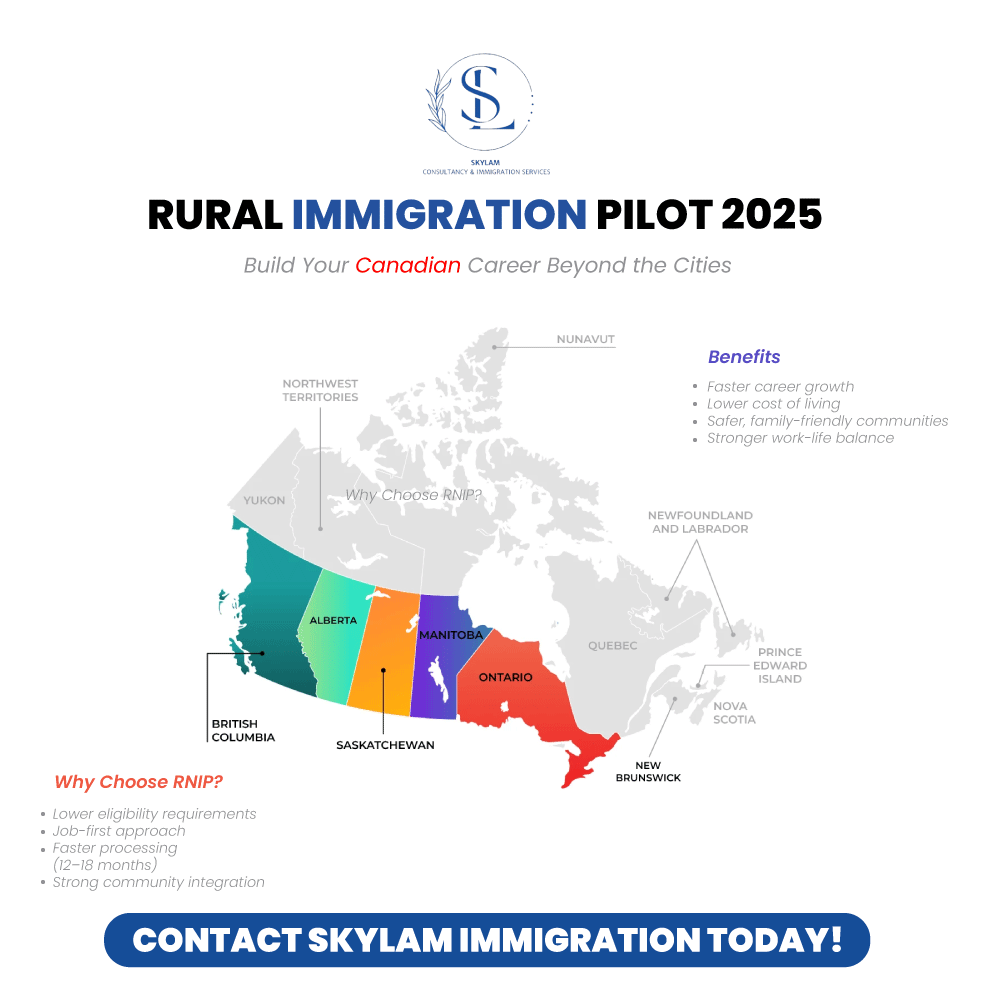
Canada’s vast landscape extends far beyond Toronto, Vancouver, and Montreal. In small towns and rural communities across the country, exciting opportunities await skilled immigrants looking to build meaningful careers while enjoying a unique quality of life. The Rural and Northern Immigration Pilot (RNIP) program opens doors to permanent residence through community-driven immigration, offering an alternative pathway for those ready to embrace life beyond major metropolitan areas.
Understanding the Rural and Northern Immigration Pilot
What is RNIP?
The Rural and Northern Immigration Pilot is a community-driven program launched by Immigration, Refugees and Citizenship Canada (IRCC) to help smaller communities attract and retain skilled foreign workers. Unlike traditional immigration programs managed centrally, RNIP empowers local communities to identify candidates who meet their specific economic and demographic needs.
Program Objectives
RNIP addresses several critical challenges facing rural Canada:
- Population decline in smaller communities
- Skills shortages in key industries
- Economic diversification beyond traditional sectors
- Community sustainability and growth
- Regional economic development initiatives
How RNIP Differs from Other Immigration Programs
Unlike Express Entry or Provincial Nominee Programs, RNIP offers:
- Community-specific selection: Local communities choose candidates
- Lower eligibility thresholds: More accessible language and education requirements
- Job-first approach: Secure employment before applying
- Community integration focus: Emphasis on long-term settlement
- Faster processing: Streamlined application process
Participating Communities (2025 Update)
As of September 2025, eleven communities participate in RNIP across five provinces:
Ontario
- Sault Ste. Marie: Manufacturing, healthcare, and tourism hub
- Sudbury: Mining, healthcare, and education center
- Timmins: Mining and forestry industries
- North Bay: Transportation, military, and healthcare
- Thunder Bay: Transportation, healthcare, and education
Manitoba
- Brandon: Agriculture, manufacturing, and healthcare
- Altona/Rhineland: Agriculture and food processing
Saskatchewan
- Moose Jaw: Agriculture, manufacturing, and transportation
Alberta
- Claresholm: Agriculture, manufacturing, and services
British Columbia
- Vernon: Agriculture, tourism, and technology
- West Kootenay (Trail, Castlegar, Rossland, Nelson): Mining, forestry, and tourism
Each community has unique economic priorities and specific occupational demands, creating diverse opportunities for skilled workers.
Eligibility Requirements
Basic Eligibility Criteria
To qualify for RNIP, candidates must meet:
Work Experience Requirements:
- Minimum 1 year of continuous work experience in the past 3 years
- Experience must be in a skilled occupation (NOC TEER 0, 1, 2, 3, 4, or 5)
- Work experience can be gained inside or outside Canada
Education Requirements:
- Minimum Canadian high school diploma or equivalent
- Educational Credential Assessment (ECA) for foreign education
- Must meet specific educational requirements for the intended occupation
Language Proficiency:
- CLB 4 for NOC TEER 4 and 5 occupations
- CLB 5 for NOC TEER 2 and 3 occupations
- CLB 6 for NOC TEER 0 and 1 occupations
- Valid language test results (IELTS, CELPIP, TEF, or TCF)
Financial Requirements:
- Sufficient funds to support yourself and family members
- Amount varies based on family size (similar to Express Entry requirements)
Job Offer Requirements:
- Valid job offer from employer in participating community
- Full-time, non-seasonal position
- Meet prevailing wage rates for the occupation and region
Community-Specific Requirements
Each participating community may have additional criteria:
Industry Focus:
- Priority occupations based on local needs
- Specific experience in targeted sectors
- Connection to community economic development plans
Settlement Factors:
- Demonstrated intention to live in the community
- Previous connections to the area (education, work, family)
- Participation in community visits or recruitment events
In-Demand Occupations by Community
Healthcare and Social Services
- Registered nurses and licensed practical nurses
- Personal support workers and home care providers
- Medical technologists and laboratory technicians
- Pharmacists and pharmacy technicians
- Social workers and community counselors
Skilled Trades
- Welders and metal fabricators
- Heavy equipment operators and mechanics
- Electricians and industrial electricians
- Plumbers and pipefitters
- Carpenters and construction workers
Agriculture and Food Processing
- Agricultural managers and farm supervisors
- Food processing workers and quality control inspectors
- Livestock workers and dairy farm workers
- Greenhouse workers and crop production technicians
- Equipment operators and maintenance workers
Transportation and Logistics
- Transport truck drivers (long-haul and local)
- Railway workers and equipment operators
- Warehouse supervisors and logistics coordinators
- Aircraft maintenance engineers and technicians
- Marine engineers and vessel operators
Technology and Professional Services
- Software developers and IT specialists
- Accountants and financial analysts
- Engineers (various disciplines)
- Teachers and educational specialists
- Marketing and sales professionals
Application Process: Step-by-Step Guide
Phase 1: Research and Preparation (2-4 months)
1. Community Research
- Research participating communities thoroughly
- Understand local economic priorities and culture
- Identify communities matching your skills and preferences
2. Skills Assessment
- Evaluate your qualifications against community needs
- Obtain Educational Credential Assessment (ECA)
- Complete language testing with valid results
3. Job Search Strategy
- Research employers in target communities
- Prepare Canadian-style resume and cover letters
- Network with local employers and recruitment agencies
Phase 2: Job Search and Community Endorsement (3-8 months)
1. Secure Job Offer
- Apply for positions with eligible employers
- Participate in virtual or in-person interviews
- Negotiate terms and obtain written job offer
2. Community Recommendation
- Submit application to community for endorsement
- Participate in community interview (virtual or in-person)
- Demonstrate commitment to settling in the community
3. Obtain Community Endorsement
- Community reviews application against local priorities
- Endorsement letter provided if approved
- Specific settlement plan may be developed
Phase 3: Permanent Residence Application (12-18 months)
1. IRCC Application Submission
- Submit complete application to IRCC with community endorsement
- Include all required documentation and forms
- Pay applicable government fees
2. Medical and Security Clearances
- Complete medical examinations with approved panel physicians
- Obtain police clearance certificates from all countries of residence
- Respond to any additional information requests
3. Final Processing and Approval
- IRCC conducts final review of application
- Confirmation of Permanent Residence (COPR) issued
- Landing arrangements and settlement planning
Benefits of Rural Immigration
Professional Advantages
Career Growth Opportunities:
- Leadership roles available sooner in smaller organizations
- Diverse skill development across multiple responsibilities
- Direct impact on community economic development
- Entrepreneurial opportunities in underserved markets
Work-Life Balance:
- Shorter commute times and less traffic congestion
- More flexible work arrangements
- Stronger workplace relationships and community connections
- Access to outdoor recreation and natural environments
Economic Benefits
Cost of Living Advantages:
- Housing costs: 30-50% lower than major cities
- Transportation: Reduced parking and transit costs
- Services: Lower costs for childcare, recreation, and dining
- Taxes: Potential provincial tax advantages
Financial Opportunities:
- Higher purchasing power due to lower living costs
- Investment opportunities in growing communities
- Potential for property appreciation in developing areas
- Lower barriers to business ownership and entrepreneurship
Quality of Life Benefits
Community Connection:
- Stronger sense of belonging and community identity
- Easier access to local leaders and decision-makers
- Meaningful participation in community development
- Rich cultural traditions and local events
Family Benefits:
- Safer communities with lower crime rates
- Better access to outdoor activities and nature
- Smaller class sizes and more personalized education
- Strong community support networks
Healthcare Access:
- Often better access to family physicians
- Shorter wait times for many services
- Community-based healthcare delivery
- Integration of health and social services
Success Stories: Thriving in Rural Canada
The Patel Family – Sault Ste. Marie, Ontario
Dr. Rajesh Patel, a radiologist from India, relocated to Sault Ste. Marie through RNIP in 2023. Initially concerned about career opportunities in a smaller center, he discovered:
- Advanced medical facilities with latest technology
- Collaborative healthcare team environment
- Work-life balance with time for family and outdoor activities
- Community leadership opportunities on hospital board
“Moving to Sault Ste. Marie was the best decision for our family. Our children have thrived in the smaller school environment, and we’ve found a real sense of home here,” shares Dr. Patel.
Maria Santos – Agriculture Technician, Brandon, Manitoba
Maria, an agricultural engineer from Brazil, found her niche in Manitoba’s thriving agriculture sector:
- Cutting-edge farming technology and sustainable practices
- Direct farmer relationships and hands-on problem solving
- Professional development through agricultural associations
- Entrepreneurial opportunities in precision agriculture consulting
David Kim – Software Developer, Vernon, British Columbia
Despite initial reservations about rural tech opportunities, David discovered:
- Remote work flexibility with international clients
- Local tech startups serving regional businesses
- Outdoor lifestyle with year-round recreation
- Cost savings allowing earlier home ownership
Challenges and Solutions
Common Concerns About Rural Living
Limited Career Advancement
- Reality: Smaller organizations offer faster promotion opportunities
- Solution: Diversify skills and take on multiple responsibilities
- Network: Build relationships across the region for opportunities
Social and Cultural Activities
- Reality: Different but rich cultural experiences available
- Solution: Participate in community organizations and events
- Create: Initiate activities that align with your interests
Access to Services
- Reality: Some specialized services may require travel
- Solution: Plan for periodic visits to larger centers
- Technology: Utilize telemedicine and online services
Integration Strategies
Community Involvement:
- Join local organizations and volunteer groups
- Participate in community events and festivals
- Support local businesses and initiatives
- Engage in municipal planning and development discussions
Professional Networking:
- Join professional associations and chambers of commerce
- Attend industry conferences and training sessions
- Mentor newcomers and share expertise
- Collaborate on regional economic development projects
Family Settlement:
- Research schools and educational opportunities
- Connect with other immigrant families
- Explore recreational and cultural activities
- Establish healthcare and service provider relationships
Future Outlook for Rural Immigration
Program Expansion
IRCC continues to evaluate RNIP’s success with potential for:
- Additional participating communities across Canada
- Increased allocation numbers for successful communities
- Enhanced employer engagement and recruitment tools
- Improved settlement services and community integration support
Technological Integration
Rural communities are increasingly leveraging technology:
- High-speed internet infrastructure enabling remote work
- Digital healthcare delivery improving access to specialists
- E-commerce platforms supporting local businesses
- Smart agriculture and industrial automation
Economic Diversification
Rural economies are evolving beyond traditional sectors:
- Clean technology and renewable energy projects
- Tourism and recreation industry development
- Value-added agriculture and food processing
- Knowledge-based services and professional consulting
Making Your Decision: Is Rural Immigration Right for You?
Self-Assessment Questions
Consider these factors when evaluating rural immigration:
Career Compatibility:
- Are your skills in demand in rural communities?
- Can you adapt to diverse responsibilities and smaller teams?
- Are you open to entrepreneurial opportunities?
- Do you value work-life balance over maximum earning potential?
Lifestyle Preferences:
- Do you enjoy outdoor activities and natural environments?
- Are you comfortable with slower-paced community life?
- Can you adapt to limited urban amenities and services?
- Do you value community involvement and local connections?
Family Considerations:
- How will rural living impact your children’s education and activities?
- Are family members supportive of the lifestyle change?
- Can you maintain important cultural and religious practices?
- Are extended family connections manageable from a rural location?
Getting Started with RNIP
Immediate Action Steps
- Skills and Qualification Assessment
- Complete language testing if needed
- Obtain Educational Credential Assessment
- Research occupational requirements and licensing
- Community Research
- Study participating communities thoroughly
- Connect with local economic development offices
- Join online community groups and forums
- Professional Preparation
- Update resume for Canadian standards
- Prepare for virtual interviews and presentations
- Develop portfolio showcasing relevant experience
- Financial Planning
- Calculate moving and settlement costs
- Research housing and living expenses
- Plan for potential income adjustments during transition
Professional Consultation Benefits
Working with experienced immigration consultants provides:
- Community-specific strategy development
- Application completeness review and optimization
- Employer connection facilitation
- Settlement planning and preparation support
- Ongoing guidance throughout the process
Conclusion: Embracing Opportunity Beyond the City
The Rural and Northern Immigration Pilot represents more than just another pathway to Canadian permanent residence—it’s an opportunity to build a meaningful career while contributing to vibrant communities across Canada. For skilled workers willing to embrace life beyond major metropolitan areas, rural immigration offers unique advantages: faster career advancement, lower cost of living, stronger community connections, and exceptional quality of life.
Success in rural immigration requires careful planning, realistic expectations, and genuine commitment to community integration. The rewards, however, can be substantial: professional fulfillment, financial stability, and the satisfaction of contributing to Canada’s rural economic development.
At Skylam Immigration Services, we understand that rural immigration is about more than meeting eligibility requirements—it’s about finding the right community fit and building a successful long-term settlement strategy. Our experienced consultants provide personalized guidance through every aspect of the RNIP process, from initial assessment to successful settlement.
Ready to explore opportunities beyond the city? Contact Skylam today for a comprehensive assessment of your RNIP eligibility and expert guidance toward building your Canadian career in a thriving rural community.
Rural and Northern Immigration Pilot eligibility requirements and participating communities are subject to change. This guide provides current information as of September 2025. For the most up-to-date program details and personalized advice, consult with a licensed immigration consultant.
Contact Skylam Immigration:
- Website: www.skylam.ca
- Email: info@skylam.ca
- Free RNIP Assessment: Schedule your consultation today
Skylam Immigration Services is regulated by the College of Immigration and Citizenship Consultants (CICC) and authorized to provide immigration advice and representation in Canada.