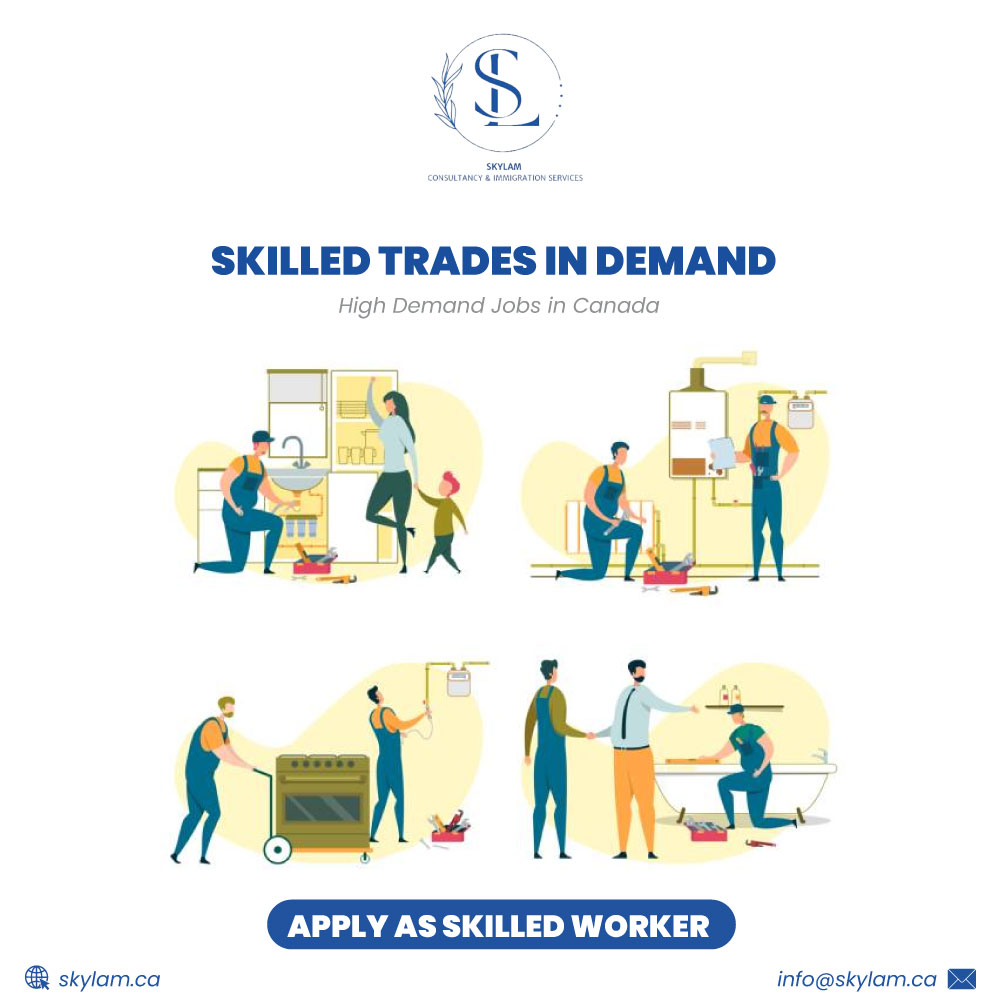
Canada continues to face a significant shortage of skilled trades workers, making this sector one of the most promising pathways for immigration in 2026. From construction and manufacturing to transportation and maintenance, skilled trades play a vital role in supporting Canada’s economy and infrastructure.
For individuals with hands-on experience and technical skills, immigration through skilled trades offers strong job prospects, competitive salaries, and fast-track pathways to permanent residency (PR).
In this comprehensive guide, Skylam Immigration Services explains the most in-demand skilled trades, immigration pathways, eligibility requirements, and expert strategies to help you succeed in Canada.
Why Skilled Trades Are in High Demand in Canada
Canada’s demand for skilled trades workers is driven by several key factors:
- Aging Workforce: Many experienced tradespeople are retiring
- Infrastructure Development: Ongoing construction and development projects across provinces
- Labor Shortages: Insufficient local workforce to meet demand
- Economic Growth: Expansion in industries like manufacturing, transportation, and energy
As a result, skilled trades workers are highly valued and often prioritized in immigration programs.
Top In-Demand Skilled Trades in 2026
Canada actively seeks professionals in the following trades:
1. Construction Trades
- Electricians
- Plumbers
- Carpenters
- Welders
- Heavy equipment operators
These roles are essential for infrastructure and housing development across provinces.
2. Industrial and Manufacturing Trades
- Machinists
- Industrial electricians
- HVAC technicians
- Maintenance mechanics
Manufacturing industries rely heavily on skilled workers to maintain productivity.
3. Transportation and Automotive Trades
- Truck drivers
- Automotive service technicians
- Diesel mechanics
With Canada’s vast geography, transportation workers are critical to supply chains.
4. Service and Maintenance Trades
- Painters
- Construction helpers
- Facility maintenance workers
These roles support both residential and commercial infrastructure.
5. Agriculture and Resource-Based Trades
- Farm equipment operators
- Agricultural technicians
- Forestry workers
Rural areas often face shortages in these occupations, creating immigration opportunities.
Immigration Pathways for Skilled Trades Workers
Canada offers multiple immigration pathways tailored for skilled trades professionals.
1. Federal Skilled Trades Program (FSTP)
The Express Entry system includes the Federal Skilled Trades Program, specifically designed for tradespeople.
Key Requirements:
- At least 2 years of full-time work experience in a skilled trade
- Job offer or certificate of qualification from a Canadian authority
- Language proficiency (CLB 4–5 minimum)
- Ability to perform job duties
Advantage: Lower language requirements compared to other programs.
2. Provincial Nominee Programs (PNPs)
Provinces actively invite skilled trades workers to meet labor shortages.
Examples:
- Ontario Skilled Trades Stream
- Alberta Opportunity Stream
- British Columbia Skilled Worker Stream
Benefits:
- Additional CRS points
- Higher chances of PR approval
- Opportunities for region-specific employment
3. Work Permit Pathway
Many skilled workers start with a temporary work permit:
- Employer-specific permits (often requiring LMIA)
- Open work permits in certain cases
Work experience gained in Canada helps applicants qualify for PR programs such as:
- Canadian Experience Class (CEC)
- Provincial Nominee Programs
4. Rural and Regional Immigration Programs
Smaller communities in Canada actively seek skilled trades workers through:
- Rural and Northern Immigration Pilot (RNIP)
- Regional immigration streams
These programs offer faster processing and lower competition compared to major cities.
Certification and Licensing Requirements
Many skilled trades require certification in Canada.
Important Points:
- Certification requirements vary by province
- Some trades are regulated, requiring licenses or apprenticeships
- Applicants may need to pass exams or complete additional training
Examples:
- Electricians and plumbers require provincial certification
- Automotive technicians may require trade certification
Language Requirements for Skilled Trades
Language requirements for skilled trades are generally lower compared to other immigration programs:
- English: IELTS or CELPIP
- French: TEF Canada or TCF Canada
Minimum levels:
- CLB 4–5 for Federal Skilled Trades Program
- Higher levels improve CRS scores and job opportunities
Salary Expectations for Skilled Trades
Skilled trades workers in Canada earn competitive salaries.
Average Annual Salaries (2026 Estimates):
- Electricians: CAD 55,000 – 85,000
- Plumbers: CAD 50,000 – 80,000
- Welders: CAD 45,000 – 75,000
- Truck drivers: CAD 50,000 – 90,000
- HVAC technicians: CAD 50,000 – 80,000
Salaries vary based on experience, province, and specialization.
Best Provinces for Skilled Trades Workers
Some provinces offer more opportunities for tradespeople:
- Ontario: High demand in construction and manufacturing
- Alberta: Energy sector and infrastructure projects
- British Columbia: Construction and housing development
- Saskatchewan and Manitoba: Agriculture and industrial jobs
Choosing the right province can increase employment chances and PR success.
Common Mistakes to Avoid
- Not verifying trade certification requirements
- Applying without a job offer when required
- Submitting incomplete work experience documents
- Ignoring provincial immigration opportunities
- Underestimating language requirements
Avoiding these mistakes can improve application success.
How Skylam Immigration Services Can Help
Skylam provides expert support for skilled trades immigration:
- Eligibility assessment for FSTP and PNP programs
- Job offer and LMIA guidance
- Trade certification advice
- Document preparation and verification
- PR application support
- Settlement guidance after arrival
With Skylam, applicants receive step-by-step guidance and personalized immigration strategies.
Benefits of Skilled Trades Immigration
- High demand and job security
- Competitive salaries
- Faster PR pathways
- Opportunities across multiple provinces
- Pathway to Canadian citizenship
Skilled trades offer a stable and rewarding career path in Canada.
Final Thoughts
In 2026, skilled trades remain one of the strongest immigration pathways to Canada. With labor shortages across industries, skilled workers have excellent opportunities to secure employment and permanent residency.
By understanding immigration programs, meeting certification requirements, and preparing strong applications, candidates can successfully build their future in Canada.
With Skylam Immigration Services, your journey becomes simpler, faster, and more successful.
Start Your Skilled Trades Immigration Journey Today
If you are a skilled trades professional planning to immigrate to Canada:
- Identify in-demand occupations
- Choose the right immigration pathway
- Prepare required certifications and documents
- Apply with expert guidance
Contact Skylam Immigration Services today to begin your journey toward a successful skilled trades career in Canada.