
Canadian Study Permit Requirements in 2026: Complete Guide
Canada remains a popular destination for international students who want to pursue post-secondary education in a Canadian institution. However, studying in Canada requires more than simply receiving admission from a school.
For most international students, obtaining a Canadian study permit is an important part of the process. Applicants need to meet eligibility requirements, obtain the appropriate admission documents, demonstrate that they have enough money to support themselves, and satisfy the immigration officer that they meet Canada's temporary resident requirements.
The Canadian study permit system has also seen important changes in 2026. For example, most study permit applicants need a Provincial Attestation Letter (PAL) or Territorial Attestation Letter (TAL), while certain students are exempt. Starting January 1, 2026, students entering eligible degree-granting master's or doctoral programs at public designated learning institutions do not need a PAL or TAL. (canada.ca)
Financial requirements have also been updated. For applications submitted on or after September 1, 2026, applicants outside Quebec generally need to demonstrate CAD $23,448 for one person for living expenses, excluding tuition and transportation. The amount increases according to the number of family members accompanying the applicant. (canada.ca)
This guide explains the main Canadian study permit requirements in 2026, the documents students may need, financial planning, PAL/TAL requirements, and common reasons an application may be refused.
What Is a Canadian Study Permit?
A study permit is an official document issued by Canada's immigration authorities that allows a foreign national to study in Canada under the conditions of the permit.
It is important to understand the difference between a study permit and a student visa.
A study permit authorizes eligible foreign nationals to study in Canada. Depending on the student's nationality and circumstances, they may also need a temporary resident visa or an electronic travel authorization to travel to Canada.
A study permit itself is not necessarily the document used for travel.
Students should therefore understand both their study permit requirements and the entry document requirements that apply to them.
Who Needs a Study Permit?
Most foreign nationals who want to study in Canada for more than six months need a study permit.
There are some exceptions, including specific short-term study situations and other categories established by Canadian immigration rules.
The Government of Canada's study permit eligibility tool can help applicants determine whether they need a study permit based on their circumstances and intended studies. (canada.ca)
Students should determine their status before making travel arrangements.
The Basic Canadian Study Permit Requirements
To qualify for a study permit, applicants generally need to satisfy several important requirements.
These include:
-
Acceptance from a Designated Learning Institution
-
Proof of sufficient financial support
-
A valid passport or travel document
-
A Provincial Attestation Letter or Territorial Attestation Letter when required
-
Meeting health requirements where applicable
-
Meeting criminality and security requirements
-
Convincing the immigration officer that the applicant will leave Canada when the study permit expires
-
Providing other documents required for the individual application
The Government of Canada lists enrollment at a DLI, sufficient funds, compliance with the law, health requirements where applicable, and the requirement to satisfy an officer that the applicant will leave Canada at the end of the authorized period among the study permit eligibility requirements. (canada.ca)
Each applicant's circumstances are different, so the exact document checklist can vary.
1. Letter of Acceptance From a Designated Learning Institution
One of the most important Canadian study permit requirements is an official Letter of Acceptance (LOA).
Applicants generally need an LOA from a Designated Learning Institution (DLI).
A DLI is a Canadian school that has been approved by the relevant provincial or territorial government to host international students.
The Government of Canada maintains a list of designated learning institutions. Students planning post-secondary studies should confirm that their institution is included on the official DLI list. (canada.ca)
Receiving admission from a school is an important milestone, but it does not guarantee study permit approval.
The study permit application is assessed separately by Canadian immigration authorities.
What Should Students Check Before Choosing a DLI?
Students should not choose a school based only on its name or the availability of admission.
Before making a decision, applicants should consider:
-
Whether the institution is a DLI
-
The specific program
-
Program duration
-
Tuition fees
-
Location
-
Living costs
-
Academic requirements
-
Career relevance
-
Whether the program is eligible for a post-graduation work permit, if that is an important consideration
-
Whether the program fits the student's previous education and career plans
The DLI list also identifies information about programs that may be eligible for the Post-Graduation Work Permit Program. However, students should verify the specific program rather than assuming that every program at a DLI qualifies. (canada.ca)
2. Provincial Attestation Letter or Territorial Attestation Letter
For many study permit applicants, the Provincial Attestation Letter (PAL) or Territorial Attestation Letter (TAL) is another important requirement.
In most cases, students need a PAL/TAL when applying for a study permit.
The process for obtaining it generally involves the educational institution and the province or territory.
Students should follow their school's instructions for obtaining the appropriate attestation letter.
Who Is Exempt From PAL/TAL in 2026?
There are important exemptions.
Starting January 1, 2026, students applying for an eligible degree-granting master's or doctoral program at a public DLI do not need a PAL/TAL.
Other exemptions can apply to certain students, including primary and secondary school students and specific groups identified by IRCC. (canada.ca)
Applicants should not assume they are exempt simply because they are applying for a postgraduate program.
The exemption specifically applies to eligible degree-granting master's or doctoral programs at public DLIs.
Students studying in Quebec also need to follow Quebec's specific requirements. In many cases, the Quebec Acceptance Certificate (CAQ) is relevant.
3. Proof of Financial Support
Financial capacity is one of the most important parts of a Canadian study permit application.
Applicants must demonstrate that they have enough money to pay for:
-
Tuition
-
Living expenses
-
Transportation to and from Canada
-
Living expenses for accompanying family members, if applicable
The Government of Canada states that applicants must show enough financial resources for the first year of their studies and, for programs longer than one year, explain how they plan to finance the full duration of their studies. (canada.ca)
This is important because students should not plan to rely on future employment in Canada as the primary evidence that they can afford their studies.
The financial assessment looks at whether the applicant has sufficient resources available.
Updated Financial Requirement From September 1, 2026
The financial requirement for living expenses is updated periodically.
For study permit applications submitted on or after September 1, 2026, the required amount for one person, excluding tuition and transportation, is:
| Number of family members | Required annual living funds |
|---|---|
| 1 | CAD $23,448 |
| 2 | CAD $29,192 |
| 3 | CAD $35,888 |
| 4 | CAD $43,572 |
| 5 | CAD $49,419 |
| 6 | CAD $55,736 |
| 7 | CAD $62,054 |
| Each additional person | CAD $6,318 |
These figures apply to provinces and territories other than Quebec and are for living expenses only. Tuition and transportation costs are additional. (canada.ca)
For example, a single student applying after September 1, 2026 needs to demonstrate CAD $23,448 for annual living expenses, in addition to the money needed for tuition and transportation.
Applicants should always check the current financial table before submitting their application because the required amounts can be updated.
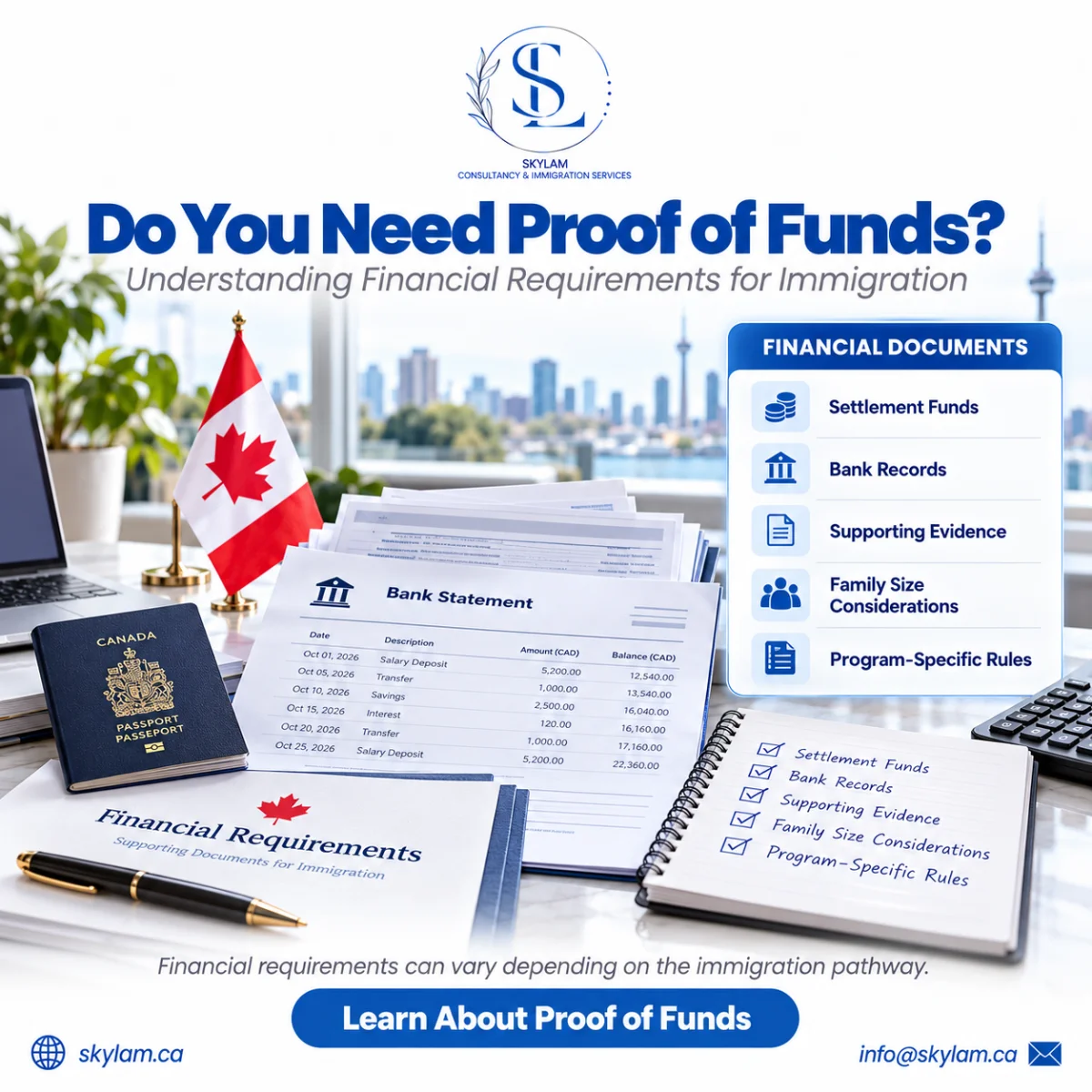
4. What Documents Can Prove Your Funds?
There is no single financial document that every applicant must submit.
IRCC provides examples of documents that may help demonstrate financial capacity.
These can include:
-
Bank statements
-
Proof of tuition payment
-
Proof of a student or education loan
-
Scholarship documentation
-
Guaranteed Investment Certificates from Canadian financial institutions
-
Employment documents
-
Pay statements
-
Financial support letters
-
Evidence of income
-
Documents showing rental income
-
Other evidence demonstrating available funds
The exact documents needed depend on the applicant's circumstances.
The Government of Canada states that bank statements may include statements for Canadian or foreign accounts covering the previous six months, together with documentation showing the source of income or funds. (canada.ca)
Why the Source of Funds Matters
Showing a large bank balance without explaining where the money came from may not provide a complete picture of an applicant's financial situation.
Applicants should be able to provide credible evidence showing how their studies will be funded.
For example, if parents are paying for the student's education, the application may need documents demonstrating the relationship and the parent's financial capacity.
If the student is receiving a scholarship, the scholarship documentation should clearly identify the amount and duration of the funding.
The goal is to demonstrate that the funds are genuinely available to support the student's studies.
5. Proof of Identity
Applicants need valid identity documents.
Generally, this includes a valid passport or travel document.
Applicants applying online need to upload the required passport information.
The Government of Canada also lists photograph requirements for study permit applications, although biometric procedures can affect whether physical photographs are required in a particular case. (canada.ca)
Applicants should follow the current instructions provided during their application rather than relying on an old checklist.
6. Letter of Explanation
A letter of explanation is recommended as part of the study permit application.
The Government of Canada says applicants should explain why they want to study in Canada and that they understand their responsibilities as an international student. (canada.ca)
A good explanation should be clear and consistent with the rest of the application.
The student should be able to explain:
-
Why this program?
-
Why this institution?
-
Why Canada?
-
How does the program relate to previous education?
-
How does it fit future career plans?
-
How will the studies be financed?
-
What is the applicant's overall study plan?
The explanation should reflect the applicant's genuine circumstances.
It should not contain exaggerated claims or information that conflicts with the application documents.
7. Academic Background
Although the exact documents vary by application, students should be prepared to provide evidence of their previous education.
This can include:
-
Academic transcripts
-
Certificates
-
Diplomas
-
Degrees
-
Graduation documents
-
Other relevant academic records
The student's chosen program should also make sense in the context of their academic and professional background.
For example, a significant change in academic direction does not automatically mean that a study permit will be refused, but the applicant should be able to explain the reason for the change clearly.
A logical study plan can help an officer understand the purpose of the proposed education.
8. Medical Examination
Some applicants may need to complete a medical examination.
Whether a medical exam is required can depend on factors such as:
-
Intended length of stay
-
Recent residence or travel history
-
Intended occupation or field of work
-
Other circumstances
The Government of Canada states that applicants may need a medical exam if they plan to stay in Canada for more than six months, have recently spent time in certain countries, or intend to work in certain occupations where public health protection is relevant. (canada.ca)
Applicants should check the current requirements applicable to their situation.
9. Police Certificate
A police certificate may be required depending on the applicant's circumstances and visa office instructions.
Not every applicant will necessarily need one.
If a police certificate is required, obtaining it early can help avoid unnecessary delays.
The Government of Canada recommends checking the instructions that apply to the applicant's country or region. (canada.ca)
10. You Must Convince the Officer You Will Leave Canada
One of the most important Canadian study permit requirements is demonstrating that the applicant will leave Canada when their authorized stay ends, unless they obtain another legal status that allows them to remain.
The Government of Canada explicitly lists this as part of study permit eligibility. (canada.ca)
This does not mean that students cannot have future plans involving Canada.
Rather, the study permit is a temporary status, and applicants must satisfy the officer that they understand and will comply with the conditions of that temporary status.
This is why an applicant's overall circumstances, study plan and explanation need to be credible and consistent.
Choosing the Right Program
Choosing a Canadian program should be based on more than admission availability.
Students should consider:
Academic Fit
Does the program connect with your previous studies?
Career Relevance
Can you explain how the program supports your career goals?
Financial Feasibility
Can you realistically afford tuition and living expenses?
Institution
Is the institution a DLI?
Program Eligibility
If post-graduation work opportunities are important to you, have you checked whether the specific program meets the applicable requirements?
Location
Have you considered housing, transportation and living costs in the province or city?
A carefully considered program choice can make the overall study plan easier to explain.
Applying for a Canadian Study Permit
Most applicants outside Canada generally apply for a study permit before travelling to Canada.
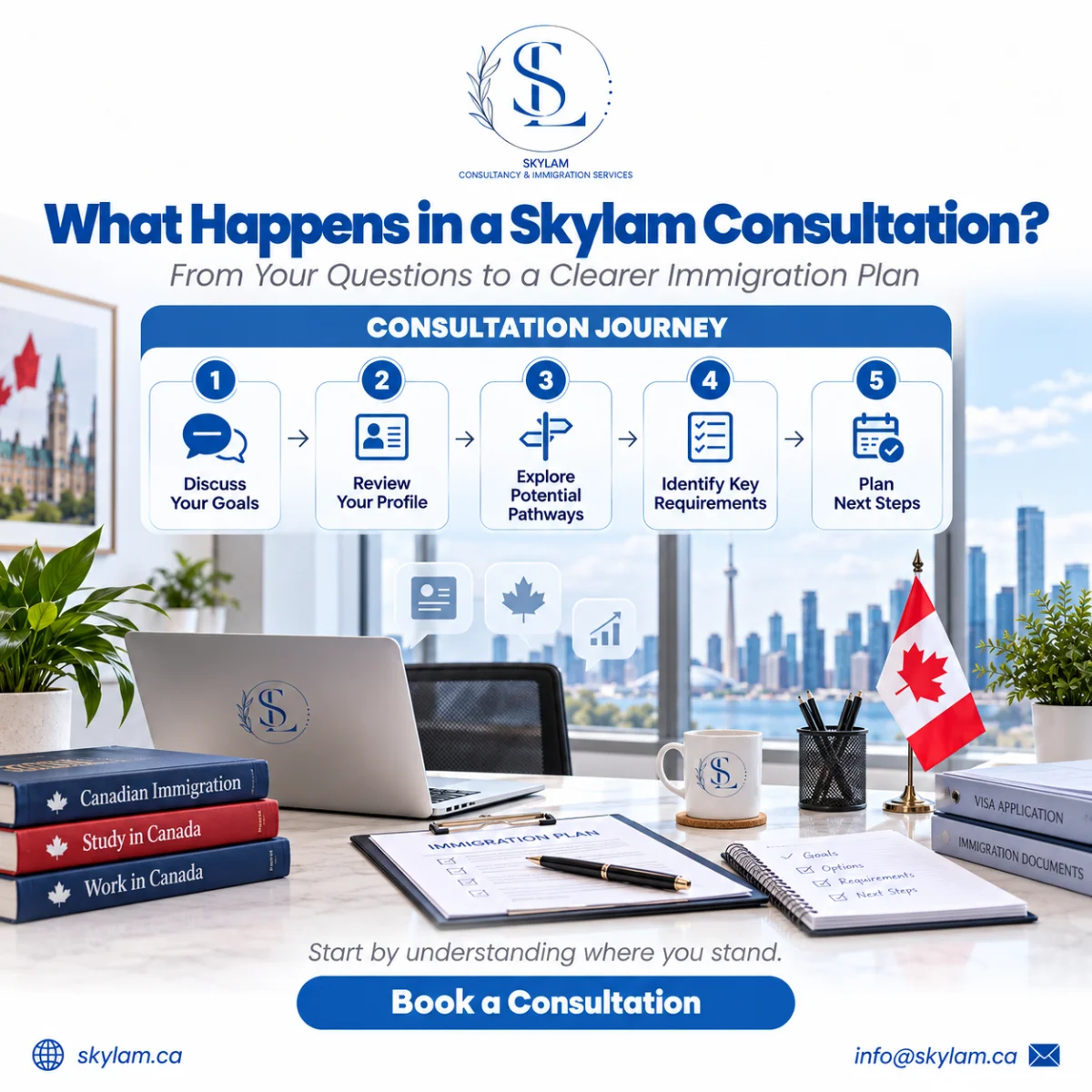
The basic process can be summarized as:
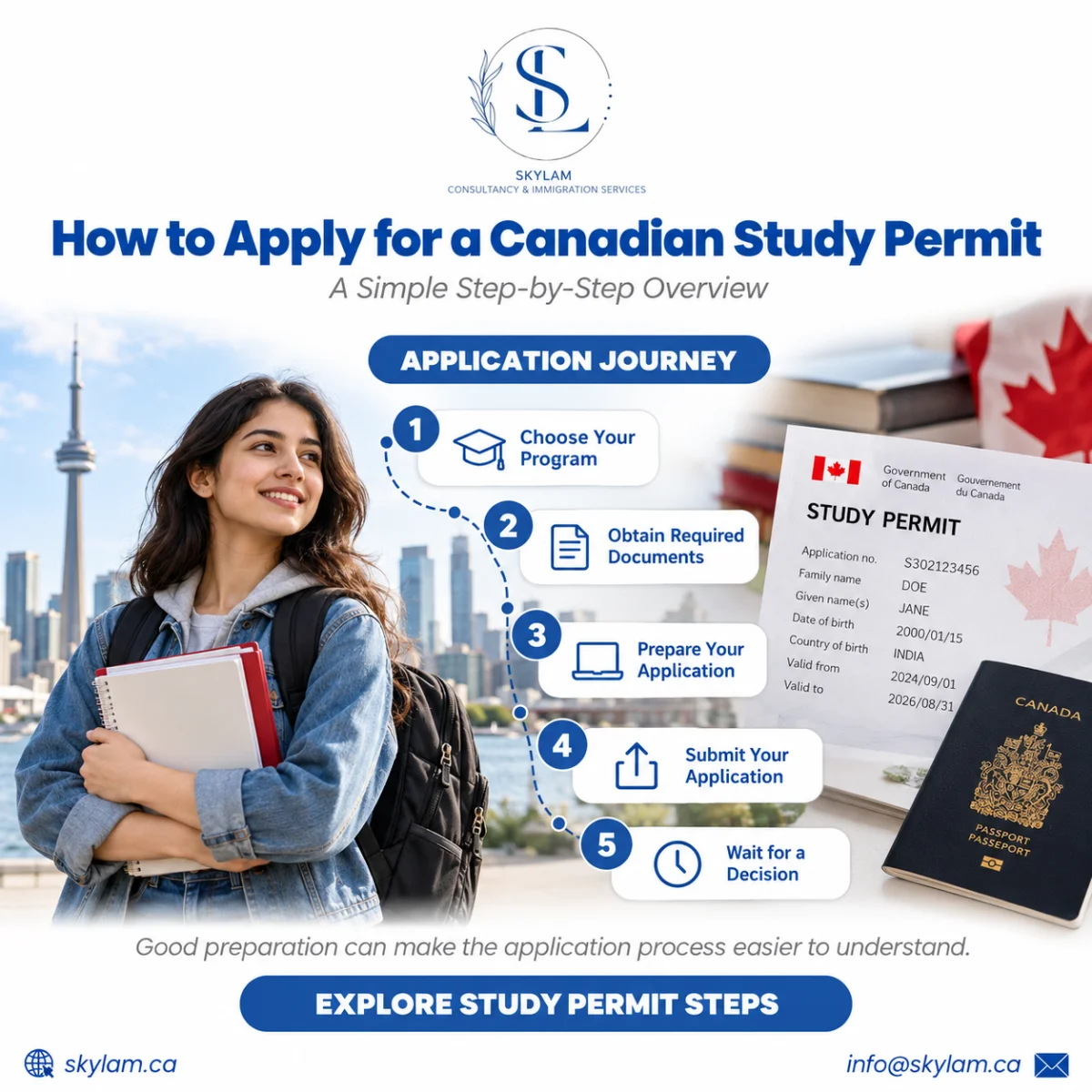
Choose a program → Apply to a DLI → Receive LOA → Obtain PAL/TAL if required → Prepare finances → Prepare documents → Submit study permit application → Complete biometrics/medical steps if required → Wait for a decision
The exact process can differ based on the applicant's location and circumstances.
The Government of Canada generally requires applicants to submit the LOA and PAL/TAL where applicable with the study permit application. (canada.ca)
What Happens After Applying?
After submitting the application, IRCC may request additional information or documents.
Depending on the application, the applicant may need to complete:
-
Biometrics
-
Medical examination
-
Police certificate
-
Additional documentation
-
Other verification steps
Applicants should monitor their application account and respond to requests within the specified timeframe.
If the application is approved, IRCC provides instructions concerning travel and the study permit.
The permit itself is generally issued when the student arrives in Canada, subject to the applicable process and entry requirements.
Common Reasons a Study Permit Application May Be Refused
No single factor guarantees approval or refusal.
However, IRCC identifies circumstances that may lead to refusal.
An application may be refused if the applicant does not:
-
Have a valid letter of acceptance
-
Demonstrate sufficient financial support
-
Pass a required medical examination
-
Convince the officer that the main purpose in Canada is to study
-
Convince the officer that they will leave Canada at the end of the study period
These are specifically identified by the Government of Canada in its study permit guidance. (canada.ca)
This is why submitting a large number of documents is not necessarily the same as submitting a strong application.
The documents need to support a coherent and credible application.
Common Study Permit Mistakes to Avoid
Choosing a Program Without a Clear Reason
Students should understand why they selected the program.
A program that appears unrelated to their previous education or career plans may require a stronger explanation.
Underestimating Financial Requirements
Tuition is only one part of the cost.
Students also need to plan for:
-
Housing
-
Food
-
Transportation
-
Health-related costs where applicable
-
Study materials
-
Personal expenses
-
Return transportation
The official financial requirement is a minimum immigration requirement, not necessarily a complete estimate of every student's actual cost of living.
Using Unclear Financial Documents
Students should be able to explain the source and availability of their funds.
Ignoring PAL/TAL Requirements
Applicants should determine whether they need a PAL/TAL before submitting the application.
An exemption should also be supported with the appropriate evidence where required.
Using an Outdated Financial Figure
Financial requirements are updated periodically.
For applications submitted from September 1, 2026, the living-expense amount for one person outside Quebec is CAD $23,448, excluding tuition and transportation. (canada.ca)
Treating Admission as Study Permit Approval
Admission to a Canadian school does not guarantee that IRCC will approve a study permit.
The school decides whether to admit the student.
Canadian immigration authorities decide whether the applicant meets the study permit requirements.
Study Permit and Future Permanent Residence
Many students are interested in Canada because they hope to build a long-term future there.
However, applicants should understand the distinction between temporary study status and permanent residence.
A study permit is not a permanent residence permit.
After completing studies, some graduates may have options to obtain work authorization or pursue an immigration pathway if they meet the requirements of the program available to them.
However, eligibility depends on the specific program, the student's circumstances and the immigration rules in effect at that time.
Therefore, students should choose their educational program primarily as a genuine academic and career decision while also understanding the immigration rules that may apply after graduation.
Planning Your Canadian Study Permit Application in 2026
Students preparing an application in September 2026 should consider creating a timeline.
Step 1: Research Your Education Goal
Identify your intended field, level of study and career objective.
Step 2: Research DLIs
Confirm that your chosen institution is a designated learning institution.
Step 3: Review the Program
Check program length, tuition, admission requirements and other relevant details.
Step 4: Apply for Admission
Submit the required documents to the institution.
Step 5: Receive Your LOA
You generally need the Letter of Acceptance for your study permit application.
Step 6: Check PAL/TAL Requirements
Determine whether your situation requires a provincial or territorial attestation letter.
Step 7: Plan Your Finances
Calculate:
Tuition + living expenses + transportation + family costs, if applicable
For applications submitted on or after September 1, 2026, the official minimum living-expense amount outside Quebec starts at CAD $23,448 for one applicant, excluding tuition and transportation. (canada.ca)
Step 8: Prepare Your Explanation
Make sure your study plan is logical and consistent.
Step 9: Prepare Supporting Documents
Organize academic, financial, identity and other required documentation.
Step 10: Submit the Application Carefully
Review every section before submission.
How Skylam Immigration Services Can Help
Planning a Canadian study permit application can involve many separate decisions.
Students may have questions about:
-
Choosing an appropriate Canadian program
-
Understanding DLI requirements
-
Study permit eligibility
-
PAL/TAL requirements
-
Financial documentation
-
Study plans
-
Supporting documents
-
Application preparation
-
Common mistakes
-
Future immigration planning
Skylam Immigration Services can provide support to applicants who want to better understand the Canadian immigration process and prepare their application based on their individual circumstances.
The purpose of professional guidance should be to help applicants understand the applicable requirements and organize their application accurately.
No immigration service can guarantee that a study permit will be approved.
Frequently Asked Questions About Canadian Study Permits
How much money do I need for a Canadian study permit in 2026?
For applications submitted on or after September 1, 2026, a single applicant studying outside Quebec generally needs to demonstrate CAD $23,448 for one year of living expenses, excluding tuition and transportation. Additional funds are required for tuition and transportation. (canada.ca)
Do I need a PAL or TAL?
Most study permit applicants need a Provincial Attestation Letter or Territorial Attestation Letter, but there are exemptions.
For example, eligible master's and doctoral students attending a public DLI are exempt from the PAL/TAL requirement beginning January 1, 2026. (canada.ca)
Do I need an LOA to apply for a study permit?
Generally, yes. Applicants need a Letter of Acceptance from a Designated Learning Institution. (canada.ca)
Can I study in Canada without a study permit?
Some people can study without a study permit under specific exemptions. For example, certain short-term studies may not require a permit.
Applicants should use the official IRCC study permit tool to determine whether their specific situation requires a permit. (canada.ca)
Can international students work in Canada?
International students may be allowed to work under the conditions of their study permit and applicable Canadian rules. However, students should not base their study permit financial plan on the assumption that future employment will cover all expenses.
The initial application requires proof that the applicant has sufficient funds to support themselves without relying on work in Canada. (canada.ca)
Does admission to a Canadian university guarantee a study permit?
No.
Admission and immigration approval are separate decisions.
A student may receive an LOA from a Canadian institution but still need to satisfy the study permit requirements.
Can I apply for a study permit from outside Canada?
Generally, applicants should apply before coming to Canada, although specific situations allow some people to apply from inside Canada or at a port of entry. (canada.ca)
Is a study permit the same as permanent residence?
No.
A study permit is temporary authorization to study in Canada. Permanent residence is a separate immigration status with its own eligibility requirements.
Final Thoughts
Obtaining a Canadian study permit requires more than receiving an admission letter.
Students need to demonstrate that they have been accepted by an appropriate Designated Learning Institution, provide a PAL/TAL when required, demonstrate sufficient financial support, provide valid identity documents and satisfy the immigration officer that they meet Canada's study permit requirements.
For students applying from September 1, 2026 onward, the updated financial requirement is particularly important. Outside Quebec, a single applicant generally needs to demonstrate CAD $23,448 in living expenses for the first year, in addition to tuition and transportation costs. (canada.ca)
Students should also remember that requirements can differ depending on their program, province, family situation and personal circumstances.
The best approach is to begin with a clear education plan, select a suitable institution and program, organize genuine financial evidence, prepare the required documents and carefully review the current immigration requirements before submitting an application.
If you are planning to study in Canada in 2026, preparation is one of the most important parts of the process.
Choose carefully. Prepare accurately. Understand the requirements before you apply.
This article is for general informational purposes and does not constitute legal advice or guarantee study permit approval. Canadian immigration rules, financial requirements and program policies can change. Applicants should verify the current requirements applicable to their individual circumstances before submitting an application.