
Canada Announces Additional PR Processing Capacity for Workers, Families and Humanitarian Applicants in 2027

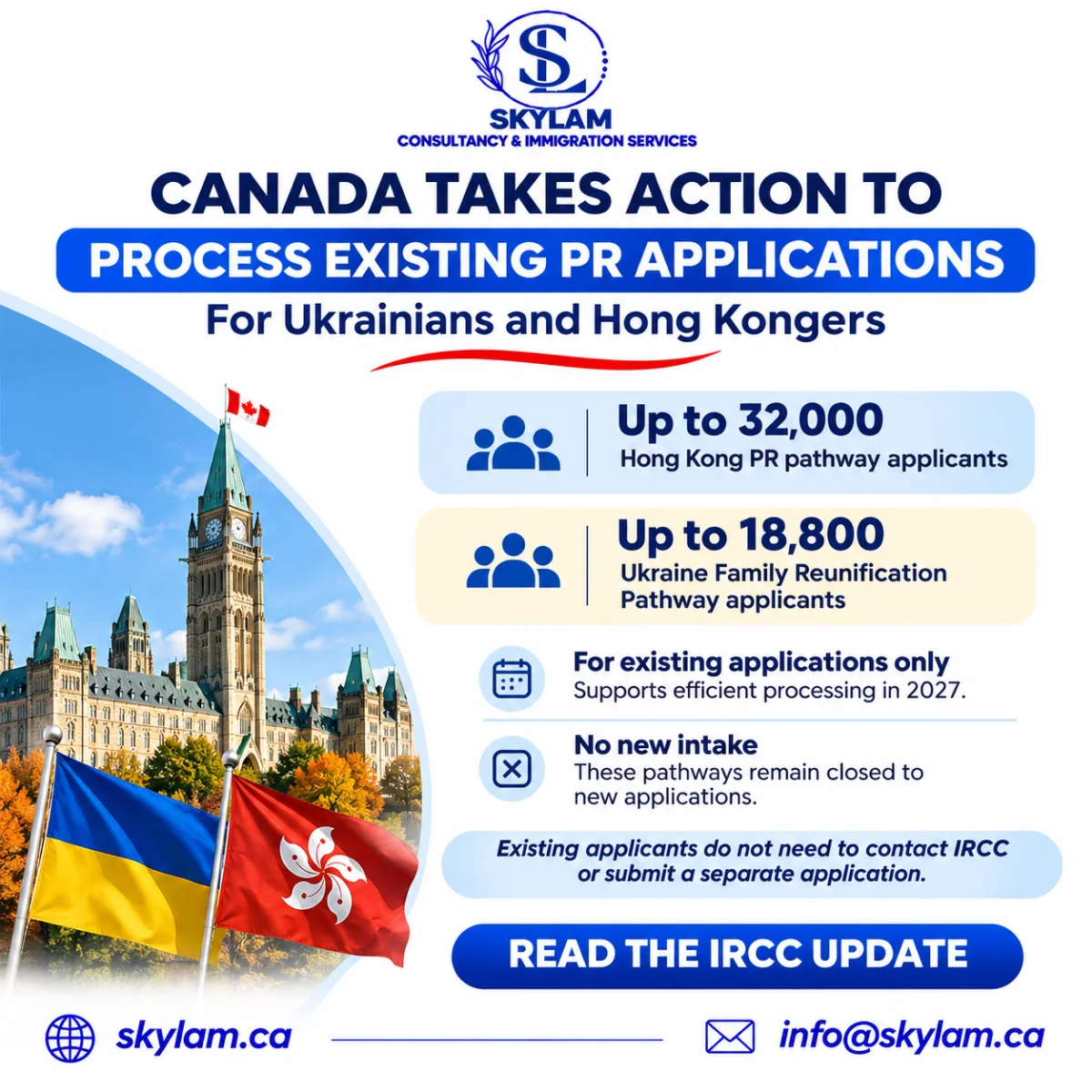
Immigration, Refugees and Citizenship Canada (IRCC) has announced additional permanent residence processing capacity for selected groups of people already living in Canada.
The new time-limited measure is intended to support eligible workers, accompanying family members, in-Canada family sponsorship applicants, and individuals already found eligible for permanent residence on humanitarian and compassionate (H&C) grounds.
The government has identified three important applicant groups:
-
Up to 100,000 workers and eligible family members.
-
Up to 45,000 spouses, common-law partners and dependent children living in Canada.
-
Up to 12,600 individuals already found eligible for permanent residence on humanitarian and compassionate grounds.
The measure forms part of Canada's broader immigration planning for 2027 and aims to improve processing efficiency, retain established workers and address existing application inventories.
Importantly, the measure does not create new immigration programs or reopen previously closed pathways. Existing applicants do not need to submit a separate application or contact IRCC solely to benefit from these additional spaces.
1. What Is Canada's Time-Limited Permanent Residence Measure?
Canada's time-limited permanent residence measure provides additional admissions capacity in 2027 for eligible people already living in the country.
Rather than creating a new immigration pathway open to all temporary residents, IRCC intends to use identified existing economic, family and humanitarian immigration categories.
The initiative is designed to support two broader groups:
Workers cohort: Eligible workers and accompanying family members, with additional selection capacity involving provinces and territories.
Humanitarian cohort: Certain existing humanitarian and family-related applicants who have been waiting for permanent residence decisions.
The November 10 and November 12 announcements provide further information about these groups and how the measure will be implemented.
2. Key Applicant Groups and Planned Capacity
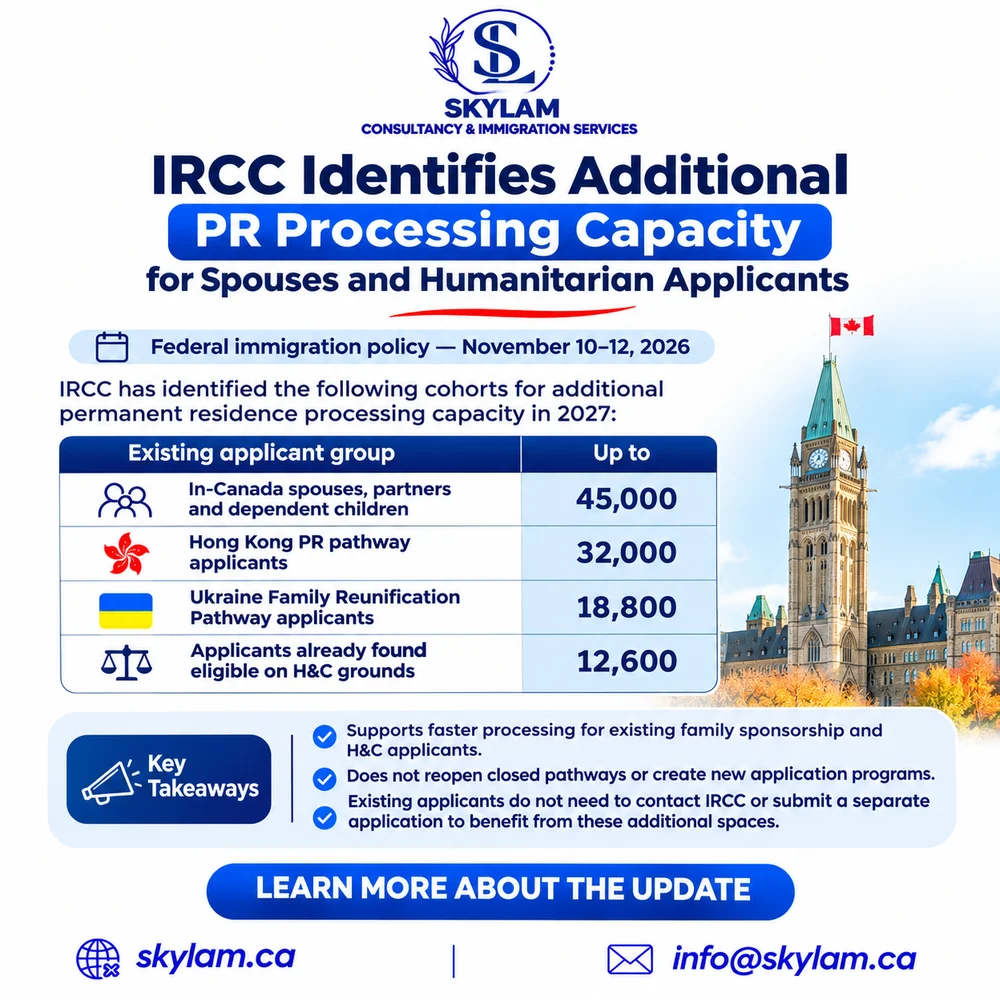
| Applicant category | Up to |
|---|---|
| Workers and eligible family members | 100,000 |
| In-Canada spouses, common-law partners and dependent children | 45,000 |
| Applicants already found eligible on H&C grounds | 12,600 |
These figures represent planned maximum capacity for identified cohorts.
They should not be added together and advertised as a newly established combined permanent residence target. The categories belong to different components of the broader time-limited measure.
The figures also do not guarantee individual application approval.
3. Up to 100,000 Workers and Eligible Family Members
IRCC has announced that the federal government will collaborate with provinces and territories to help qualifying workers already established in Canadian communities transition to permanent residence.
This component could support up to 100,000 eligible workers and accompanying family members in 2027.
Additional Provincial Nomination Capacity
Participating provinces and territories will be offered additional Provincial Nominee Program (PNP) allocations.
Provincial governments may decide how much of the additional capacity they wish to use to retain qualifying workers who are meeting regional labour-market needs.
IRCC indicated on November 12 that these additional allocations are intended to be used by March 31, 2027, to support permanent residence transitions during 2027.
Selected Existing Federal Immigration Applications
Provinces and territories may also identify workers in their jurisdictions who already have permanent residence applications awaiting a decision.
These may include applicants under the Atlantic Immigration Program and selected existing federal economic immigration programs.
Certain identified programs are closed to new applications.
The additional capacity does not reopen those programs.
Who May Benefit?
The worker component focuses on people already established in Canadian communities whose circumstances align with the identified immigration pathways and regional selection arrangements.
Holding a work permit or being employed in Canada does not automatically make someone eligible.
Provincial and federal program requirements continue to apply.
4. Up to 45,000 In-Canada Family Sponsorship Applicants
Another important part of the measure concerns eligible family members of Canadian citizens and permanent residents.
IRCC has identified additional processing capacity for up to 45,000:
-
Spouses.
-
Common-law partners.
-
Dependent children.
These individuals are already living in Canada and are included in the relevant family sponsorship applicant group.
Why This Matters for Families
Family sponsorship applicants may face uncertainty while waiting for a permanent residence decision.
Additional admissions capacity is intended to support the processing of eligible cases and provide greater certainty for families already established in Canada.
However, the announcement does not guarantee that every pending sponsorship application will receive a decision within a particular period.
Individual applications remain subject to eligibility, admissibility and processing requirements.
5. Up to 12,600 Humanitarian and Compassionate Applicants
IRCC has also identified up to 12,600 individuals who have already been found eligible for permanent residence on humanitarian and compassionate grounds.
Humanitarian and compassionate considerations may apply where an individual requests exceptional consideration under Canadian immigration law.
What Does Already Found Eligible Mean?
This component focuses on applicants who have already received a favourable eligibility assessment under the relevant H&C process.
Some applicants may still need to complete additional requirements before permanent residence can be granted.
The measure is not a new humanitarian application program available automatically to everyone living in Canada.
Does Every Pending H&C Applicant Qualify?
No.
IRCC specifically identifies individuals already found eligible for permanent residence on H&C grounds.
Someone with a newly submitted or still-pending H&C application should not assume automatic inclusion.
6. Do Applicants Need to Submit a New Application?
No.
IRCC explicitly states that applicants do not need to do anything or contact the department solely for their existing applications to be processed using the additional capacity.
The measure is intended to operate through the identified application categories and existing administrative processes.
Applicants should continue to follow normal IRCC instructions, including responding to requests for supporting documents and keeping contact information current.
There is no separate general application form created by this announcement.
7. Does This Measure Reopen Closed Immigration Pathways?
No.
IRCC confirms that the measure does not create new programs or reopen pathways that have already closed.
This is particularly important because some identified applicants have applied through programs that are no longer accepting new applications.
Additional processing capacity for outstanding cases does not establish new eligibility for individuals who did not apply under those programs.
Applicants who are not covered by an existing eligible application should assess other currently available immigration pathways.
8. Why Is Canada Introducing Additional PR Capacity?
The federal government has identified several objectives.
Retaining Established Workers
The worker component is intended to help provinces and territories retain qualifying individuals who are already contributing to their communities and local economies.
Supporting Family Reunification
Additional family sponsorship capacity may help more eligible spouses, partners and children complete the permanent residence process.
Addressing Existing Application Inventories
Some applicants have experienced extended processing periods.
Additional admissions capacity is intended to help IRCC finalize more eligible applications.
Supporting Immigration System Efficiency
Because the identified applicants are already living in Canada, their transition to permanent residence does not necessarily represent an equivalent increase in new arrivals.
The measure forms part of the government's wider approach to managing immigration levels and existing application inventories.
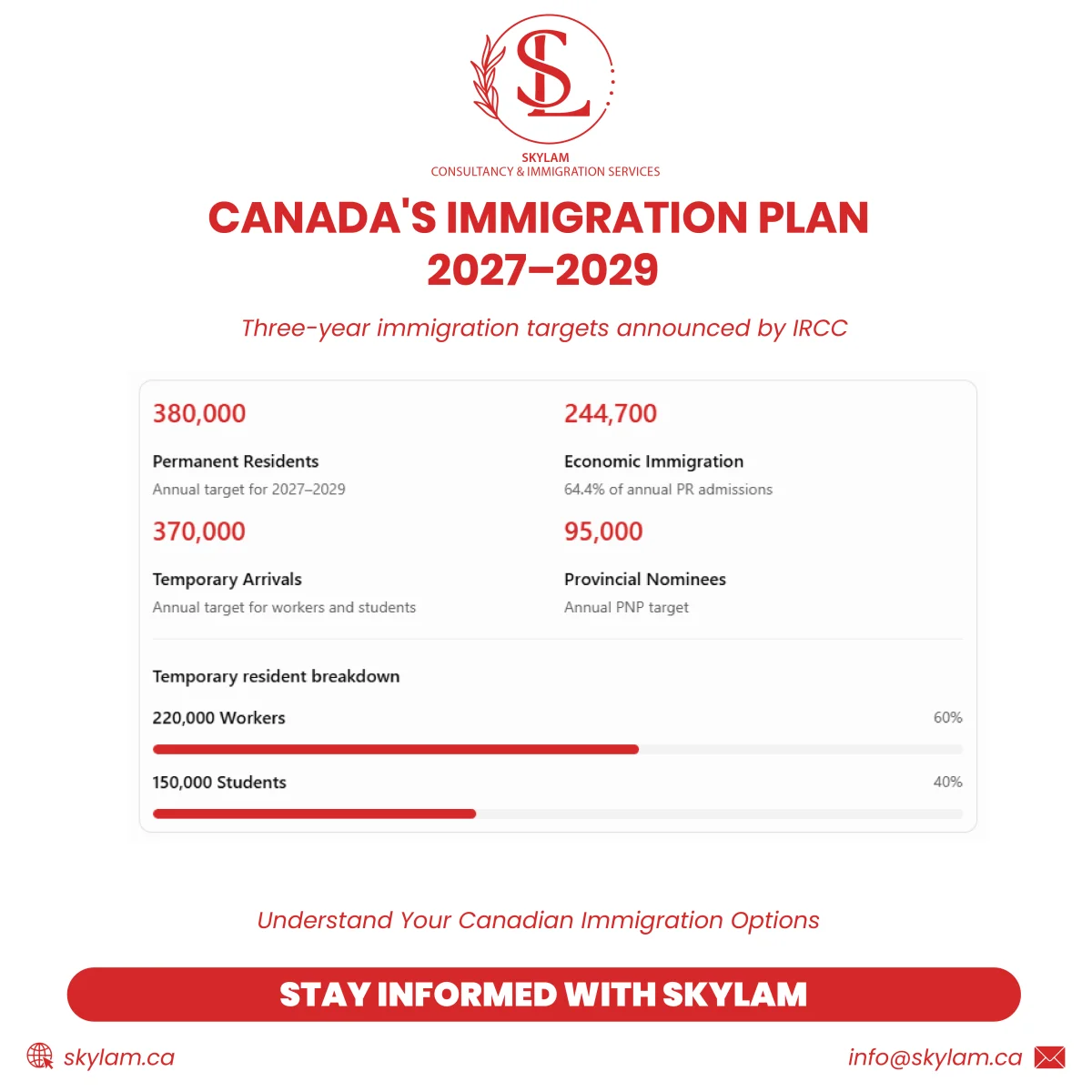
9. How Does the Measure Relate to Canada's 2027–2029 Immigration Levels Plan?
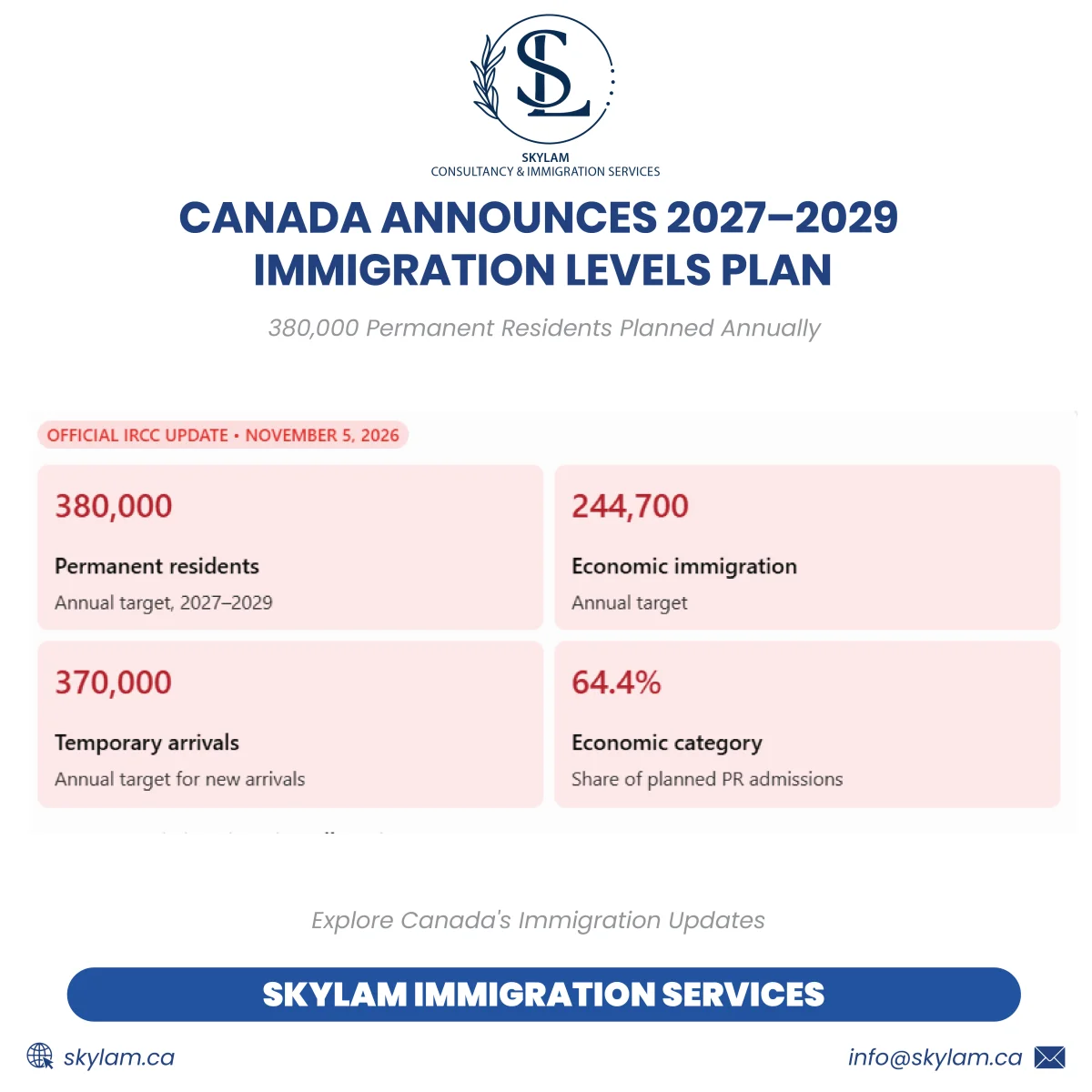
Canada's 2027–2029 Immigration Levels Plan establishes annual permanent resident admission targets of 380,000.
The time-limited measure provides additional processing and admissions capacity in 2027 for identified eligible applicants already living in Canada.
It should not be confused with a permanent annual intake or a universally available temporary-to-permanent residence pathway.
The worker and humanitarian components are separate elements of the broader measure.
10. What Should Existing Applicants Do?
IRCC does not require an additional application or a special request to be considered through the announced capacity.
Nevertheless, applicants should continue meeting their normal obligations.
Recommended administrative steps include:
-
Monitor official IRCC correspondence.
-
Keep contact information current.
-
Respond to requests for additional information or documentation.
-
Maintain valid immigration status where required.
-
Review official updates affecting the relevant existing application pathway.
Applicants should avoid submitting duplicate applications solely because of this announcement.
11. Frequently Asked Questions
Is Canada opening a new PR pathway for 100,000 workers?
No. The worker component uses additional capacity and identified immigration pathways in collaboration with provinces and territories.
Are 45,000 new spousal sponsorship applications being accepted?
The announcement identifies additional processing capacity for up to 45,000 eligible in-Canada family members. It is not the announcement of a new 45,000-person application intake.
Does every H&C applicant qualify for the 12,600 additional spaces?
No. The identified cohort consists of individuals already found eligible for permanent residence on humanitarian and compassionate grounds.
Do applicants need to contact IRCC?
No. IRCC states that applicants do not need to contact the department solely to benefit from these additional processing spaces.
Can someone apply just because they currently have a Canadian work permit?
No. Eligibility depends on the identified immigration pathways and applicable selection arrangements.
Is permanent residence guaranteed under this measure?
No. Applications remain subject to relevant program requirements, admissibility assessments and IRCC decisions.
How can I verify a Canadian immigration consultant?
The College of Immigration and Citizenship Consultants (CICC) maintains a Public Register for checking immigration consultant registration.
Visit: https://register.college-ic.ca
Conclusion
IRCC's November 2026 announcements identify additional permanent residence capacity for eligible workers, in-Canada family members and humanitarian and compassionate applicants.
The planned measure includes up to 100,000 workers and eligible family members, 45,000 in-Canada spouses, partners and dependent children, and 12,600 people already found eligible on H&C grounds.
These measures aim to retain established workers, support families and reduce outstanding application inventories.
However, they do not establish new immigration programs, reopen closed pathways or guarantee permanent residence.
Existing applicants do not need to submit a separate application or contact IRCC solely to benefit from these additional processing spaces.
Stay Informed with Skylam Consultancy & Immigration Services
Understanding Canada's changing immigration policies can help applicants make informed decisions about their permanent residence plans.
Skylam Consultancy & Immigration Services provides information and guidance about Canadian immigration pathways and relevant application requirements.
Website: https://skylam.ca
Email: info@skylam.ca
Verify Your Immigration Consultant
Before obtaining Canadian immigration services, verify your consultant's registration through the official College of Immigration and Citizenship Consultants (CICC) Public Register:
https://register.college-ic.ca