
Canada Express Entry Changes 2026: New CRS Points for Canadian Work Experience and High-Wage Job Offers
Introduction: Canada Is Changing How Express Entry Ranks Skilled Workers
Canada is updating its Express Entry system to place greater emphasis on skilled workers who can contribute to the country's economy and address labour market needs. On October 16, 2026, Immigration, Refugees and Citizenship Canada (IRCC) announced changes to the Comprehensive Ranking System (CRS), including new points for eligible Canadian work experience and qualifying job offers in high-wage occupations.
The changes are scheduled to take effect on November 3, 2026, marking an important update for people planning to immigrate to Canada through Express Entry.
Under the revised system, candidates may benefit from eligible Canadian work experience or a qualifying job offer in an eligible high-wage occupation. IRCC is also changing how job offers are assessed by removing the requirement for a Labour Market Impact Assessment (LMIA) for certain Express Entry purposes.
These updates are intended to make the selection process more closely aligned with Canada's economic priorities while maintaining safeguards against fraudulent job offers.
For candidates already in the Express Entry pool, understanding the changes is especially important. Although IRCC plans to recalculate existing CRS scores automatically, candidates seeking points for qualifying job offers must update their profiles with the required information before November 3.
This guide explains the major Express Entry changes, how high-wage occupations are defined, who may benefit, what the LMIA update means, and what applicants should do next.
1. What Are the Major Express Entry Changes in November 2026?
The November 2026 update focuses on how Express Entry evaluates Canadian work experience and qualifying job offers.
Express Entry is Canada's application management system for several economic immigration programs. Eligible candidates create profiles, receive CRS scores, and may be invited to apply for permanent residence through invitation rounds.
Under the announced changes, IRCC is placing greater emphasis on employment factors connected to Canadian labour market needs.
The main changes include:
-
Additional CRS points for eligible Canadian work experience under the revised system.
-
New points for qualifying job offers in eligible high-wage occupations.
-
Changes to the LMIA requirement for qualifying job offers used for specified Express Entry purposes.
-
Automatic recalculation of existing candidates' CRS scores.
-
A requirement for candidates seeking job-offer points to update their Express Entry profiles before November 3, 2026.
-
A temporary pause in invitation rounds while the recalculation process takes place.
These changes do not mean that every Canadian job or job offer will automatically increase a candidate's CRS score. Eligibility depends on the occupation, work experience, job offer, and applicable program requirements.
Applicants should therefore review their individual circumstances rather than assuming they will qualify for additional points.
2. New CRS Points for Canadian Work Experience
Canadian work experience can help demonstrate that a candidate understands the country's workplace environment and has experience contributing to its economy.
Under the announced changes, eligible Canadian work experience will play an important role in the updated CRS points system. Candidates may also qualify for additional points if their Canadian work experience meets the requirements for an eligible high-wage occupation.
The number of points available depends on the applicable criteria, including the length of eligible work experience and the relevant wage category.
Why Canadian work experience matters
Canadian work experience may help candidates demonstrate:
-
Familiarity with Canadian workplace practices.
-
Experience in occupations relevant to the Canadian labour market.
-
The ability to apply professional skills in a Canadian employment setting.
-
Potential alignment with the country's economic and workforce needs.
However, not all work experience is automatically eligible. Candidates must still meet the applicable requirements for the immigration program and the specific CRS factor.
For example, an applicant should not assume that any job performed while physically present in Canada will count as eligible Canadian work experience. The nature of the work, employment circumstances, and relevant program rules must be considered.
Can existing Express Entry candidates receive updated points?
Yes. IRCC has announced that candidates already in the Express Entry pool will have their CRS scores automatically recalculated under the new points system.
The recalculation will include points for eligible Canadian work experience.
However, candidates who want to receive points for a qualifying job offer must update their profiles with the required information before November 3, 2026.
Candidates should review their existing profiles carefully and make sure their employment information is accurate and complete.
3. New CRS Points for Qualifying High-Wage Job Offers
One of the most significant aspects of the announcement is the introduction of CRS points for qualifying job offers in eligible high-wage occupations.
The purpose is to give greater recognition to employment opportunities that align with Canada's economic and labour market priorities.
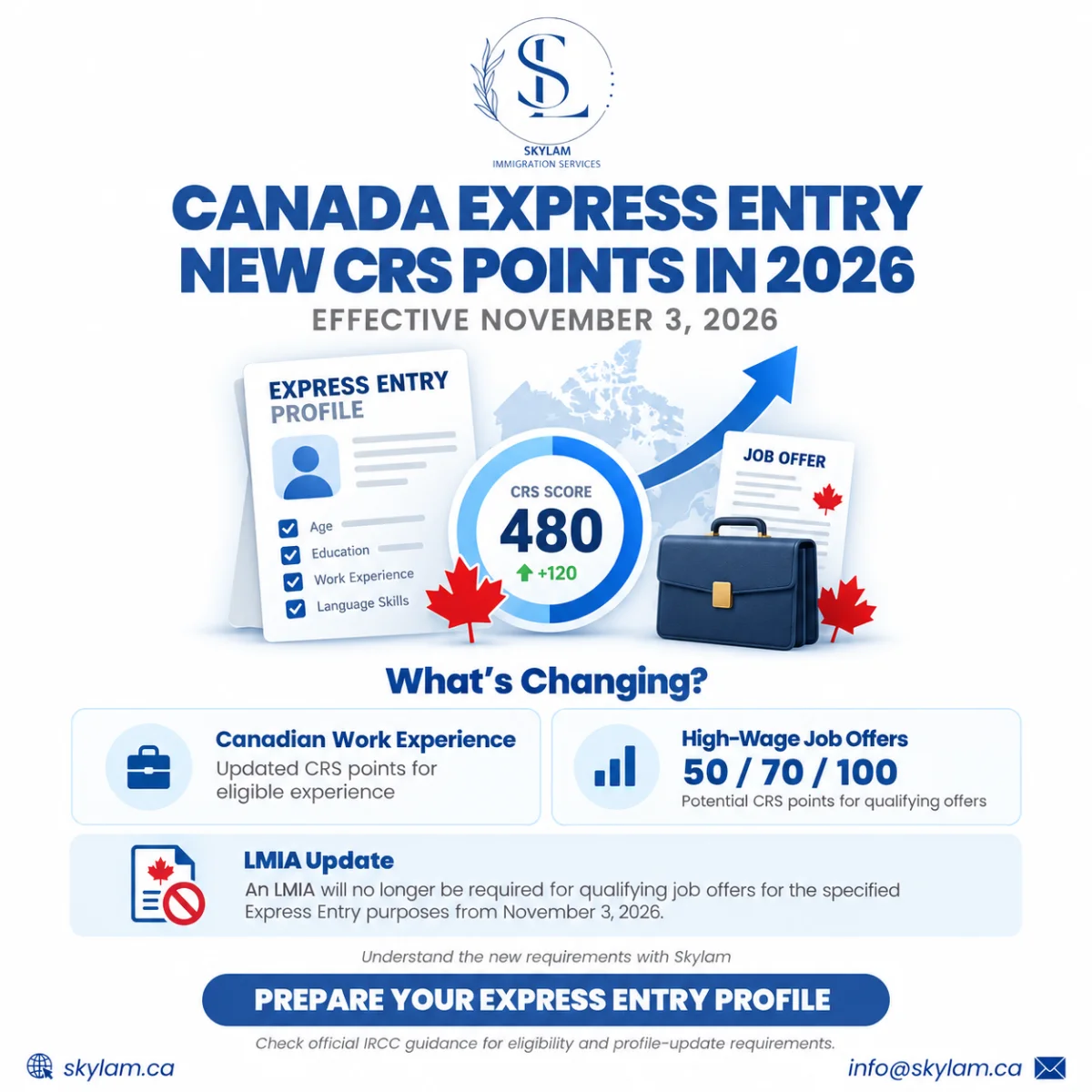
Under the detailed changes announced by IRCC, qualifying job offers may be eligible for different CRS point amounts according to the applicable high-wage threshold.
| High-wage category | Potential CRS points |
|---|---|
| Occupation meeting the 2-times median wage threshold | 100 |
| Occupation meeting the 1.5-times threshold but below 2 times | 70 |
| Occupation meeting the 1.3-times threshold but below 1.5 times | 50 |
| Occupation that does not meet the qualifying high-wage thresholds | 0 under this job-offer factor |
These amounts apply to the qualifying job-offer factor described in the announced changes. They are not guaranteed points for every employment offer, and candidates must satisfy the relevant requirements.
Does every job offer qualify?
No. A job offer must meet IRCC's applicable requirements, including the conditions relating to the occupation and the genuineness of the offer.
A job offer in Canada does not automatically qualify simply because an employer is willing to hire a foreign national.
IRCC will continue assessing whether the offer is genuine, whether the employer is active and able to fulfil the employment terms, whether the offer complies with applicable employment and recruitment laws, and whether the candidate is qualified and able to perform the job.
Candidates should also distinguish between a job offer that meets an immigration program's eligibility requirements and one that qualifies for additional CRS points. These are related but separate assessments.
4. What Is a High-Wage Occupation Under the New Rules?
The term high-wage occupation has a specific meaning under the announced Express Entry changes.
According to IRCC, an occupation qualifies for consideration under the high-wage framework when its median wage reaches at least 1.3 times the median wage of the overall Canadian workforce.
This assessment is based on the typical earnings associated with an occupation—not simply the salary an individual applicant earns.
IRCC will maintain a list of eligible high-wage occupations using wage information from sources including Job Bank, the Labour Force Survey, and the Census of Population. The list will reflect data from the previous three years, and an occupation will be assigned the highest high-wage level it met during any year in that period.
Occupations that may be relevant
IRCC has identified areas such as the following as potentially relevant to its labour market priorities:
-
Health care
-
Skilled trades
-
Engineering
-
Technology
-
Education
Examples of jobs mentioned in the announcement include engineers and electricians.
However, working in one of these broad sectors does not automatically mean that a candidate's occupation qualifies for additional points. Applicants need to check the official occupation list and applicable criteria.
Why your personal salary is not the only factor
Consider two candidates working in different occupations. One earns a relatively high salary in an occupation whose median wage does not meet the required threshold. Another works in an occupation that meets a qualifying high-wage threshold, even though their individual salary may be lower than the first candidate's.
The second candidate's occupation may meet the high-wage classification, subject to the rules and requirements.
This illustrates why applicants should not determine their eligibility using salary alone.
Practical tip: Confirm the correct occupation classification and check IRCC's official high-wage occupation list before making decisions about your Express Entry profile.
Official resource: IRCC High-Wage Occupations
5. LMIA Requirements Are Changing for Qualifying Job Offers
Another major update concerns the Labour Market Impact Assessment, commonly known as an LMIA.
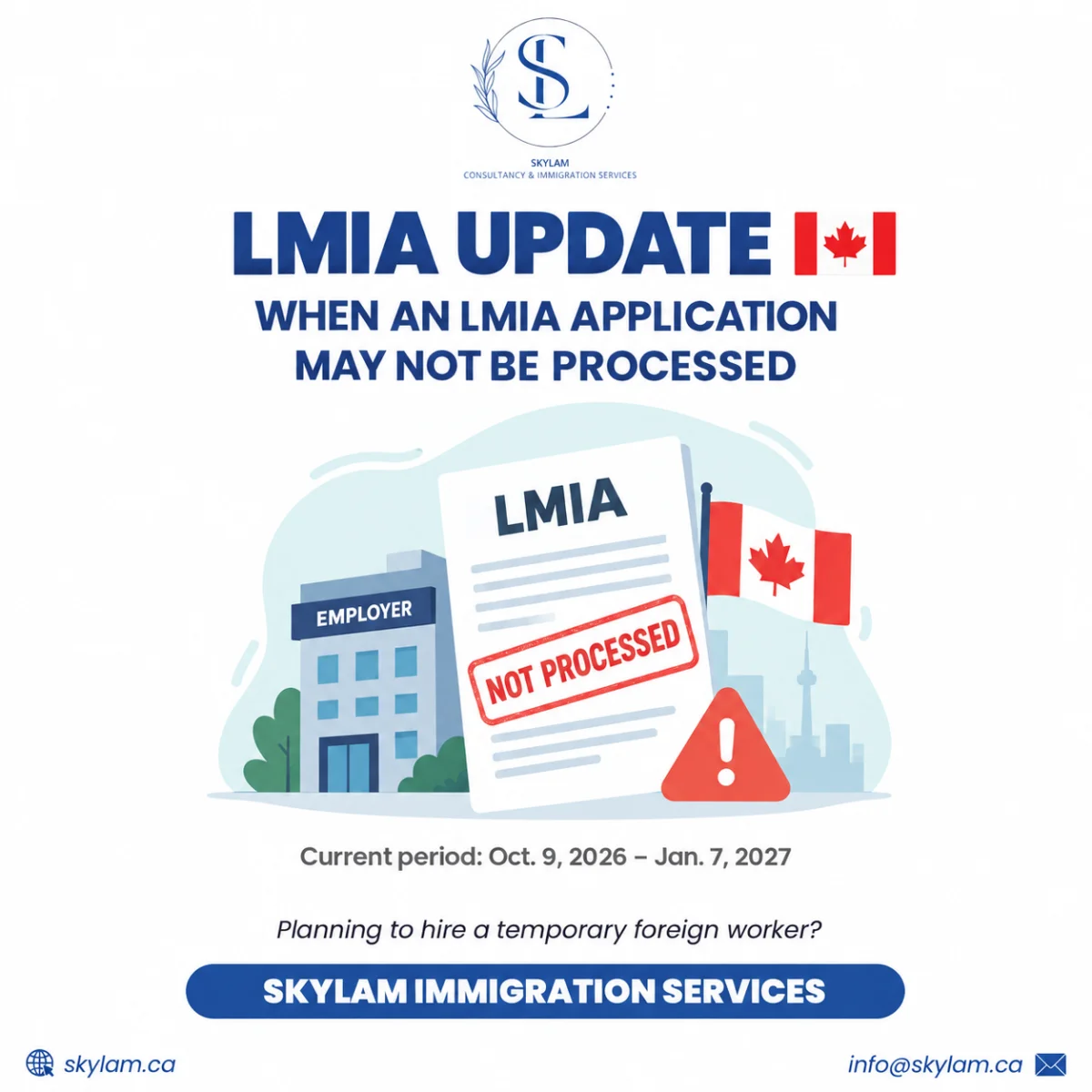
An LMIA is a document used in Canada's temporary foreign worker system to assess whether hiring a foreign worker may be justified under applicable labour market requirements. Its role depends on the immigration or work authorization pathway involved.
Starting November 3, 2026, an LMIA will no longer be required for a qualifying job offer to receive the new Express Entry points or to meet job-offer requirements under the Federal Skilled Worker Program and Federal Skilled Trades Program, as described in the announcement.
This change is intended to reduce administrative steps for eligible candidates and employers.
Does this mean every job offer is accepted without an LMIA?
No. The change removes the LMIA requirement for the specified Express Entry purposes. It does not remove the other requirements that a job offer must meet.
IRCC will continue assessing job offers to determine whether they are genuine and meet the applicable program requirements.
The employer and job offer must still satisfy the relevant conditions, and the candidate must meet the requirements that apply to their immigration pathway.
Will an LMIA guarantee extra CRS points?
No. An LMIA itself does not guarantee additional CRS points under the revised framework.
The new job-offer points depend on whether the offer qualifies under the applicable high-wage criteria and other requirements.
Candidates should not assume that obtaining an LMIA automatically makes a job offer eligible for the new points. Similarly, the absence of an LMIA does not mean every job offer qualifies.
What about work permits?
The announced change relates to specified Express Entry job-offer requirements and points. It should not be interpreted as a blanket change to every Canadian work permit pathway.
People applying for work permits or considering employment in Canada should check the rules for their particular situation. An immigration program's job-offer requirements, CRS rules, and work authorization requirements are not interchangeable.
6. Federal Skilled Worker and Federal Skilled Trades Applicants: What to Know
The announcement specifically identifies changes to job-offer requirements under two Express Entry programs:
-
Federal Skilled Worker Program (FSWP)
-
Federal Skilled Trades Program (FSTP)
Under the new rules, an LMIA will no longer be required for a qualifying job offer to meet the specified job-offer requirements for these programs.
Nevertheless, applicants must continue to meet the other eligibility criteria for the program through which they intend to apply.
Federal Skilled Worker Program
The Federal Skilled Worker Program is designed for eligible skilled workers with foreign or Canadian work experience who meet its selection and eligibility criteria.
Applicants should assess their work experience, language ability, education, and other applicable requirements. A qualifying job offer may be relevant to program eligibility, but it does not replace the other criteria.
Federal Skilled Trades Program
The Federal Skilled Trades Program is intended for eligible workers with qualifying experience in specified skilled trades.
Applicants must meet the program's applicable trade experience and other eligibility requirements. A job offer may be relevant in assessing eligibility, but its existence alone does not establish that the candidate qualifies.
Why program eligibility and CRS points must be considered separately
A job offer may be relevant to program eligibility without necessarily qualifying for additional CRS points under the high-wage job-offer factor.
This distinction matters because candidates can misunderstand the new rules and assume that all qualifying program-level job offers will also receive the new high-wage CRS points.
Before relying on a job offer, applicants should identify which immigration program applies to them and determine whether the offer meets both the program requirements and the separate criteria for additional CRS points.
7. Existing Express Entry Profiles: What Happens Next?
IRCC has announced that it will automatically recalculate CRS scores for candidates already in the Express Entry pool under the updated points system.
The recalculation process may take up to two weeks. During that period, Express Entry invitation rounds will be paused.
For candidates currently in the pool, this means it is important to understand which parts of the update will be applied automatically and which require action.
Changes IRCC will apply automatically
Existing profiles will have their CRS scores recalculated under the new points system, including the updated treatment of eligible Canadian work experience.
Candidates should monitor their accounts for updates and follow any instructions issued by IRCC.
What candidates must do to receive job-offer points
Candidates who wish to receive points for a qualifying job offer must update their profiles with the required information before November 3, 2026.
This is a particularly important step for people who already have a job offer and believe it may qualify under the new high-wage framework.
Applicants should:
-
Review their current Express Entry profile.
-
Confirm that their job title, employment history, and other information are accurate.
-
Check whether the occupation appears on IRCC's official high-wage occupation list.
-
Review the official job-offer instructions and identify the information required.
-
Update the profile before the announced deadline if seeking job-offer points.
-
Retain accurate supporting documents in case they are needed later.
Do not enter invented information or make assumptions about how to answer a system question. If a profile field or instruction is unclear, consult the current official IRCC guidance before submitting or changing information.
Official resource: How to Update Your Express Entry Profile for a Job Offer
8. Will These Changes Make It Easier to Get Canadian Permanent Residence?
The changes may improve the CRS position of some candidates, particularly those with eligible Canadian work experience or a qualifying job offer in an eligible high-wage occupation.
However, they do not guarantee an invitation to apply for permanent residence.
Express Entry candidates are ranked through the CRS, and invitations depend on the applicable selection rules and invitation rounds. A higher score may improve a candidate's relative position, but the outcome depends on the circumstances of each round and the candidate's eligibility.
The new rules may affect applicants differently.
For example:
-
A candidate with eligible Canadian work experience may receive an updated score under the revised system.
-
A candidate with a qualifying job offer in an eligible high-wage occupation may be able to claim the new job-offer points if the requirements are met.
-
A candidate with a job offer in an occupation that does not meet the high-wage thresholds may not qualify for points under that particular factor.
-
A candidate without Canadian work experience or a qualifying job offer may need to focus on other applicable CRS factors and immigration pathways.
The most useful next step is to evaluate the candidate's full profile rather than focusing on one new rule in isolation.
9. How Can Applicants Prepare Before November 3, 2026?
With the announced implementation date approaching, candidates should review their Express Entry profiles and identify whether the new provisions may apply to them.
Here is a practical preparation checklist.
Step 1: Review your Express Entry profile
Check your personal information, education, language test results, work experience, and other details. Make sure the information remains accurate and consistent with your supporting documents.
Step 2: Identify your occupation correctly
Use the appropriate occupational classification and review the official high-wage occupation list. Do not rely solely on a job title, salary amount, or informal online discussion.
Step 3: Review your Canadian work experience
Determine whether your experience meets the relevant Canadian work experience requirements. Keep records that accurately reflect your employment history and duties.
Step 4: Assess your job offer
If you have a job offer, review whether it meets IRCC's requirements for genuineness, occupation eligibility, and other applicable conditions.
A written offer is not automatically eligible for CRS points merely because it comes from a Canadian employer.
Step 5: Update your profile if necessary
Candidates seeking points for a qualifying job offer must update their profiles with the required information before November 3, 2026.
Follow the current official instructions carefully and avoid submitting inaccurate or unsupported information.
Step 6: Monitor official announcements
Implementation details and online instructions may change. Check IRCC's official website for current requirements and any clarifications related to the transition.
Step 7: Consider your broader immigration strategy
Do not base your entire immigration plan on one CRS factor. Assess language scores, education, work experience, program eligibility, and any other relevant pathways.
A broader review may help identify options that are more suitable for your circumstances.
10. Canada's Wider Express Entry Strategy in 2026
The November changes form part of Canada's broader effort to align economic immigration with labour market needs.
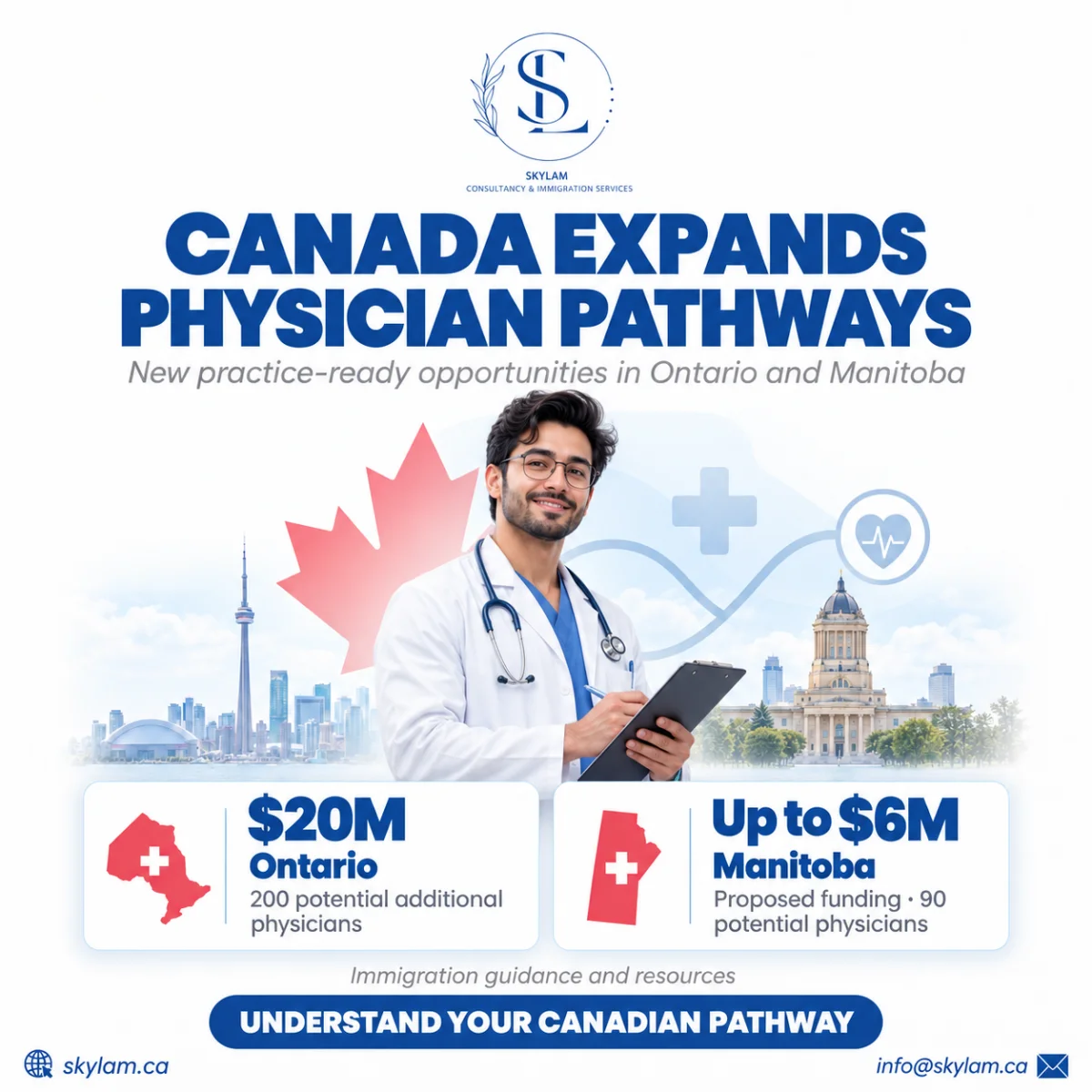
The federal government has also announced measures involving doctors with Canadian work experience and updated Express Entry categories for candidates with experience in areas such as health care, skilled trades, research, transportation, and education.
These measures reflect a focus on selecting candidates whose skills and experience may contribute to Canada's workforce and long-term economic growth.
However, an occupation being important to the economy does not automatically guarantee selection or permanent residence. Candidates must still meet the eligibility criteria for the relevant program or category and follow the applicable invitation process.
For prospective immigrants, this makes it important to understand both the general CRS system and the specific selection categories that may apply to their backgrounds.
Applicants should use official information to assess their options rather than relying on assumptions about which occupations will receive invitations.
Frequently Asked Questions (FAQs)
1. When do the new Canada Express Entry CRS changes take effect?
The announced changes are scheduled to take effect on November 3, 2026.
2. Will existing Express Entry profiles be recalculated automatically?
Yes. IRCC has announced automatic recalculation of CRS scores for candidates already in the Express Entry pool, including updated points for eligible Canadian work experience.
3. Do I need to update my profile if I have a qualifying job offer?
If you wish to receive points for a qualifying job offer, IRCC says you must update your profile with the required information before November 3, 2026.
4. Will all Canadian job offers receive CRS points?
No. The new job-offer points apply to qualifying offers that meet the applicable high-wage occupation criteria and other requirements.
5. What are the new CRS points for high-wage job offers?
Under the announced framework, qualifying job offers may receive 50, 70, or 100 CRS points, depending on the relevant high-wage threshold and eligibility requirements.
6. Is an LMIA still required for qualifying job offers under these Express Entry changes?
Starting November 3, 2026, an LMIA will no longer be required for a qualifying job offer to receive the new Express Entry points or meet the specified job-offer requirements under the Federal Skilled Worker and Federal Skilled Trades programs.
Other requirements still apply, and this change should not be treated as a blanket exemption for all Canadian work permits or immigration pathways.
7. Does my personal salary determine whether my occupation is high-wage?
Not by itself. The high-wage classification is based on the typical median wage of the occupation relative to the median wage of the overall Canadian workforce.
8. Will invitation rounds continue during CRS recalculation?
IRCC has announced that invitation rounds will be paused during the recalculation process, which may take up to two weeks.
9. Does a qualifying job offer guarantee permanent residence?
No. A qualifying job offer may affect a candidate's CRS score or program eligibility, but it does not guarantee an invitation or approval for permanent residence.
10. Where can I verify the new Express Entry requirements?
Candidates should consult the official IRCC announcement and the relevant Express Entry program pages for the latest requirements.
Conclusion: Review Your Express Entry Profile Before the Deadline
Canada's November 3, 2026, Express Entry changes will place greater emphasis on eligible Canadian work experience and qualifying job offers in high-wage occupations. The updated framework also changes the role of LMIA requirements for specified job-offer purposes and introduces an important profile-update deadline for candidates seeking job-offer points.
For people already in the Express Entry pool, the key priorities are to keep profile information accurate, check whether their occupation meets the relevant criteria, and follow IRCC's instructions before the deadline.
For prospective applicants, the changes are a useful reminder that Express Entry planning involves more than calculating a CRS score. Program eligibility, language ability, work experience, occupation classification, and the quality of supporting documentation all matter.
Skylam Immigration Services encourages applicants to review official immigration guidance carefully and seek appropriate assistance when they need help understanding how the changes may affect their circumstances.
📩 Need help understanding your Canadian immigration options? Contact Skylam Immigration Services for guidance with your Express Entry planning and profile preparation.
Official IRCC Resources
Disclaimer: This article is for general informational purposes and is based on the announced Express Entry changes. Immigration rules, eligibility requirements, and online instructions may change. Always verify current requirements through official IRCC sources. Individual outcomes depend on the applicant's circumstances.