
Canada Express Entry Rounds of Invitations: CRS Scores, Draw Types and Eligibility Explained
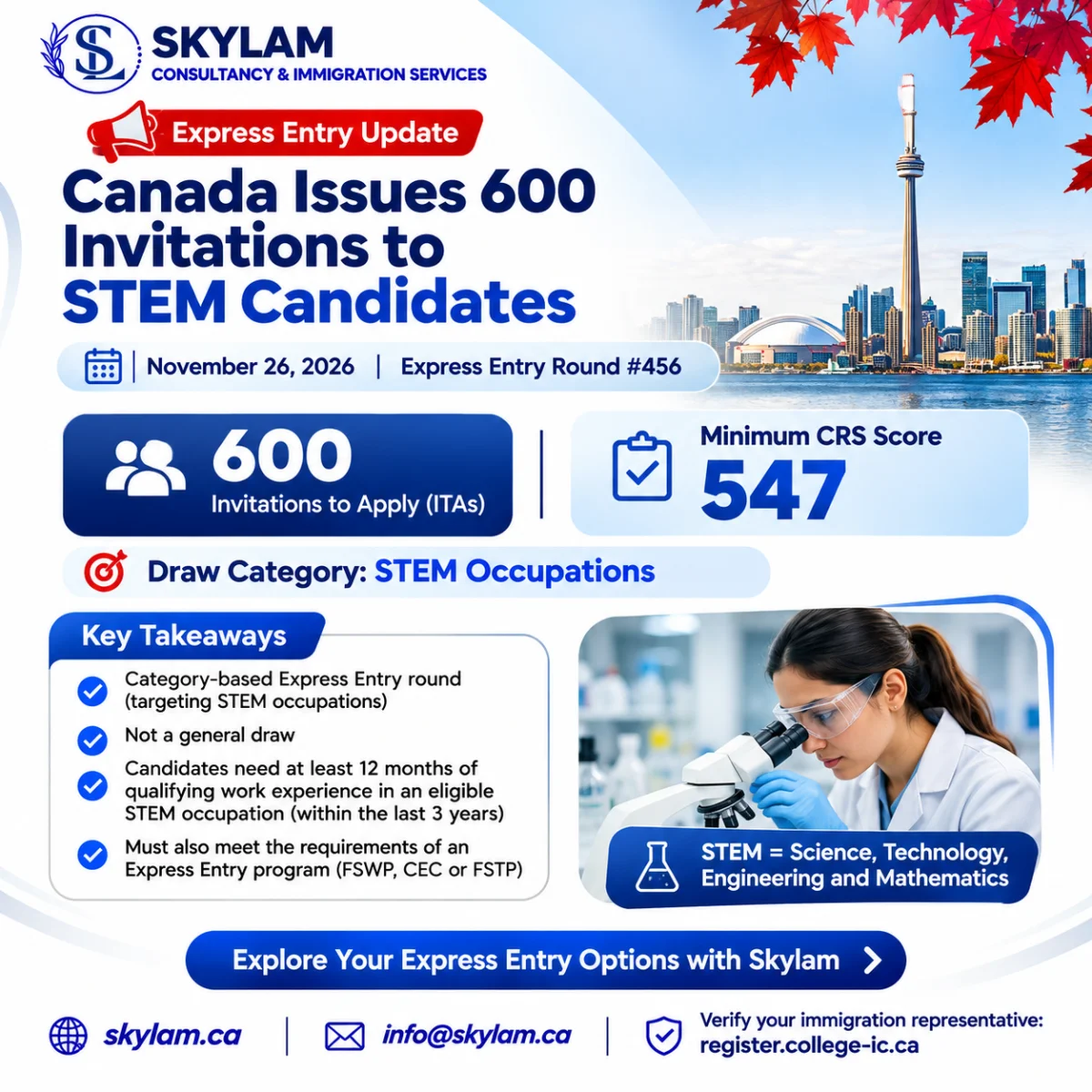
Canada's Express Entry system is one of the principal immigration pathways for eligible skilled workers seeking permanent residence.
Immigration, Refugees and Citizenship Canada (IRCC) regularly conducts invitation rounds to select candidates from the Express Entry pool.
Candidates are ranked through the Comprehensive Ranking System (CRS), which considers factors such as language proficiency, education, work experience and other applicable criteria.
However, not every invitation round is open to every Express Entry candidate.
IRCC conducts three main types of invitation rounds: general, program-specific and category-based.
Understanding these differences is essential for individuals planning to apply for Canadian permanent residence.
1. What Are Express Entry Rounds of Invitations?
An Express Entry round is a selection process through which IRCC invites eligible candidates to apply for permanent residence.
Candidates must first qualify for an immigration program managed through Express Entry and create a valid profile.
Eligible candidates are placed in the Express Entry pool and assigned a CRS score.
During an invitation round, IRCC selects the highest-ranking candidates who meet the requirements of that particular round.
Selected candidates receive an Invitation to Apply (ITA).
Important: An ITA allows an applicant to submit a permanent residence application. It does not guarantee approval.
2. Three Types of Express Entry Invitation Rounds
General Rounds
In general rounds, IRCC invites the highest-ranking eligible candidates from across the programs managed by Express Entry.
Selection is based on CRS ranking and the applicable invitation instructions.
Program-Specific Rounds
Program-specific rounds target candidates who qualify under a particular immigration program.
For example, IRCC may conduct a Provincial Nominee Program (PNP) round.
Only candidates meeting the relevant program requirements can be invited.
A high CRS score does not make someone eligible for a PNP-specific round without the required nomination.
Category-Based Rounds
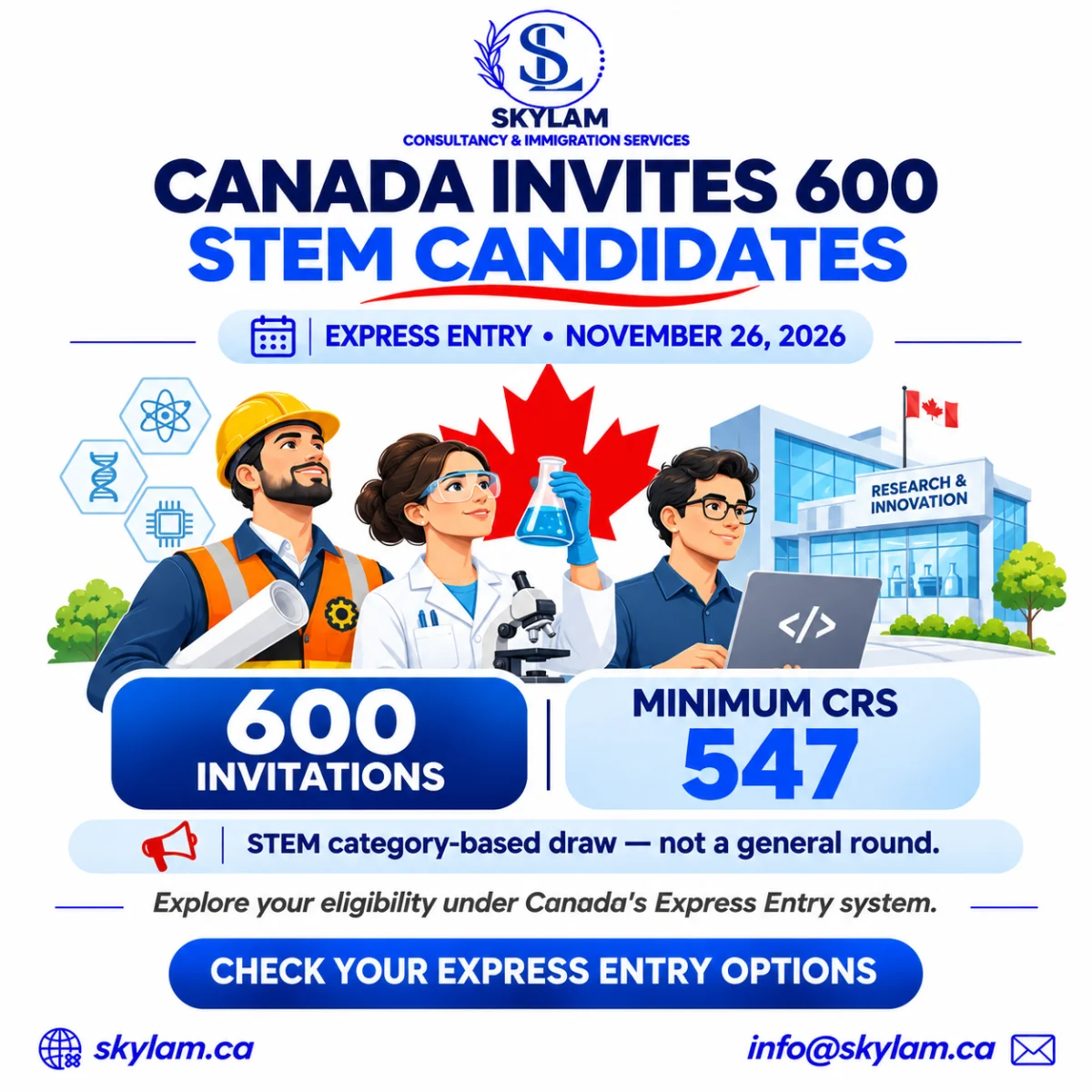
Category-based rounds allow IRCC to select candidates who meet specific economic immigration priorities.
Categories may involve French-language proficiency or qualifying work experience in selected occupations.
Applicants must meet the category's requirements and qualify under an Express Entry immigration program.
| Round type | Selection focus |
|---|---|
| General | Highest-ranking eligible candidates across Express Entry programs |
| Program-specific | Candidates eligible for a particular immigration program |
| Category-based | Candidates meeting a designated category's requirements |
3. Which Immigration Programs Use Express Entry?
Express Entry manages applications under three federal economic immigration programs.
Federal Skilled Worker Program
This program is intended for eligible skilled workers who meet applicable requirements involving work experience, language proficiency, education and other selection factors.
Qualifying foreign work experience may be relevant.
Canadian Experience Class
The Canadian Experience Class is intended for applicants with qualifying Canadian skilled work experience.
Applicants must meet the applicable employment and language requirements.
Federal Skilled Trades Program
This program is designed for eligible skilled trades workers who meet relevant trade experience and other program requirements.
Certain provincial nominations are also processed through Express Entry.
4. What Is the Comprehensive Ranking System?
The Comprehensive Ranking System is a points-based system used to assess and rank eligible Express Entry profiles.
CRS scores depend on various factors, including:
-
Age
-
Educational qualifications
-
English or French language proficiency
-
Canadian work experience
-
Foreign work experience
-
Spouse or partner factors, where applicable
-
Other qualifying points under current rules
Candidates with higher scores generally rank above those with lower scores.
However, selection also depends on the type of invitation round and its specific eligibility requirements.
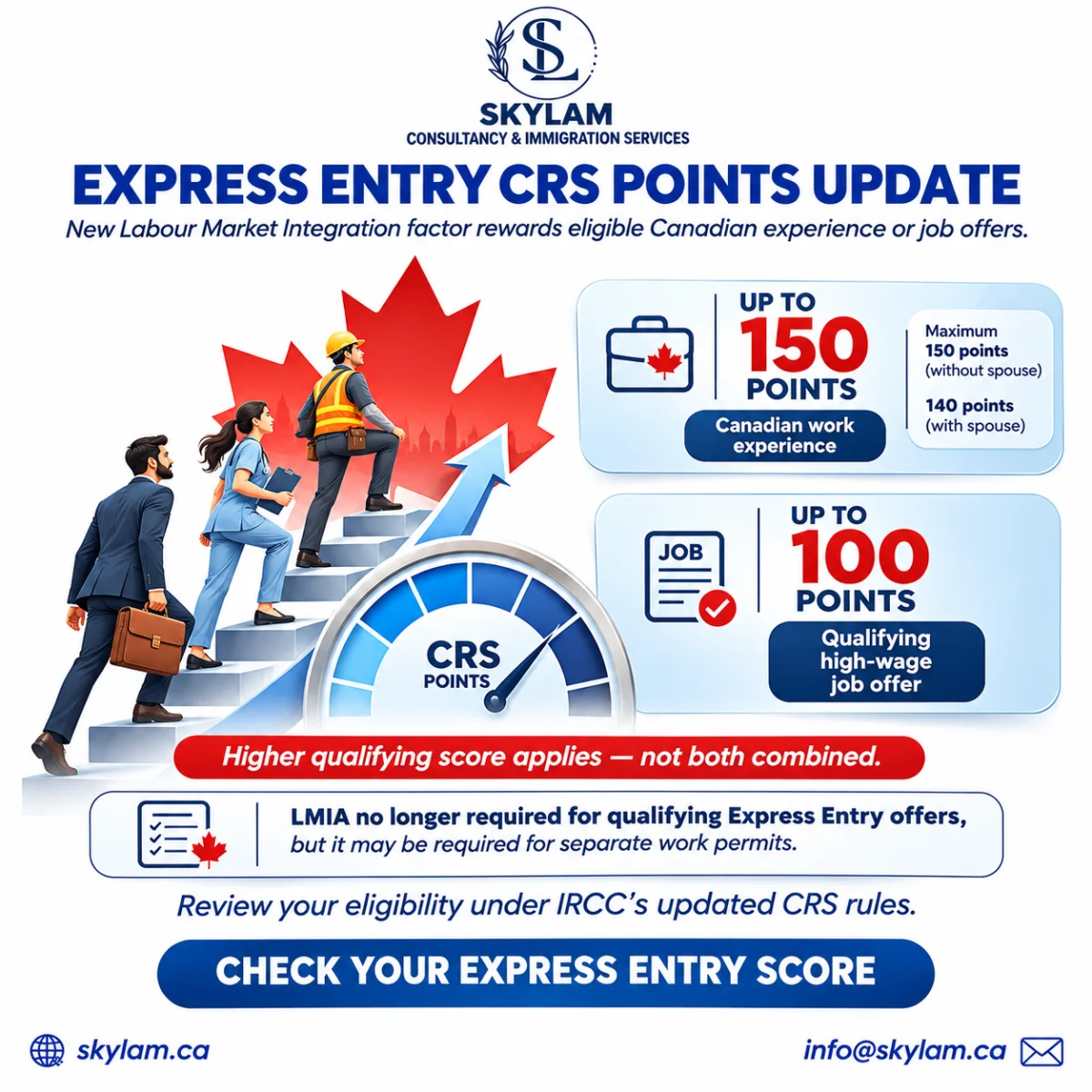
November 2026 CRS Changes
IRCC introduced changes to the allocation of CRS points for Canadian work experience and valid job offers effective November 3, 2026.
The changes also removed LMIA and LMIA-exemption requirements for Express Entry job offers.
These changes concern Express Entry rules and do not eliminate LMIA obligations under separate work permit programs.
Candidates should use the latest IRCC CRS criteria when reviewing their profiles.
5. How Does IRCC Select Candidates?
According to IRCC, the invitation process involves four main steps.
Step 1: Determine the round type
IRCC selects whether the round will be general, program-specific or category-based.
Step 2: Decide the number of invitations
The department determines how many candidates it intends to invite.
Step 3: Identify eligible candidates
IRCC ranks candidates who meet the specific requirements of the invitation round.
Step 4: Issue Invitations to Apply
The highest-ranking eligible candidates receive invitations.
The relevant instructions are published when the round is conducted.
6. What Information Does IRCC Publish After a Draw?
IRCC publishes official invitation-round information, including:
-
Date and time of the round
-
Number of invitations issued
-
CRS score of the lowest-ranked candidate invited
-
Round type
-
Relevant immigration programs or categories
-
Applicable tie-breaking information
This information helps candidates understand previous invitation rounds.
However, historical cutoff scores do not guarantee future selection.
7. How Does the Express Entry Tie-Breaking Rule Work?
Sometimes multiple candidates have the same CRS score at the invitation cutoff.
In this situation, IRCC applies a tie-breaking rule using the date and time candidates submitted their Express Entry profiles.
Among candidates at the cutoff score, those whose qualifying profiles were submitted before the published tie-breaking timestamp receive priority.
The tie-breaking rule does not replace the round's other eligibility requirements.
Candidates must still qualify for the relevant program or category.
8. Does a High CRS Score Guarantee an Invitation?
No.
A high CRS score improves a candidate's ranking but does not guarantee an invitation.
For example, a candidate who does not have an eligible provincial nomination cannot be selected in a PNP-specific round solely because their CRS score is high.
Similarly, candidates who do not meet the requirements of a category-based round cannot qualify through their CRS score alone.
Selection depends on the specific instructions and eligibility criteria for each round.
9. What Happens After Receiving an Invitation to Apply?
Candidates generally have 60 days to submit a complete permanent residence application after receiving an ITA.
Required documents may include:
-
Passport and identification documents
-
Language test results
-
Educational credentials
-
Work experience documentation
-
Police certificates
-
Medical examination information
-
Other applicable supporting records
Applicants must provide accurate information consistent with the claims made in their Express Entry profiles.
IRCC reviews submitted applications to determine whether candidates meet the relevant immigration and admissibility requirements.
10. How Can Candidates Improve Their Express Entry Preparation?
Prospective applicants should first establish whether they qualify for a federal immigration program.
They can then assess their CRS score and review the requirements of relevant invitation categories.
Practical preparation includes checking the correct NOC classification, maintaining valid language results, preparing educational documents and reviewing applicable program requirements.
Candidates should also monitor official IRCC updates, particularly when CRS rules or category eligibility conditions change.
11. Frequently Asked Questions
What are Express Entry rounds of invitations?
They are selection rounds through which IRCC invites eligible candidates from the Express Entry pool to apply for Canadian permanent residence.
What are the three types of Express Entry draws?
General, program-specific and category-based rounds.
What is a CRS score?
The Comprehensive Ranking System score is used to rank eligible Express Entry candidates.
Does meeting the minimum CRS cutoff guarantee an invitation?
No. Candidates must also meet the eligibility requirements of the invitation round and any applicable tie-breaking rule.
Can applicants outside Canada join Express Entry?
Potentially, yes. Candidates with qualifying foreign work experience may be eligible under relevant federal immigration programs.
How long do invited candidates have to apply?
Express Entry candidates generally have 60 days after receiving an ITA to submit their permanent residence application.
Where can applicants verify official draw results?
IRCC publishes invitation-round information on its official Express Entry website and through the associated Ministerial Instructions.
Conclusion
Canada's Express Entry invitation system uses CRS ranking and specific selection criteria to invite eligible skilled workers to apply for permanent residence.
The distinction between general, program-specific and category-based rounds is essential because not all candidates qualify for every invitation round.
Applicants should review current program requirements, understand their CRS scores and follow official IRCC announcements when planning their Canadian immigration applications.
Explore Your Canadian Immigration Options with Skylam
Skylam Consultancy & Immigration Services provides information and guidance for individuals exploring Canadian immigration pathways.
Learn more about Express Entry requirements and how different invitation rounds may relate to your qualifications.
Website: https://skylam.ca
Email: info@skylam.ca
Verify your immigration representative: https://register.college-ic.ca