
Canada Updates Express Entry Eligibility for Researchers: New Rules for NOC 41200 and NOC 41201
Canada has introduced important changes to the Express Entry system that affect the eligibility of certain university professors, lecturers and academic researchers.
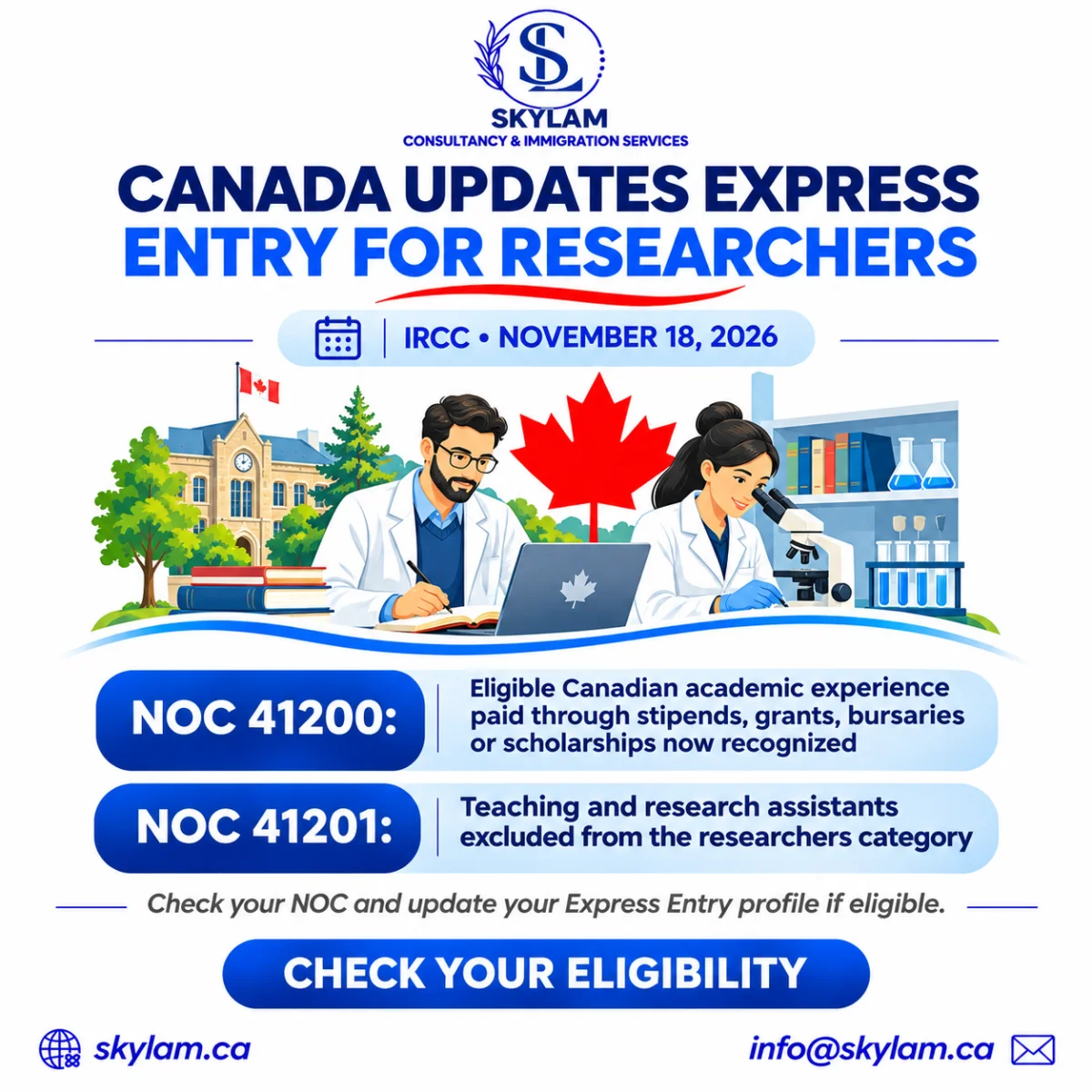
On November 18, 2026, Immigration, Refugees and Citizenship Canada (IRCC) announced updated criteria for the researchers with Canadian work experience category.
The changes recognize certain forms of academic compensation, including stipends, grants, bursaries and scholarships, for eligible university professors and lecturers.
At the same time, IRCC has removed post-secondary teaching and research assistants from the qualifying work experience occupations for the researchers category.
These changes may affect how eligible academic professionals establish work experience, demonstrate program eligibility and receive Comprehensive Ranking System (CRS) points.
1. What Has Changed in Express Entry?
IRCC has updated the eligibility criteria for its researchers with Canadian work experience category.
The changes primarily affect two National Occupational Classification (NOC) categories.
| Occupation | NOC code | November 2026 update |
|---|---|---|
| University professors and lecturers | 41200 | Certain Canadian academic experience and job offers supported by stipends, grants, bursaries or scholarships are now recognized |
| Post-secondary teaching and research assistants | 41201 | Work experience no longer qualifies for the researchers category |
The changes are intended to better reflect how academic professionals are compensated in Canadian universities and research institutions.
However, applicants must still meet all applicable immigration program requirements.
2. NOC 41200: Expanded Recognition of Academic Work Experience
University professors and lecturers fall under NOC 41200.
Academic professionals working in Canadian universities may receive compensation through arrangements that differ from conventional employment salaries.
These arrangements can include:
-
Research grants
-
Academic stipends
-
Bursaries
-
Scholarships
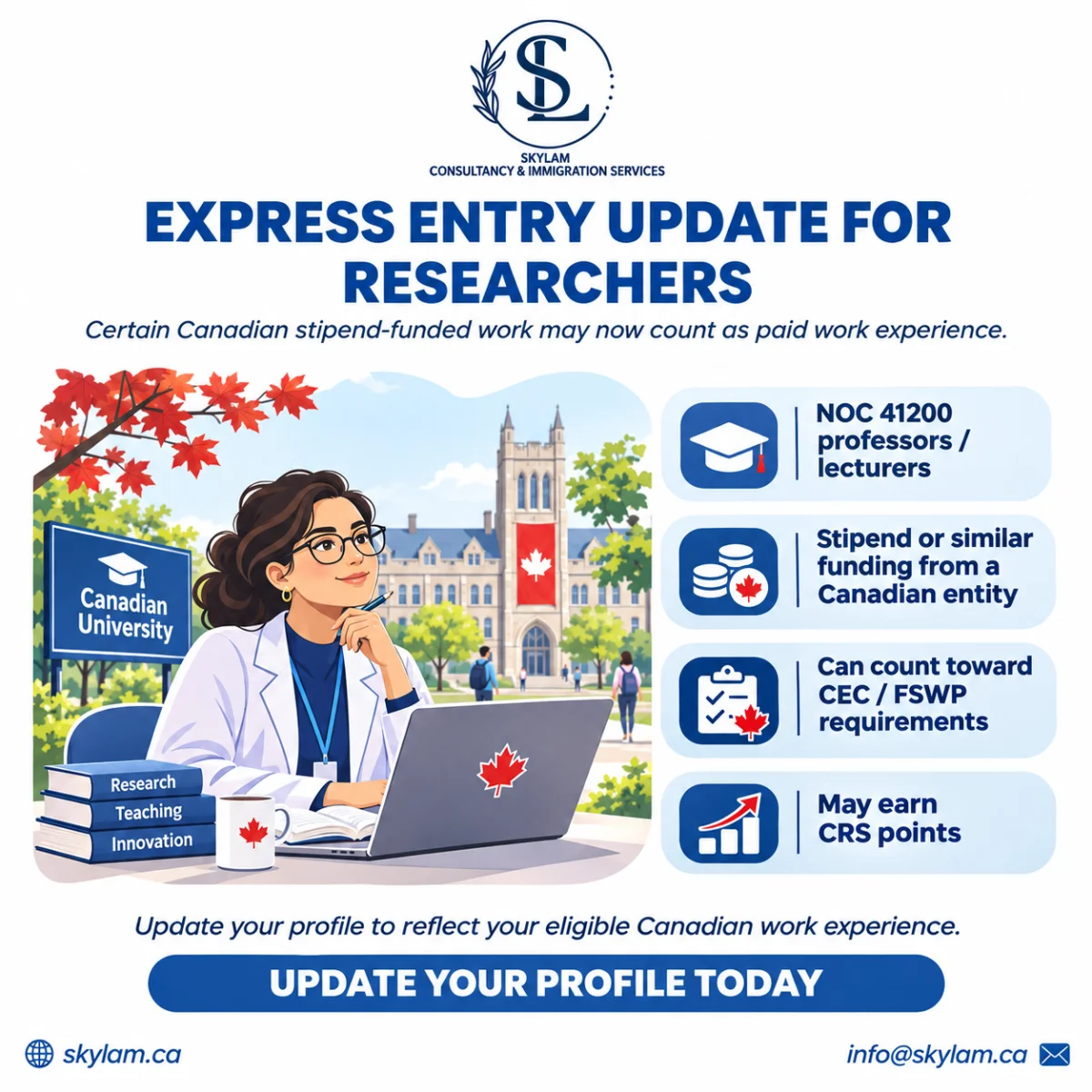
Under the November 18 update, qualifying Canadian academic work experience supported by these forms of compensation may now be recognized under Express Entry.
This represents an important adjustment for eligible professors and lecturers whose work experience previously may not have been recognized in the same way.
Why Does This Matter?
Academic employment structures can differ substantially from conventional employment arrangements.
Recognizing qualifying academic experience paid through these methods may help eligible researchers demonstrate the work experience required under relevant economic immigration programs.
Applicants must still establish that their duties, occupational classification and experience meet IRCC's requirements.
3. Canadian Experience Class Eligibility
IRCC confirms that qualifying Canadian academic experience paid through the identified compensation arrangements can now count toward Canadian Experience Class (CEC) work experience requirements.
The Canadian Experience Class is an immigration program under Express Entry for candidates who have qualifying skilled work experience in Canada.
Candidates must satisfy requirements relating to work experience, language proficiency and other applicable conditions.
What Should Applicants Review?
Eligible academic professionals should examine:
-
Their correct NOC classification.
-
The nature of their Canadian work experience.
-
Whether their academic compensation qualifies.
-
Whether their duties align with NOC 41200.
-
The documentation available to support their experience.
Recognition of a qualifying compensation arrangement does not automatically guarantee eligibility under CEC.
4. Federal Skilled Worker Program Recognition
The November 18 update also affects the Federal Skilled Worker Program (FSWP).
According to IRCC, qualifying experience paid through grants, stipends, bursaries or scholarships may now count toward relevant FSWP work experience requirements for eligible NOC 41200 candidates.
The Federal Skilled Worker Program assesses applicants using criteria that include skilled work experience, language proficiency and education.
Candidates must still meet applicable program requirements.
The announcement does not eliminate the standard eligibility conditions of the Federal Skilled Worker Program.
5. Comprehensive Ranking System Points
The Comprehensive Ranking System ranks eligible Express Entry candidates.
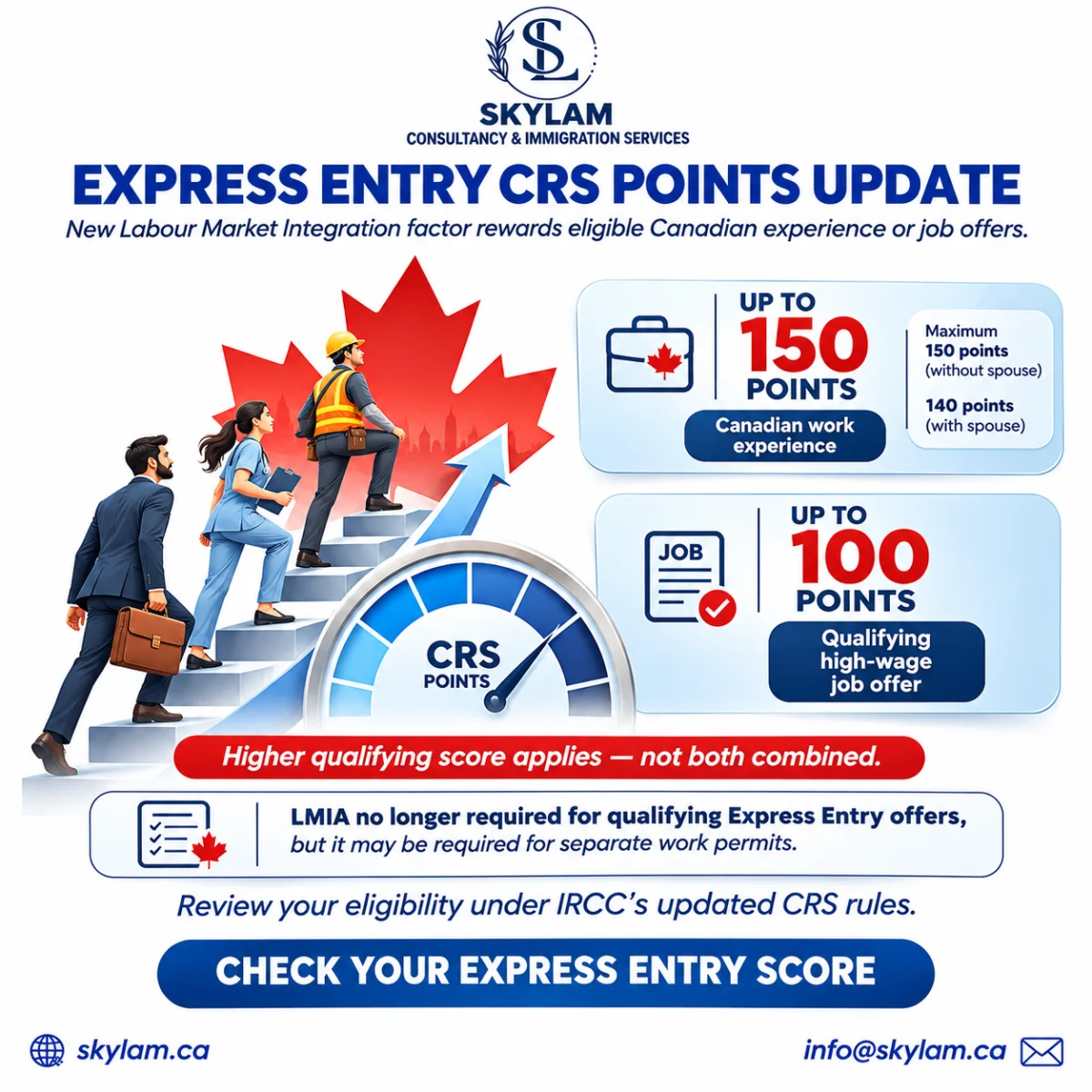
IRCC confirms that candidates with qualifying academic experience and/or job offers may receive CRS points under the updated rules.
This could influence the ranking of eligible candidates.
However, the actual number of points will depend on the candidate's circumstances and the applicable CRS criteria.
Applicants should review their Express Entry profiles carefully and ensure that any claimed experience or job offer meets the relevant requirements.
No universal CRS-point increase applies automatically to every academic professional.
6. NOC 41201: Teaching and Research Assistants Removed from the Researchers Category
IRCC also announced an important restriction affecting NOC 41201.
Work experience classified under post-secondary teaching and research assistants will no longer qualify for the researchers with Canadian work experience category.
This distinction is particularly important for individuals working as research assistants or teaching assistants at Canadian post-secondary institutions.
Does This Mean Research Assistants Cannot Apply for Express Entry?
No.
The change relates specifically to eligibility for the researchers category.
It does not mean that every applicant with NOC 41201 experience is automatically excluded from all Express Entry immigration programs.
Candidates may still be eligible through other applicable federal economic immigration programs or selection categories if they meet the requirements.
Applicants should avoid confusing eligibility for the researchers category with overall Express Entry eligibility.
7. Why Is Canada Updating Researcher Eligibility?
IRCC states that the changes are part of Canada's broader strategy to attract and retain highly skilled research talent.
Research and innovation contribute to economic development, scientific progress and Canada's international competitiveness.
The government intends to better recognize the employment arrangements of academic professionals working in Canada.
The revised criteria also distinguish university-level professors and lecturers from post-secondary teaching and research assistant roles.
IRCC describes the goal as maintaining a focus on eligible researchers, including professors, lecturers and post-doctoral researchers.
8. Who May Benefit from the Changes?
The update may be relevant to qualifying university professors and lecturers who have Canadian work experience paid through the identified academic compensation arrangements.
Potentially affected applicants include individuals who:
-
Perform duties corresponding to NOC 41200.
-
Have relevant Canadian academic work experience.
-
Receive qualifying compensation through recognized arrangements.
-
Meet applicable Express Entry program requirements.
-
Can provide evidence supporting their claimed experience.
Eligibility must be assessed individually.
Applicants should not assume that holding an academic appointment or receiving a scholarship automatically qualifies them for the researchers category.
9. What Should Current Express Entry Candidates Do?
IRCC advises candidates with qualifying Canadian academic experience to update their Express Entry profiles.
Applicants should review their occupational classification and supporting documentation before changing their profiles.
Step 1: Confirm the Correct NOC
Determine whether the work actually performed corresponds to NOC 41200 or another applicable occupational classification.
Step 2: Review Canadian Work Experience
Examine the dates, duties, compensation arrangements and supporting records associated with the experience.
Step 3: Check Program Eligibility
Determine whether the experience meets the applicable Canadian Experience Class or Federal Skilled Worker Program requirements.
Step 4: Review CRS Information
Check how qualifying experience or job offers may affect the Express Entry profile under current rules.
Step 5: Update Accurate Information
Ensure that the Express Entry profile accurately reflects qualifying experience and other relevant information.
Candidates should retain documentation supporting all information submitted to IRCC.
10. Frequently Asked Questions
When did Canada announce the researcher eligibility changes?
IRCC published the announcement on November 18, 2026.
Which NOC benefits from the expanded compensation recognition?
NOC 41200, covering university professors and lecturers, is specifically identified in the announcement.
Can stipends and research grants count as compensation for eligible work experience?
IRCC now recognizes qualifying Canadian experience paid through stipends, grants, bursaries or scholarships for eligible NOC 41200 applicants.
Does the change affect the Canadian Experience Class?
Yes. IRCC confirms that qualifying experience may count toward CEC work experience requirements.
Can eligible academic experience affect CRS points?
Yes. Qualifying experience and/or job offers may contribute CRS points, subject to applicable requirements.
Is NOC 41201 still eligible for the researchers category?
No. IRCC states that post-secondary teaching and research assistant experience under NOC 41201 no longer qualifies for this category.
Can someone with NOC 41201 experience still apply through Express Entry?
Potentially, yes. The restriction concerns the researchers category. Eligibility for other Express Entry pathways must be assessed separately.
Does the change guarantee permanent residence?
No. Applicants must meet all relevant immigration requirements and receive an invitation before submitting an Express Entry permanent residence application.
Conclusion
Canada's November 18, 2026 Express Entry changes introduce more specific recognition of academic work experience while refining eligibility for the researchers category.
Qualifying Canadian work experience paid through stipends, grants, bursaries or scholarships may now be recognized for eligible university professors and lecturers under NOC 41200.
At the same time, work experience under NOC 41201 no longer qualifies for the researchers category.
For academic professionals, the changes make accurate NOC classification, supporting documentation and an up-to-date Express Entry profile especially important.
Explore Your Canadian Immigration Options with Skylam
Interested in understanding how Canada's Express Entry changes may affect your immigration plans?
Skylam Consultancy & Immigration Services provides guidance and information on Canadian immigration pathways and eligibility requirements.
Website: https://skylam.ca
Email: info@skylam.ca
Verify your immigration representative: https://register.college-ic.ca