
Canada LMIA Requirements 2026: Job Bank Wage Update and Temporary Foreign Worker Program Guide
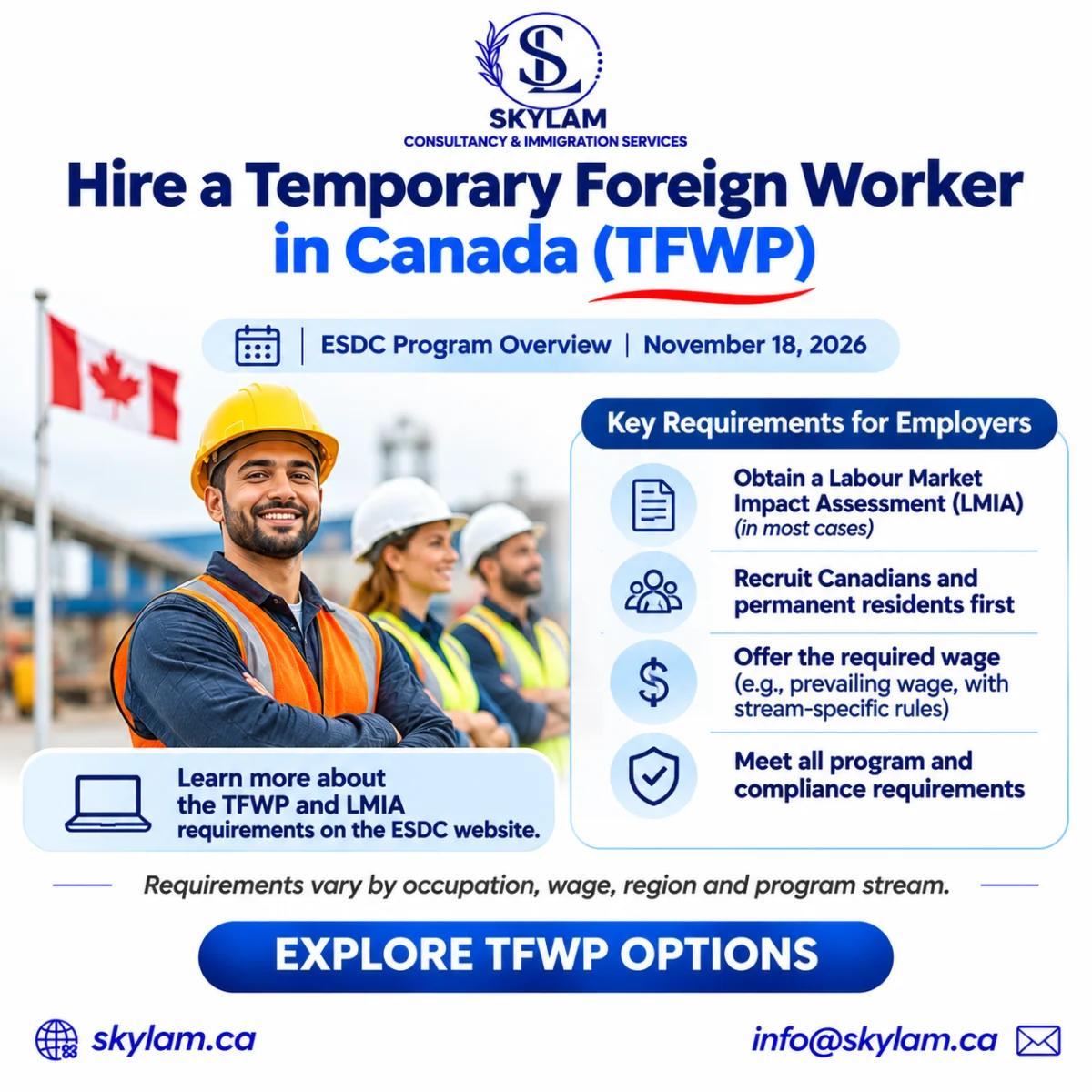
Canada's Temporary Foreign Worker Program (TFWP) allows eligible employers to recruit foreign workers when Canadian citizens or permanent residents are not available to fill particular positions.
Employment and Social Development Canada (ESDC) administers the Labour Market Impact Assessment (LMIA) process and provides guidance to employers on recruitment, wages and program compliance.
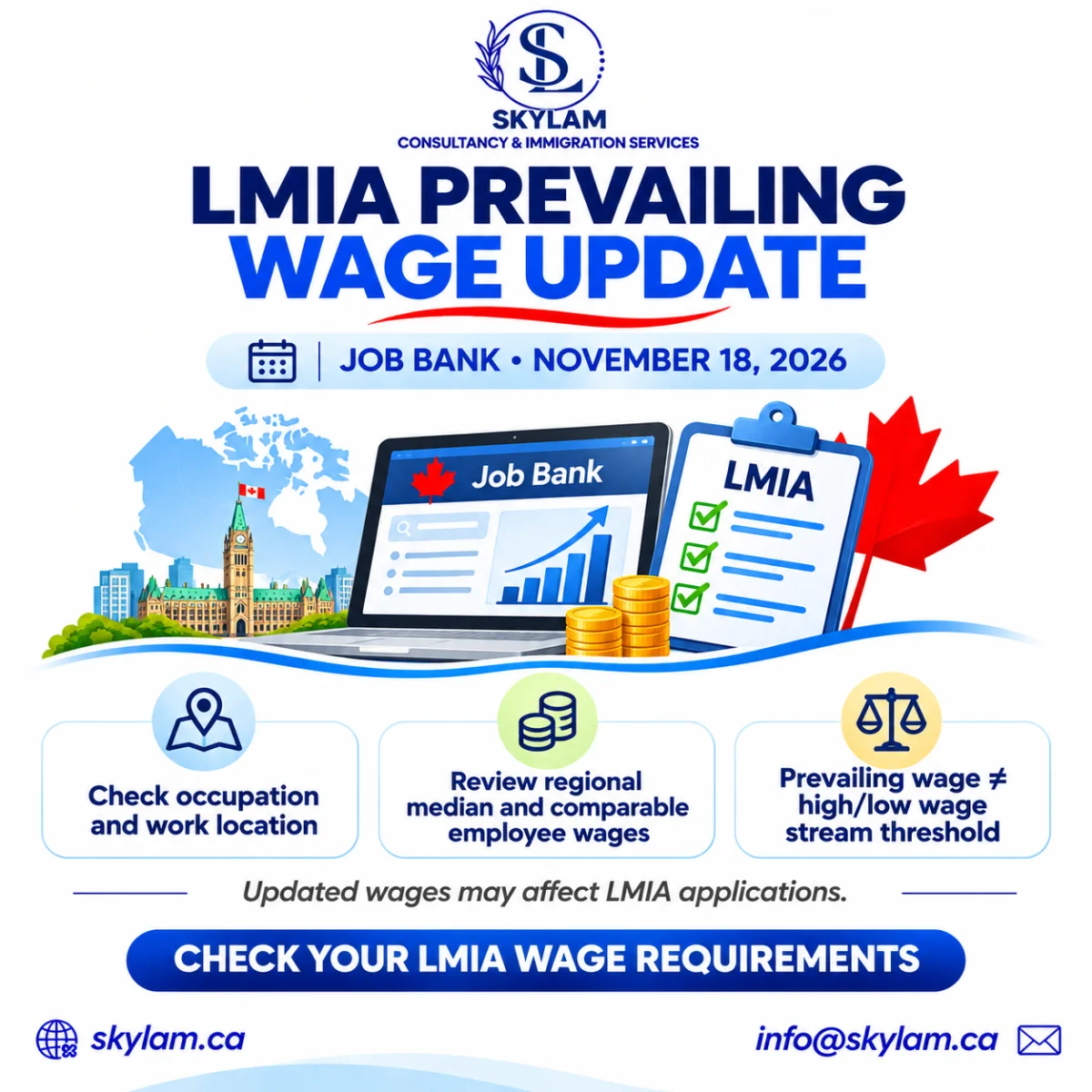
The department's official employer information page, updated November 18, 2026, confirms that Job Bank's annual fall wage update took place on that date.
For employers preparing LMIA applications, reviewing the applicable prevailing wage and selecting the correct program stream remain essential steps.
This article explains the key LMIA requirements, wage considerations, application categories and employer responsibilities.
1. What Is a Labour Market Impact Assessment?
A Labour Market Impact Assessment is an assessment issued by ESDC that evaluates the potential effect of hiring a temporary foreign worker on Canada's labour market.
Employers generally need an LMIA when hiring foreign workers through the Temporary Foreign Worker Program.
A positive LMIA indicates that employing a foreign worker is expected to have a positive or neutral effect on the Canadian labour market.
However, an approved LMIA does not automatically guarantee a work permit.
The foreign worker must still meet the applicable immigration requirements administered by Immigration, Refugees and Citizenship Canada (IRCC).
2. Job Bank's November 18, 2026 Wage Update
ESDC confirms that Job Bank wages are updated annually in the fall.
For 2026, the annual update took place on November 18.
These wage figures are relevant when determining the prevailing wage for particular occupations and employment locations.
Employers should review the latest available wage information before submitting an LMIA application.
Why Is the Update Important?
The applicable wage may vary by occupation and geographical area.
When Job Bank updates its occupational wage information, employers may need to reassess the wages they intend to offer temporary foreign workers.
An outdated wage figure could result in an employment offer that does not satisfy the applicable program requirements.
The updated wage figures should be checked directly through Job Bank rather than relying on unverified estimates.
3. Understanding Canada's Prevailing-Wage Requirements
The prevailing wage is the wage employers generally must offer for a specific occupation and employment location.
ESDC's program rules generally use the regional median occupational wage published on Job Bank.
Employers must also consider the wages paid to existing employees performing comparable work in the same location with similar skills and experience.
Where the comparable employee wage is higher than the applicable Job Bank median, the higher wage requirement generally applies.
Certain employment streams have additional wage requirements.
Employers should review the official instructions relevant to their circumstances.
4. High-Wage and Low-Wage LMIA Streams
Canada's Temporary Foreign Worker Program distinguishes between high-wage and low-wage positions.
The classification depends on the wage offered for the position compared with the applicable provincial or territorial hourly wage threshold.
| Offered wage | Applicable stream |
|---|---|
| At or above the provincial or territorial threshold | High-Wage Stream |
| Below the provincial or territorial threshold | Low-Wage Stream |
This classification is different from the occupational prevailing-wage requirement.
High-Wage Stream
Employers hiring under the High-Wage Stream must comply with its specific recruitment and application requirements.
Depending on the applicable rules and exemptions, this can include a transition plan outlining activities to recruit, retain or train Canadian citizens and permanent residents.
Low-Wage Stream
Employers using the Low-Wage Stream must comply with the requirements for that category.
Depending on the circumstances, these may include restrictions involving work locations, employer workforce proportions and other employment conditions.
Important: Employers cannot simply increase or decrease an offered wage to avoid program requirements. The wage must remain consistent with the applicable occupational prevailing wage and comparable employee compensation.
5. LMIA Application Categories Available to Employers
ESDC identifies several categories for hiring temporary foreign workers.
High-Wage and Low-Wage Positions
These streams cover various occupations and use the provincial or territorial hourly wage threshold to determine the applicable category.
Primary Agriculture
Agricultural employers may recruit temporary foreign workers for qualifying occupations and activities related to primary agriculture.
Global Talent Stream
The Global Talent Stream supports eligible employers recruiting uniquely skilled or in-demand workers under its applicable requirements.
Caregiver Positions
Eligible employers may use the relevant TFWP stream to recruit workers who provide care for children, seniors or individuals with medical needs.
Foreign Academic Positions
Eligible post-secondary educational institutions may use the relevant process to recruit foreign academic workers.
Hiring in Quebec
Employers recruiting temporary foreign workers in Quebec may be subject to regular or facilitated procedures and applicable provincial requirements.
LMIA for Permanent Residence
ESDC also provides guidance for employers determining whether an LMIA is required when hiring a worker who has applied for permanent residence.
Applicants should identify the correct category rather than assuming that one application stream applies to every occupation.
6. Employer Responsibilities Under the Temporary Foreign Worker Program
Employers participating in the TFWP must comply with the requirements of their LMIA, the conditions in the decision letter and applicable immigration regulations.
Important obligations include:
-
Providing employment consistent with the approved job offer.
-
Meeting applicable wage and working-condition requirements.
-
Complying with federal, provincial and territorial employment laws.
-
Maintaining required employment records.
-
Cooperating with government inspections.
-
Taking appropriate steps to address compliance issues.
ESDC generally requires employers to retain relevant records for six years from the first day of the employment period covered by the work permit.
Employers must also notify the department about relevant changes or errors associated with an approved LMIA.
Failure to comply with program conditions may lead to administrative penalties, restrictions on future participation or other enforcement measures.
7. What Happens After an LMIA Application Is Submitted?
Following submission, ESDC assesses the application according to the requirements of the relevant stream.
The department provides information about application processing times, refusal-to-process rules and possible modifications to positive LMIAs.
Employers can submit applicable applications through the LMIA Online system.
A Job Bank account is required to access that application service.
Processing timelines may vary depending on application type and operational circumstances.
Employers should consult current ESDC service information rather than relying on estimates that may no longer be accurate.
8. Why the November 2026 Wage Update Matters
The November 18 Job Bank wage update is particularly relevant for employers reviewing recruitment budgets and preparing new LMIA applications.
Employers should consider whether the latest published wage information affects:
-
Their proposed employment offer.
-
The applicable occupational prevailing-wage requirement.
-
Comparable wage arrangements with existing employees.
-
Their recruitment budget.
-
Their ability to satisfy the relevant LMIA requirements.
It is also important to keep the occupational prevailing wage separate from the provincial or territorial threshold used to determine the high-wage or low-wage stream.
9. How Should Employers Prepare an LMIA Application?
Employers considering temporary foreign worker recruitment should follow a structured approach.
Step 1: Identify the occupation
Determine the correct National Occupational Classification code and responsibilities associated with the position.
Step 2: Confirm the work location
Identify the location where employment duties will be performed.
Step 3: Review the prevailing wage
Consult current Job Bank wage information and consider applicable existing employee wages.
Step 4: Select the appropriate LMIA stream
Compare the offered wage with the applicable provincial or territorial threshold.
Step 5: Review recruitment obligations
Understand the recruitment and advertising requirements applicable to the relevant stream.
Step 6: Prepare accurate documentation
Ensure the employment offer, business information and supporting records satisfy the applicable program requirements.
Step 7: Review compliance responsibilities
Understand the obligations associated with hiring and employing temporary foreign workers.
10. Frequently Asked Questions
When did Job Bank's 2026 fall wage update take place?
ESDC confirms that the update took place on November 18, 2026.
Does every employer hiring a foreign worker need an LMIA?
No. LMIA requirements depend on the relevant immigration and employment category. Some work permit streams are LMIA-exempt.
How is the applicable prevailing wage determined?
The applicable regional median occupational wage published on Job Bank is generally used, alongside comparable employee wages and stream-specific requirements.
Is the occupational prevailing wage the same as the high-wage/low-wage threshold?
No. The occupational prevailing wage helps determine appropriate compensation for a specific job and location. The provincial or territorial threshold determines the applicable high-wage or low-wage LMIA stream.
Does an approved LMIA guarantee a work permit?
No. IRCC assesses individual work permit eligibility.
Can employers submit LMIA applications online?
Yes. ESDC provides an LMIA Online application service, which requires a Job Bank account.
Are employer compliance requirements mandatory?
Yes. Employers participating in the TFWP must comply with applicable program conditions and regulations.
Conclusion
Canada's Temporary Foreign Worker Program provides eligible employers with a process for recruiting international workers when they cannot fill certain positions domestically.
The November 18, 2026 Job Bank wage update is a reminder that employers must use current occupational wage information when preparing LMIA applications.
Understanding the correct application stream, prevailing-wage requirements and employer compliance obligations can help businesses prepare accurate applications and make informed recruitment decisions.
Employers and prospective foreign workers should continue reviewing ESDC and IRCC instructions before proceeding.
Stay Informed with Skylam Consultancy & Immigration Services
Canada's employment and immigration requirements continue to evolve.
Skylam Consultancy & Immigration Services provides information and guidance on Canadian immigration pathways, work permits and relevant program requirements.
Stay informed about new developments and explore the immigration options that may apply to your circumstances.
Website: https://skylam.ca
Email: info@skylam.ca
Verify an immigration representative: https://register.college-ic.ca