
How to Prepare for a Canadian Study Permit Application: A Complete Guide for 2026
Canada is a popular destination for international students seeking quality education, professional development and international exposure. Its universities, colleges and other designated educational institutions offer a wide range of academic and career-focused programs.
However, receiving an admission offer from a Canadian institution is only one part of the process. International students must also meet the requirements for a Canadian study permit and demonstrate that they are prepared for their studies.
A successful preparation process involves choosing the right institution, selecting a suitable program, arranging finances, preparing supporting documents and understanding the responsibilities of an international student.
This guide explains how to prepare for a Canadian study permit application in 2026, what documents applicants may need and which important requirements they should review before submitting an application.
This article reflects Government of Canada information reviewed on November 4, 2026. Immigration requirements can change. Applicants should always verify the latest official instructions before applying.
1. What Is a Canadian Study Permit?
A Canadian study permit is an official document issued by Immigration, Refugees and Citizenship Canada (IRCC) that allows eligible foreign nationals to study in Canada at an approved educational institution, subject to the conditions of the permit.
Most international students who plan to study in Canada for longer than six months need a study permit.
A study permit is not the same as a visitor visa or an electronic travel authorization (eTA). Depending on the applicant's nationality and circumstances, a visa or eTA may also be required to travel to Canada.
In many cases, eligible applicants receive the required travel document along with their approved study permit process. They generally do not need to submit a separate application for it.
A study permit also does not provide permanent resident status. It authorizes study under specified conditions for a limited period.
Before applying, students should understand:
-
The purpose of the study permit.
-
The conditions attached to their authorization.
-
The requirements for their chosen educational institution.
-
The financial responsibilities of studying in Canada.
-
The rules governing work while studying.
-
The expiry date and extension requirements.
Understanding these points can help students prepare more responsibly for their education in Canada.
2. Choose the Right Canadian Institution
Selecting an educational institution is one of the first major decisions in the study permit preparation process.
Canada has universities, colleges, vocational institutions and other educational providers. Their programs, tuition fees, admission requirements and learning environments can differ significantly.
Before applying for admission, students should research the institution carefully.
What Is a Designated Learning Institution?
A Designated Learning Institution (DLI) is a school approved by a provincial or territorial government to host international students.
Most post-secondary international students need a letter of acceptance from a DLI to apply for a study permit.
However, being a DLI does not automatically mean that every program offered by that institution is eligible for a Post-Graduation Work Permit (PGWP).
Students who may want to work in Canada after graduation should check the specific program's eligibility separately.
How to Check an Institution
Before accepting an offer, consider the following:
-
Confirm that the institution appears on IRCC's official DLI list.
-
Check the institution's location and campus.
-
Review the program's admission requirements.
-
Understand the tuition fees and additional costs.
-
Confirm the program duration and expected completion date.
-
Check whether the specific program is PGWP-eligible, if that matters to your plans.
-
Review the institution's academic policies and student support services.
Students should use the official Government of Canada DLI list rather than relying only on information from advertisements, agents or social media.
3. Select a Study Program That Fits Your Academic Background
Choosing a program should be based on educational interests, previous qualifications and realistic career goals.
An applicant should be able to explain why the selected program is relevant to their academic or professional development.
For example:
-
A business graduate may consider an advanced business or management program that builds on their previous education.
-
A computer science graduate may consider a relevant technology or computing specialization.
-
A student with a background in engineering may explore an appropriate advanced technical program.
-
Someone with professional experience may consider a program that develops skills relevant to their career plans.
These are only examples. The appropriate program depends on the applicant's individual circumstances and the admission requirements of the institution.
Questions to Ask Before Selecting a Program
Before accepting admission, consider:
-
Does the program match my previous education?
-
Does it support my academic or career goals?
-
Can I explain why I selected this subject?
-
Is the program offered by a DLI?
-
What qualifications will I receive after completion?
-
What are the total tuition and living costs?
-
Are there any additional admission requirements?
-
Is the program eligible for a PGWP, if relevant to my plans?
A carefully selected program can make the applicant's study plan clearer and help them prepare a more consistent application.
4. Obtain a Letter of Acceptance
A Letter of Acceptance (LOA) is an official document issued by the Canadian educational institution confirming that the applicant has been accepted into a particular program.
It is a key document for a study permit application.
The letter generally includes information such as:
-
The institution's name and details.
-
The student's name.
-
The program of study.
-
The expected starting date.
-
The expected completion date.
-
Tuition information.
-
Other relevant admission details.
Applicants should review the letter carefully before using it in their application.
Check that the personal information is accurate and that the program details match the course they intend to attend.
For post-secondary applicants, the institution may need to validate the letter of acceptance with IRCC. Applicants should confirm with their school that this validation can be completed.
If the institution does not validate the letter within the required period, IRCC may return the application and refund the processing fee.
Students should also check whether any tuition deposit or other admission condition must be completed before the institution issues the required documents.
5. Understand the Provincial or Territorial Attestation Letter Requirement
A Provincial Attestation Letter (PAL) or Territorial Attestation Letter (TAL) is generally required for many international students applying for a Canadian study permit.
The letter confirms that the applicant has been allocated a place under the province or territory's study permit allocation.
The province or territory issues the attestation, usually through the designated learning institution.
Who Usually Needs a PAL or TAL?
Most international students applying for a study permit to attend post-secondary programs need a PAL or TAL unless they qualify for an exemption.
Applicants should confirm their individual situation before submitting an application.
Important PAL/TAL Exemptions in 2026
As of 2026, certain groups are exempt from the PAL/TAL requirement.
One important exemption applies to students accepted into degree-granting master's or doctoral programs at public designated learning institutions, for applications covered by the rules effective January 1, 2026.
Other exemptions may apply to primary and secondary school students and certain specified groups or circumstances.
The exemption list is not universal. Students must check the current IRCC instructions to confirm whether they qualify.
What About Students Going to Quebec?
Students planning to study in Quebec generally need to follow the province's separate requirements.
A Quebec Acceptance Certificate (CAQ) is an important part of the process for many international students. It serves as the relevant attestation for the federal study permit process where applicable.
Applicants should review both Quebec's requirements and IRCC's federal instructions.
Important: Do not assume that a PAL/TAL exemption means that the applicant is exempt from all other study permit requirements. The letter of acceptance, proof of identity, financial documents and other applicable requirements may still be necessary.
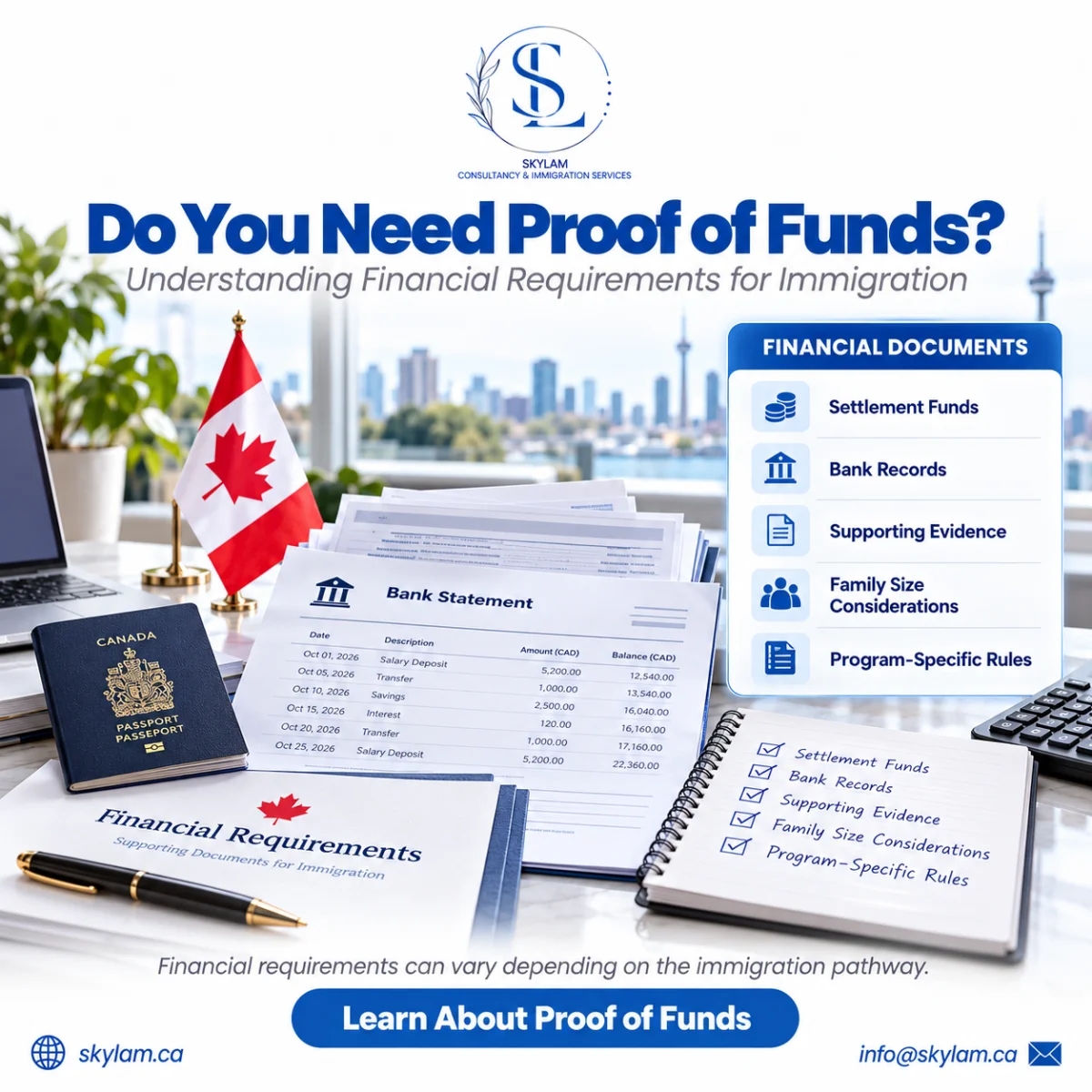
6. Prepare Proof of Financial Support
Financial preparation is one of the most important parts of a Canadian study permit application.
Applicants must demonstrate that they have enough money to cover the required expenses without depending on employment in Canada.
IRCC expects applicants to show that they can pay for:
-
Tuition fees.
-
Living expenses for themselves.
-
Living expenses for accompanying family members.
-
Transportation to and from Canada.
For programs lasting more than one year, applicants must also explain how they plan to pay for the full duration of their studies.
Living Expense Requirements Effective September 1, 2026
For study permit applications submitted on or after September 1, 2026, the following annual living expense amounts apply to applicants planning to study outside Quebec.
These figures exclude tuition fees and transportation costs.
| Family members, including applicant | Required annual living expenses (CAD) |
|---|---|
| 1 person | $23,448 |
| 2 people | $29,192 |
| 3 people | $35,888 |
| 4 people | $43,572 |
| 5 people | $49,419 |
| 6 people | $55,736 |
| 7 people | $62,054 |
| Each additional family member | $6,318 |
For example, a single student applying for a study permit outside Quebec must demonstrate the required living expenses of CAD $23,448 for the first year, in addition to tuition and transportation costs.
A student travelling with family members must consider the applicable amount for the total family size.
Students planning to study in Quebec must follow the financial requirements established by the Quebec authorities.
What Documents Can Demonstrate Financial Support?
Depending on the applicant's circumstances, supporting evidence may include:
-
Recent bank statements.
-
Proof of tuition payments.
-
Education loan documents.
-
Scholarship or funding letters.
-
Guaranteed Investment Certificates (GICs), where applicable.
-
Evidence of income from employment.
-
A financial support letter from a person providing funds.
-
Documents establishing the relationship with the financial supporter.
-
Supporting evidence of the sponsor's income and financial capacity.
IRCC provides examples of acceptable financial evidence, but the exact documents needed depend on the applicant's situation.
Explain the Source of Funds
Showing a bank balance is not always enough to explain an applicant's financial situation.
Applicants should be prepared to demonstrate that the money is genuinely available to them and explain its source.
For example, if a parent is supporting a student's education, the applicant may need to provide evidence of the relationship, the parent's financial capacity and the support being offered.
If there are significant recent deposits in a bank account, applicants should be prepared to provide accurate supporting information explaining them.
Financial documents should be genuine, consistent and supported by appropriate evidence.
Applicants should never borrow money temporarily or present funds as their own when they do not have access to them.
7. Prepare a Clear Letter of Explanation or Study Plan
A letter of explanation can help an applicant present their educational intentions and clarify relevant details of their application.
IRCC recommends that applicants explain why they want to study in Canada and demonstrate that they understand their responsibilities as international students.
This letter should be based on the applicant's actual circumstances.
It should not be treated as a guarantee of approval or a substitute for meeting the official requirements.
What Can a Study Plan Explain?
A clear and relevant study plan may address:
Academic background
Explain previous education and how it relates to the proposed program.
Reason for selecting the program
Describe why the subject is appropriate for your academic interests or career development.
Reason for choosing Canada
Explain why studying in Canada is relevant to your educational goals.
Reason for choosing the institution
Describe the institution and program based on genuine research.
Financial preparation
Explain how tuition, living expenses and transportation will be covered.
Future plans
Describe your realistic plans after completing the program, in accordance with the conditions of your temporary stay and applicable immigration rules.
Keep the Information Genuine
A study plan should not contain exaggerated claims, invented employment history or unrealistic promises.
Applicants should avoid copying another student's letter or using generic statements that do not reflect their own situation.
The information should be consistent with the academic records, financial evidence, employment documents and other application materials.
A clear explanation can help present the applicant's circumstances, but the immigration officer makes the final decision based on the complete application and applicable law.
8. Prepare Your Identity and Academic Documents
Applicants should organise their identity and academic documents before starting the online application.
Identity Documents
Common identity documents include:
-
A valid passport.
-
Passport information page.
-
Recent passport-size photographs, where required.
-
Relevant identity or civil status documents.
Applicants should check that the personal details are consistent across their documents.
A passport should have sufficient validity for the intended period of study. The validity of a study permit cannot exceed the validity of the passport.
Academic Documents
Depending on the applicant's education history and the institution's requirements, relevant documents may include:
-
Academic certificates.
-
Transcripts.
-
Previous diplomas or degrees.
-
Admission documents.
-
English or French language test results, where required.
-
Other educational records requested by the institution or IRCC.
Applicants should check whether translations are needed for documents that are not in English or French.
Any translation should follow IRCC's current instructions and be accurate.
9. Check Whether a Medical Examination Is Required
Some study permit applicants need to complete an immigration medical examination.
Whether an examination is required depends on factors such as the applicant's intended length of stay, recent residence or travel history and the type of work they plan to do.
For example, an examination may be required if an applicant:
-
Plans to stay in Canada for more than six months and meets certain country or territory-related conditions.
-
Has lived or travelled in a country or territory where an immigration medical examination is required under IRCC rules.
-
Plans to work in certain occupations where public health protection is important.
Applicants should use IRCC's official medical examination instructions to determine whether an examination is necessary.
If required, the examination must be completed according to IRCC's instructions, including using an approved panel physician where applicable.
Applicants should not arrange an examination based only on advice from an unofficial source.
10. Police Certificates and Other Supporting Documents
A police certificate may be requested as part of a study permit application, depending on the applicant's circumstances.
Applicants should review their personalised document checklist and any additional instructions that apply to their country of application.
Other documents may also be needed depending on individual circumstances.
For example:
-
Documents related to previous travel.
-
Evidence of current immigration status if applying from a country where the applicant is not a citizen or permanent resident.
-
Evidence of family relationships.
-
Additional financial documents.
-
Explanations of relevant gaps or inconsistencies.
Not every applicant needs to submit every possible document.
The best approach is to follow the personalised IRCC checklist and applicable visa office instructions rather than uploading unrelated paperwork.
11. Understand the Online Application Process
Study permit applications are generally submitted online.
The process involves answering questions that generate a personalised document checklist, completing the relevant forms, uploading supporting documents and paying the applicable fees.
A simplified preparation sequence is:
-
Confirm that you meet the study permit eligibility requirements.
-
Obtain a valid letter of acceptance from a DLI.
-
Obtain a PAL/TAL or confirm that you qualify for an exemption.
-
Prepare proof of identity and financial support.
-
Prepare other supporting documents requested for your circumstances.
-
Review the application forms carefully.
-
Upload the documents to the correct sections.
-
Pay the applicable fees.
-
Submit the application.
-
Follow the instructions for biometrics or any additional requests.
IRCC may request further information or documents while processing the application.
Applicants should regularly check their online account and respond to official requests within the stated deadlines.
12. Biometrics: Fingerprints and Photograph
Most study permit applicants who are required to provide biometrics must submit fingerprints and a digital photograph.
Biometrics are used as part of Canada's immigration identity verification process.
Applicants generally receive a biometric instruction letter after submitting their application.
If biometrics are required, the applicant should follow the instructions in that letter and attend an authorised collection location.
Applicants should not assume that biometrics are automatically completed when they submit an application.
Some people may have valid biometrics already on file. They should check IRCC's current rules to determine whether they need to provide them again.
The standard individual biometrics fee is CAD $85, although fee rules and exemptions should be checked before payment.
13. Understand Study Permit Processing and Timing
Study permit processing times can vary depending on the applicant's country of residence, application volume, individual circumstances and whether additional checks or documents are required.
There is no universal processing time that applies to every applicant.
Students should:
-
Apply as early as reasonably possible after meeting the requirements.
-
Check the current IRCC processing time estimate.
-
Allow time for biometrics and additional requests.
-
Monitor their application account.
-
Avoid making non-refundable travel arrangements before receiving the required approval and travel documents.
Submitting an incomplete application can delay processing or lead to the application being returned.
Applicants should also consider the institution's registration deadlines and contact the school if an immigration decision is delayed.
14. What Happens After a Study Permit Is Approved?
If the application is approved, the applicant receives instructions and the necessary documents to travel to Canada.
Depending on the applicant's nationality and circumstances, they may receive a visa or eTA as part of the approval process.
A letter of introduction may also be issued.
The actual study permit is generally issued by a border services officer when the student arrives in Canada and is authorised to enter.
The student should carry relevant documents when travelling, including:
-
Passport and required travel document.
-
Letter of introduction, if issued.
-
Letter of acceptance.
-
Proof of funds.
-
Other documents requested by the officer.
Approval of a study permit application does not remove the need to meet Canada's entry requirements when travelling.
15. Understand Your Responsibilities as an International Student
Receiving a study permit is not the end of the process. International students must continue to meet the conditions attached to their status.
Students generally need to:
-
Remain enrolled at a DLI, unless an exemption applies.
-
Actively pursue their studies.
-
Make progress toward completing their program.
-
Follow the conditions printed on their study permit.
-
Apply for the appropriate authorisation when required.
-
Leave Canada when their authorised stay ends unless they obtain another legal status.
Students should also understand the rules about changing institutions, taking an authorised leave and extending their study permit.
If a student's circumstances change, they should check whether they need to notify IRCC or apply for a new permit.
Failure to meet study permit conditions can affect immigration status and future applications.
16. Can International Students Work While Studying?
Some international students may work in Canada while studying, but permission depends on their study permit conditions and whether they meet the applicable eligibility requirements.
As of November 4, 2026, eligible students may generally work up to 24 hours per week off campus during regular academic sessions.
During regularly scheduled breaks, eligible students may work unlimited hours off campus, subject to the applicable rules.
However, not all students are eligible to work off campus.
For example, students enrolled only in certain language courses, general-interest courses or prerequisite courses may not qualify under the regular off-campus work rules.
Students should check their permit conditions and IRCC's official work eligibility guidance before accepting employment.
Working beyond the permitted hours or working without the required authorisation can create serious immigration consequences.
Students should also remember that expected earnings from part-time employment should not replace the required financial preparation for a study permit application.
17. Understand Post-Graduation Work Permit Eligibility
Some international students may qualify for a Post-Graduation Work Permit (PGWP) after completing an eligible Canadian study program.
A PGWP can allow eligible graduates to gain Canadian work experience after their studies.
However, graduating from any Canadian college or university does not automatically make a student eligible.
Students should check:
-
Whether the institution is eligible.
-
Whether the specific program is PGWP-eligible.
-
The program's duration.
-
Applicable language requirements.
-
Field-of-study requirements, where applicable.
-
Other current PGWP eligibility conditions.
Some non-degree programs may be subject to field-of-study requirements. The rules can differ for bachelor's, master's and doctoral degree graduates.
IRCC's 2026 field-of-study instructions state that no eligible fields of study will be added or removed during 2026. Applicants should still verify the applicable rules for their program and circumstances.
Students should confirm PGWP eligibility before accepting admission rather than relying on a general statement that an institution offers work-permit-eligible programs.
A PGWP is also separate from permanent residence. Graduates must meet the requirements of a separate immigration program if they later want to apply for permanent residence.
18. Common Study Permit Preparation Mistakes to Avoid
Mistake 1: Choosing an Institution Without Checking Its DLI Status
Applicants should confirm the institution's designation before relying on an admission offer for a study permit application.
Mistake 2: Assuming Every Program Is PGWP-Eligible
DLI status does not automatically make every program eligible for a PGWP.
The specific program must be checked.
Mistake 3: Underestimating Financial Requirements
Applicants need to account for tuition, living expenses and transportation.
They should also explain how they will fund the full duration of a program lasting more than one year.
Mistake 4: Providing Unclear Financial Evidence
Financial records should clearly demonstrate the availability and source of the funds.
Unexplained deposits or inconsistent financial information may create questions.
Mistake 5: Submitting a Generic Study Plan
A study plan should reflect the applicant's actual academic background and future intentions.
Copied or exaggerated explanations may not accurately represent the applicant's circumstances.
Mistake 6: Ignoring PAL/TAL Requirements
Most applicants need a PAL/TAL unless they qualify for a specific exemption.
Applicants should verify the current rules before submitting their applications.
Mistake 7: Assuming Part-Time Work Will Cover All Expenses
International students must demonstrate that they can afford their studies without relying on work in Canada.
Employment eligibility and permitted hours are subject to separate conditions.
Mistake 8: Relying on Guaranteed Approval Promises
No person or organisation can guarantee a Canadian study permit approval. IRCC assesses each application according to the applicable rules and the information provided.
19. A Practical Checklist Before Submitting Your Study Permit Application
Use this checklist to organise your preparation.
Institution and program
-
Confirmed the institution's DLI status.
-
Reviewed the specific program and admission requirements.
-
Checked the program duration and tuition fees.
-
Checked PGWP eligibility separately, if relevant.
-
Received a valid letter of acceptance.
Attestation requirements
-
Obtained a PAL/TAL, if required.
-
Confirmed the applicable exemption, if one applies.
-
Checked Quebec requirements if studying in Quebec.
Financial preparation
-
Calculated tuition expenses.
-
Calculated required living expenses.
-
Included transportation costs.
-
Prepared evidence of available funds.
-
Explained the source of financial support.
-
Prepared a plan for funding the full program duration.
Personal and academic documents
-
Checked passport validity.
-
Prepared academic records.
-
Prepared required translations.
-
Reviewed any country-specific instructions.
-
Checked whether a medical examination or police certificate is required.
Application review
-
Completed the correct online application.
-
Uploaded documents to the correct sections.
-
Checked that all information is accurate and consistent.
-
Reviewed fees and payment requirements.
-
Submitted the application and saved confirmation details.
-
Monitored the IRCC account for updates.
20. How Skylam Immigration Services Can Support Your Study Permit Preparation
Preparing a study permit application can involve many decisions about institutions, academic programs, finances and supporting documents.
Skylam Immigration Services offers personalised support related to study permits, skilled worker programs and family sponsorship.
For students planning to study in Canada, an organised preparation process begins with understanding their educational background, intended program, financial circumstances and the requirements that apply to their application.
Applicants should make sure that the information they provide is accurate and supported by genuine documents.
Skylam encourages prospective students to research their educational options carefully, understand the official requirements and prepare their applications responsibly.
A study permit application should reflect the student's real circumstances and genuine educational plans. No service provider can guarantee an approval, because the final decision rests with the Canadian immigration authorities.
Frequently Asked Questions (FAQs)
1. Do I need a study permit to study in Canada?
Most international students planning to study in Canada for more than six months need a study permit. Some exceptions apply, so applicants should check the official IRCC eligibility information.
2. What is a Designated Learning Institution?
A Designated Learning Institution is a school approved by a provincial or territorial government to host international students. Most post-secondary international students need an acceptance letter from a DLI to apply for a study permit.
3. Is a PAL/TAL required for every international student?
No. Most applicants need a PAL/TAL, but certain groups are exempt. For example, qualifying students entering degree-granting master's or doctoral programs at public DLIs from January 1, 2026, may be exempt. Applicants should check the current IRCC exemption list.
4. How much money does a single student need for a study permit in 2026?
For applications submitted on or after September 1, 2026, a single student studying outside Quebec generally needs CAD $23,448 for annual living expenses, excluding tuition and transportation. Other family-size amounts apply when family members accompany the student.
5. Do I need to pay tuition before applying for a study permit?
The institution may require a tuition deposit or payment as part of its admission process or PAL/TAL arrangements. Applicants should follow the institution's instructions and provide appropriate evidence of any tuition payments.
6. Can I work while studying in Canada?
Some eligible international students may work up to 24 hours per week off campus during regular academic sessions and unlimited hours during regularly scheduled breaks. Eligibility depends on the study permit conditions and other IRCC requirements.
7. Does a study permit guarantee a Post-Graduation Work Permit?
No. PGWP eligibility depends on the institution, specific program and applicable requirements. Students should verify eligibility before accepting admission.
8. Is a letter of explanation required for every study permit application?
IRCC recommends explaining why the applicant wants to study in Canada and showing an understanding of student responsibilities. Applicants should follow their personalised checklist and provide any additional explanation needed for their circumstances.
9. Will I need a medical examination?
Some applicants need an immigration medical examination depending on their intended stay, recent residence or travel history and planned work. Check IRCC's medical examination requirements for your situation.
10. Can I apply for permanent residence after studying in Canada?
Some graduates may later qualify for permanent residence through programs such as the Canadian Experience Class or a Provincial Nominee Program. However, a study permit or graduation does not automatically provide permanent residence eligibility.
11. Can I apply for a study permit before receiving my PAL/TAL?
Applicants who require a PAL/TAL should generally submit it with their study permit application. Students who qualify for an exemption should provide the required evidence of that exemption.
12. Where can I check the latest Canadian study permit requirements?
The official Government of Canada website provides the latest study permit eligibility rules, document requirements, financial requirements and application instructions.
Final Thoughts
Preparing for a Canadian study permit application requires careful planning and attention to detail.
Students should begin by selecting an appropriate institution and program, obtaining a valid letter of acceptance and understanding whether a PAL/TAL is required.
They should then prepare financial evidence, identity documents, academic records and any additional supporting documents required for their circumstances.
It is equally important to understand the responsibilities of an international student, including study permit conditions, work eligibility and the difference between temporary study authorization and future permanent residence options.
Your Canadian education journey starts with the right preparation. Research your options, understand the requirements and prepare your application with accurate information. Skylam Immigration Services is here to support your study permit planning.