
Canada Invests Over $31 Million to Help Internationally Educated Health Professionals Enter the Workforce Faster
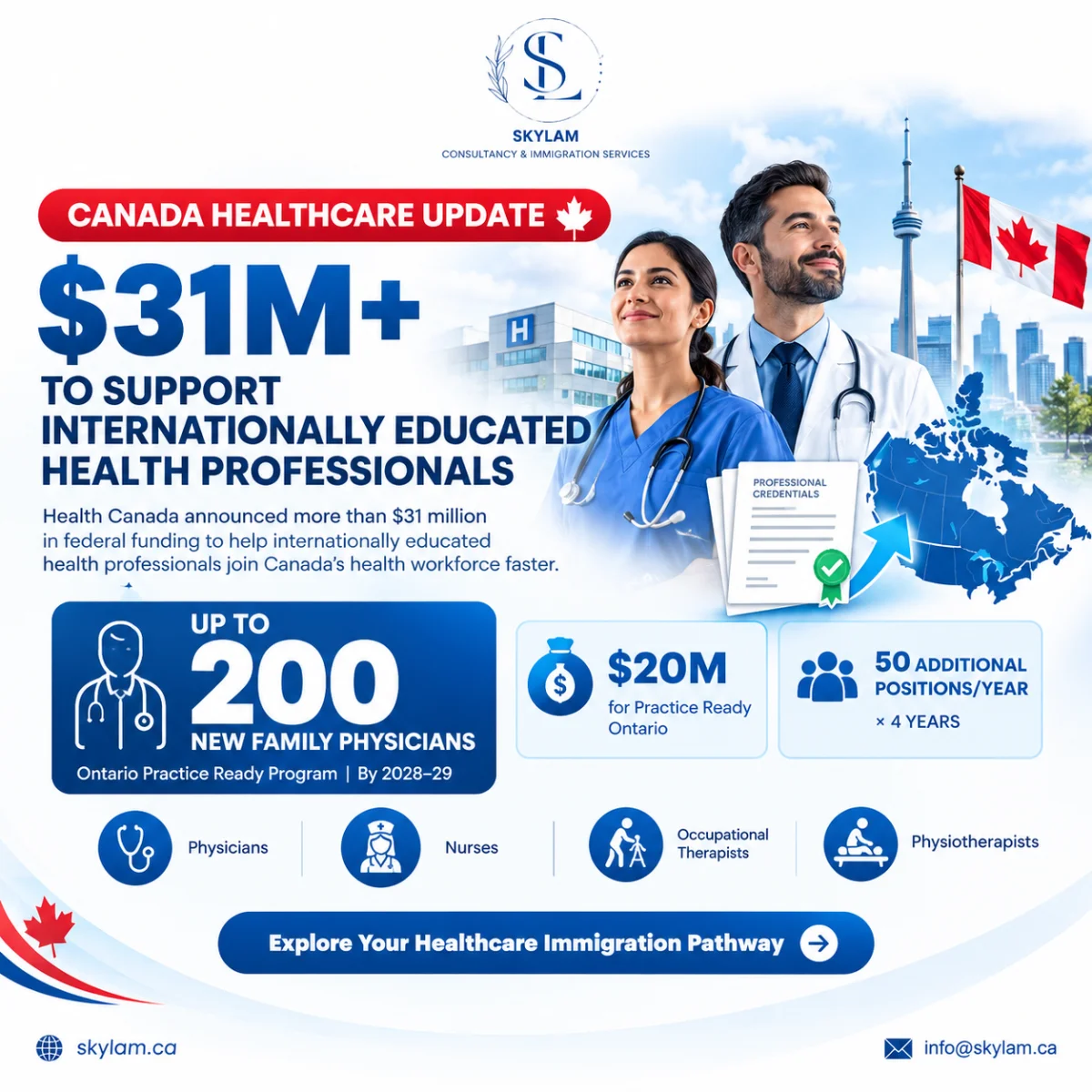
Canada is taking another significant step toward addressing its health-care workforce shortages by investing more than $31 million in projects aimed at helping internationally educated health professionals move into regulated health-care careers more quickly.
On October 7, 2026, Health Canada announced federal funding for six projects designed to improve the integration of internationally educated physicians, nurses, occupational therapists and physiotherapists into Canada’s health workforce.
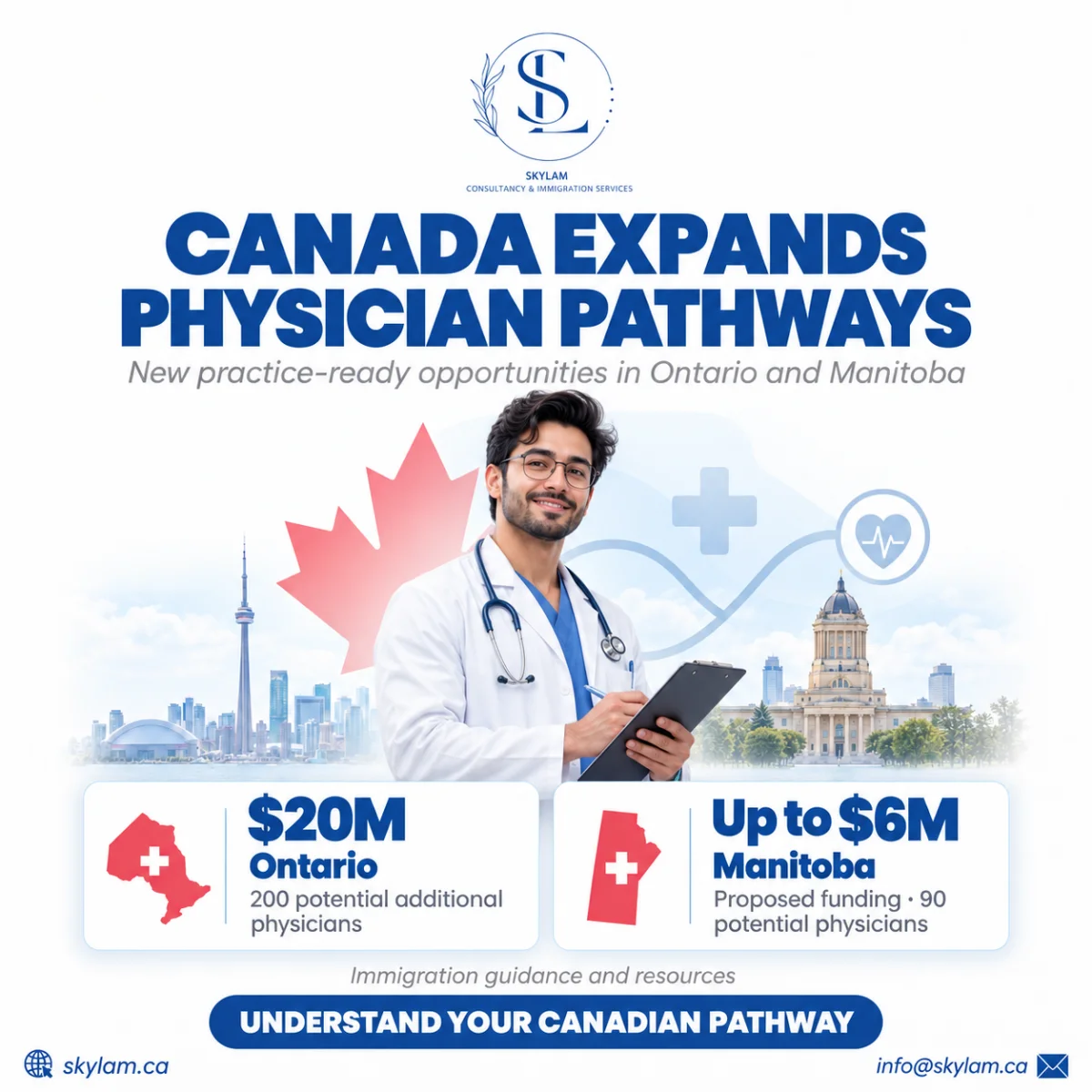
The announcement is particularly important for internationally trained family physicians, as $20 million of the funding will support the expansion of Ontario’s Practice Ready Ontario program, creating 50 additional positions per year over four years.
According to the federal announcement, the expansion could lead to up to 200 additional family physicians becoming ready to practise in Ontario by 2028–29.
For internationally educated health professionals considering Canada, the announcement reflects a broader policy direction: Canada increasingly recognizes that immigration alone is not enough. Foreign-trained professionals also need practical pathways through credential recognition, licensing, assessment and professional integration.
This article explains the announcement, what is changing, who may benefit, and why these developments matter for internationally educated health professionals considering Canada.
Why Canada Is Investing in Internationally Educated Health Professionals
Canada continues to experience shortages across several health professions, particularly in family medicine, nursing and other regulated health-care occupations.
At the same time, many internationally educated health professionals already living in Canada — or considering immigration to Canada — face significant barriers when attempting to work in their original professions.
These barriers can include:
- Foreign credential recognition requirements
- Professional licensing examinations
- Provincial regulatory requirements
- Assessment and bridging programs
- Limited residency or practice-ready assessment positions
- High costs
- Long processing timelines
- Difficulty understanding province-specific licensing pathways
As Health Canada noted in the announcement, internationally educated health professionals bring valuable skills, knowledge and experience to the Canadian health system, yet many face lengthy and complicated processes before they are able to practise.
The federal government’s latest investment is intended to help reduce some of these barriers.
More Than $31 Million in New Federal Funding
The October 2026 announcement provides more than $31 million in federal funding across six projects.
The projects are designed to help internationally educated professionals better understand and navigate the pathway from foreign education and professional experience to regulated practice in Canada.
The most significant component of the announcement is a $20 million investment in Ontario’s Practice Ready Ontario program.
The remaining funding will support projects involving internationally educated physicians, nurses, occupational therapists and physiotherapists across Canada.
The overall focus is not simply on immigration. It is on professional integration.
That distinction is important.
A person may qualify to immigrate to Canada as a health professional but still need to complete provincial licensing and regulatory requirements before being permitted to practise independently.
The federal investment is therefore aimed at helping close the gap between immigration eligibility and professional recognition.
Practice Ready Ontario to Add 50 Positions Per Year
Ontario’s Practice Ready Ontario, or PRO, program provides a pathway for certain internationally trained family physicians to demonstrate their readiness to practise in the province.
Under the new federal funding, the program is expected to support 50 additional positions per year for four years.
That represents a potential total of 200 additional internationally educated family physicians by 2028–29.
The federal government has emphasized that these additional physicians are expected to help improve access to primary care, particularly in areas where shortages are more severe.
The program will place particular emphasis on:
- Northern Ontario
- Rural communities
- Underserved regions
- Francophone communities
There will also be a specific focus on French-speaking internationally educated family physicians.
For internationally trained doctors who meet the relevant professional and regulatory criteria, this represents a potentially important development.
However, candidates should understand that participation in a practice-ready pathway is separate from simply receiving immigration status.
Professional eligibility, clinical experience, licensing standards, language requirements and other conditions still apply.
Ontario Is Also Increasing Its Own Investment
The federal funding builds on funding already being provided by the Government of Ontario.
Ontario has indicated that it is investing more than $25 million into the Practice Ready Ontario program to support 150 participants annually beginning in 2026–27.
Combined with the new federal investment, the goal is to increase the number of qualified internationally trained physicians who can enter family medicine practice in Ontario.
This is particularly relevant because access to family doctors remains a major concern in many parts of the province.
The expanded program is intended to contribute to Ontario’s broader objective of connecting more residents with primary care services.
Support Is Extending Beyond Physicians
Although the Practice Ready Ontario expansion is one of the most prominent parts of the announcement, the federal funding is broader.
Five additional projects will support internationally educated professionals in several regulated health occupations.
These include:
Internationally Educated Nurses
Nurses trained outside Canada may face a complex process involving credential verification, regulatory assessments and provincial registration.
Funding will support practical resources intended to help applicants better understand each stage of the process.
The National Nursing Assessment Service is among the organizations involved in improving guidance and support for internationally educated nurses.
Internationally Educated Occupational Therapists
The Canadian Association of Occupational Therapists is developing resources through the Canadian Hub for Internationally Educated Occupational Therapists.
The objective is to bring relevant information, guidance and practical tools together so that internationally educated occupational therapists can more clearly understand the pathway to professional practice in Canada.
Internationally Educated Physiotherapists
The Canadian Alliance of Physiotherapy Regulators is also receiving support to improve tools and resources for internationally educated physiotherapists.
The aim is to make the route to physiotherapy practice easier to understand and navigate.
Internationally Trained Physicians
Additional initiatives will also support internationally trained physicians through better preparatory resources, professional guidance and coordination between organizations involved in medical licensure and certification.
The Medical Council of Canada and the College of Family Physicians of Canada are among the organizations participating in these broader efforts.
Foreign Credential Recognition Remains a Major Issue
One of the biggest challenges facing skilled immigrants in Canada is underemployment.
According to the Statistics Canada data referenced in the federal announcement, approximately 60% of internationally educated health professionals working in Canada are employed in the field for which they were originally trained.
That means a significant proportion are not working directly in their trained professions.
There are many possible reasons.
Canadian health professions are regulated, and protecting patient safety requires rigorous professional standards. At the same time, complicated recognition processes can create delays for qualified professionals.
Canada’s current policy direction appears increasingly focused on maintaining professional standards while making the recognition process more efficient and transparent.
This is important not only for immigrants, but also for Canada’s labour market.
When a trained physician, nurse, occupational therapist or physiotherapist cannot work in their profession, both the worker and the Canadian economy lose access to valuable skills.
Canada Has Already Announced Immigration Measures for Physicians
The Health Canada funding should also be viewed alongside broader federal immigration measures.
In December 2025, the Government of Canada announced targeted measures intended to attract and retain internationally trained physicians.
According to the information referenced in the announcement, these measures included:
- A targeted Express Entry approach for physicians
- 5,000 additional spaces under the Provincial Nominee Program
- 14-day work permit processing for certain eligible applicants
These measures show that Canada is approaching the health workforce issue from several directions.
One part involves immigration.
Another involves credential recognition.
Another involves licensing and professional assessment.
And another involves ensuring health professionals are directed toward communities where the need is greatest.
For internationally trained doctors, these combined policy measures may create stronger opportunities than immigration policy alone.
Budget 2024: Up to $77.1 Million for Internationally Educated Health Professionals
The federal government has also committed up to $77.1 million through Budget 2024 to support the integration of internationally educated health-care professionals.
The initiatives supported through this funding include three broad areas.
First, improving navigation through foreign credential recognition systems.
Second, funding additional family medicine training positions.
Third, increasing assessment capacity.
One important component includes funding for 120 new family medicine training positions.
The purpose is to increase the number of internationally educated professionals who can complete the Canadian requirements necessary to enter practice.
Budget 2025 Adds Another $97 Million for Credential Recognition
The policy direction continued through Budget 2025.
The federal government announced $97 million over five years for a Foreign Credential Recognition Action Fund.
The fund is intended to support faster, fairer and more transparent recognition of foreign credentials.
Although the initiative extends beyond health care, health occupations are among the sectors expected to benefit.
Construction and other labour-shortage occupations are also part of the broader focus.
For skilled immigrants, this is an important policy shift.
Historically, immigration selection and occupational licensing have sometimes functioned as separate systems.
An individual could qualify for Canadian immigration based on education and work experience but still encounter substantial difficulty gaining recognition in the profession after arrival.
Canada is increasingly attempting to improve coordination between these systems.
Why Northern, Rural and Francophone Communities Are a Priority
The new Practice Ready Ontario expansion is specifically focused on underserved communities.
This matters because health-care shortages are not evenly distributed.
Large metropolitan areas may attract more physicians and health professionals, while smaller communities, northern regions and rural areas often experience greater recruitment challenges.
By directing internationally educated professionals toward these communities, governments hope to improve access to family medicine and other essential services.
Francophone communities are another important focus.
The dedicated attention to French-speaking internationally trained family physicians may create additional opportunities for candidates who can provide health services in French.
For eligible internationally educated physicians who are flexible about location, rural or northern pathways may therefore become particularly important.
What This Means for Internationally Educated Health Professionals
For internationally educated health professionals, the biggest takeaway is that Canada is actively investing in the infrastructure needed to help qualified professionals enter regulated practice.
However, candidates should avoid assuming that the funding creates automatic eligibility.
Immigration and professional licensing remain separate processes.
Depending on the occupation, province and applicant, candidates may need to satisfy requirements involving:
- Educational credential verification
- Professional examinations
- Clinical assessments
- Language proficiency
- Recent practice experience
- Provincial registration
- Professional certification
- Practice-ready assessments
- Immigration status
- Work authorization
The correct pathway can therefore vary significantly from one candidate to another.
A family physician considering Ontario may face a different process from a nurse considering British Columbia or a physiotherapist considering Alberta.
Why Immigration Planning and Licensing Planning Should Happen Together
One of the most important strategic lessons for internationally educated professionals is that immigration planning should not happen in isolation.
Candidates should ideally evaluate both:
Can I immigrate to Canada?
and
Can I become licensed to work in my profession in the province I am considering?
A strong immigration profile does not automatically guarantee professional licensing.
Likewise, a person who appears professionally eligible may still need the correct immigration or work authorization pathway.
Planning both processes together can help applicants avoid costly mistakes.
For example, a physician may want to consider immigration programs that align with provinces where practice-ready assessment opportunities are expanding.
A nurse may need to examine the relevant provincial regulator and credential-assessment process before selecting a destination.
A Francophone health professional may also benefit from examining immigration and employment opportunities where French-language capacity is specifically prioritized.
A Broader Opportunity for Canada’s Health Workforce
Canada’s health-care system is under increasing pressure from population growth, an aging population and workforce shortages.
Internationally educated health professionals represent an important part of the potential solution.
The new federal investment shows that governments increasingly recognize that recruiting skilled professionals is only the first step.
Those professionals must also be able to translate their education and experience into Canadian professional practice.
By investing in assessment capacity, credential recognition, licensing guidance and practice-ready pathways, Canada is attempting to reduce the amount of skilled talent that remains underused.
If implemented effectively, these initiatives could benefit both internationally educated professionals and the communities that need their services.
Final Thoughts
The October 2026 Health Canada announcement represents a significant development for internationally educated health professionals.
More than $31 million in new federal funding, including $20 million for the expansion of Practice Ready Ontario, is expected to help improve professional integration across several health occupations.
For internationally educated family physicians in particular, the creation of 50 additional Ontario positions annually over four years could help as many as 200 additional doctors become ready to practise by 2028–29.
The broader federal strategy also includes immigration initiatives, credential-recognition reforms, training positions, assessment capacity and provincial cooperation.
For internationally trained physicians, nurses, occupational therapists and physiotherapists, Canada may therefore offer increasing opportunities — but success will continue to depend on understanding both the immigration pathway and the professional licensing process.
If you are an internationally educated health professional considering Canada, your first step should be to understand which immigration programs, provincial licensing pathways and credential-recognition requirements apply to your profession and background.
Skylam Consultancy & Immigration Services can help you explore the immigration pathways that may fit your profile and long-term professional plans in Canada.
Immigration eligibility and professional licensing are separate matters. Applicants should verify current requirements with the relevant federal, provincial and professional regulatory authorities.